









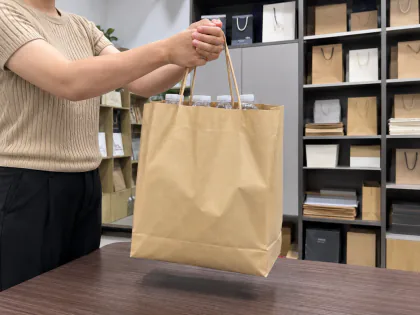
UNIQLO Kraft Paper Bag Breakdown: Why Simple Bags Work
What can clothing retailers learn from a simple kraft shopping bag? Examine UNIQLO reference bags, three measured sizes and the choices that shape cost, branding and material claims.
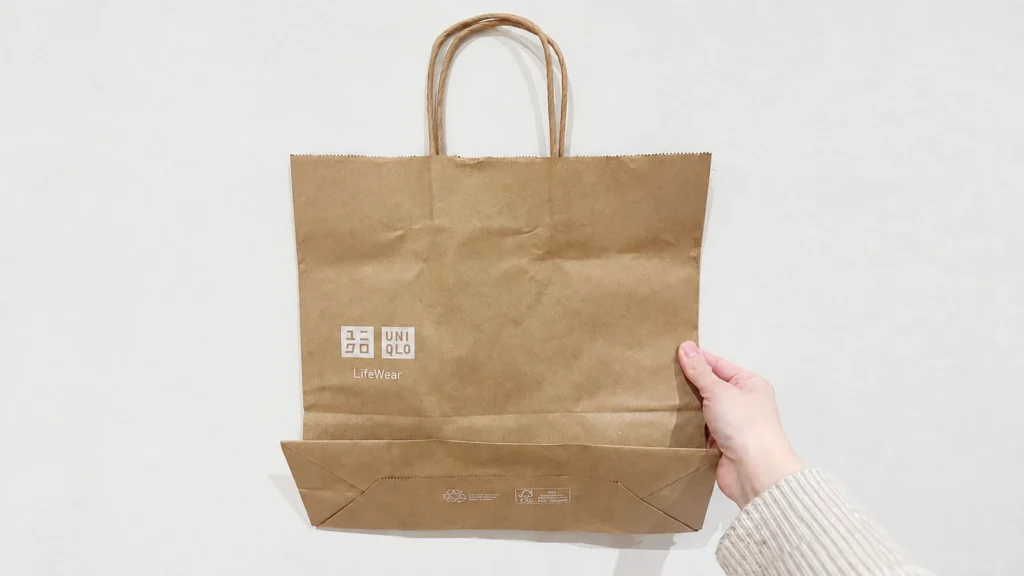
A brown kraft shopping bag can be a sensible choice for a clothing retailer: recognisable branding, a practical shape for folded garments and a construction that can keep decoration costs under control. The UNIQLO bags shown here illustrate how a familiar paper surface and restrained printing can work together without elaborate finishes.
This is an independent packaging breakdown using supplied reference photographs and measured samples, not a PAQIVA customer case study. The commercial lessons concern the bag design; UNIQLO's purchasing prices and order quantities are not public evidence for this article.
Why a simple bag works for fashion retail
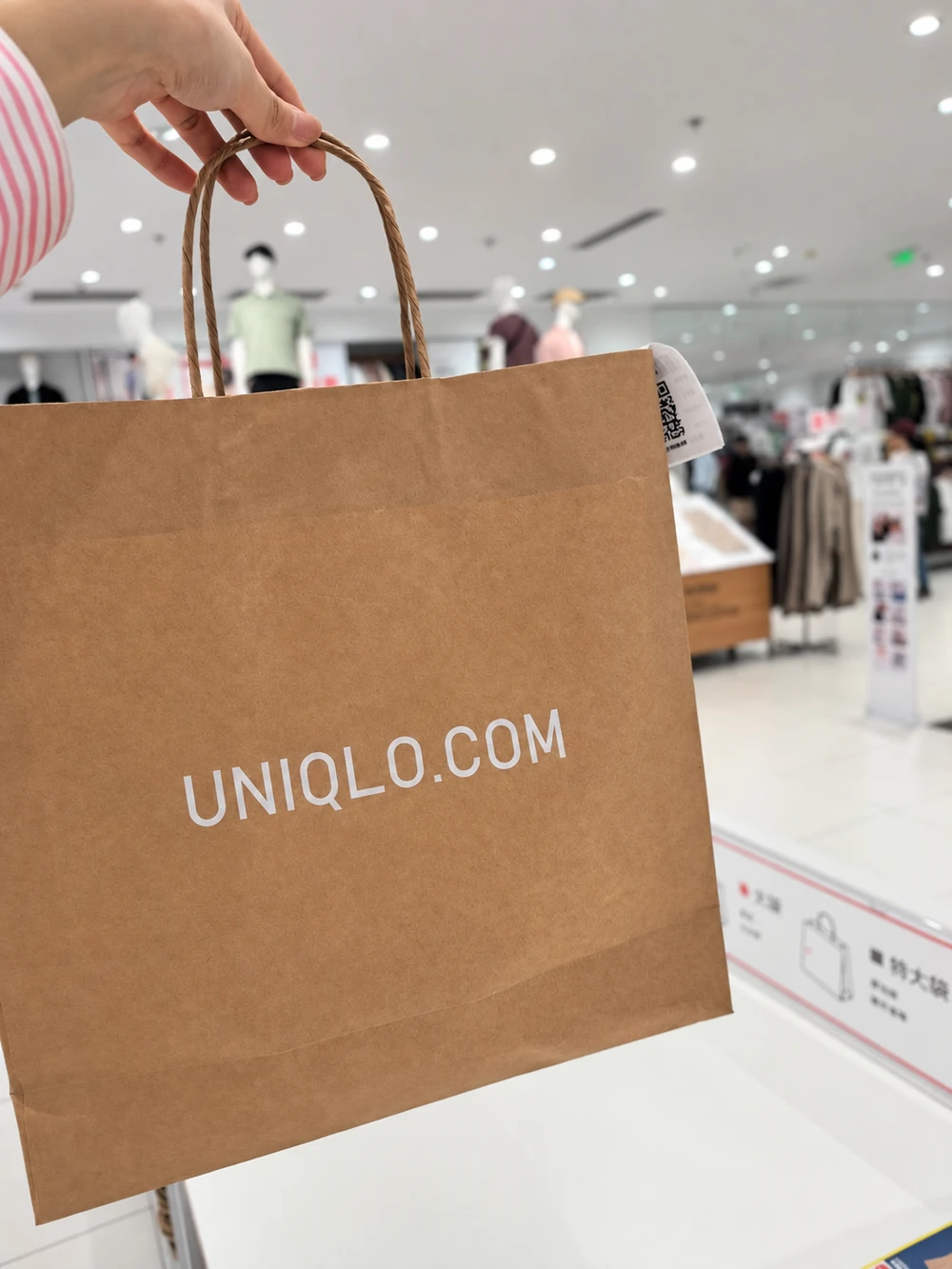
The photographs show brown paper, twisted handles and white branding with plenty of open space. The result is easy to recognise without a full printed background. In the store photograph, the web address is large enough to act as the main graphic. The other reference uses the brand marks and LifeWear lettering in a smaller area.
For an apparel buyer, the useful lesson is consistency. A repeatable paper colour, logo position and handle style can give several bag sizes a coherent identity. A simple bag also suits a purchase that is already presented by the garment, its folding and any tissue wrap. More decorative packaging may be appropriate for a gift collection, but it need not be the default for every checkout transaction.
UNIQLO's paper-bag use also has a documented materials policy behind it. Fast Retailing's February 2020 announcement reported that the group had begun moving from plastic shopping bags to bags made with FSC-certified paper or recycled paper from September 2019. It also described efforts to reduce bag use and encourage customers to bring their own. This explains a stated policy direction; it does not establish the exact composition of every bag photographed here.
Where the cost advantage can come from
For your own project, an unlaminated kraft bag with a straightforward printed design can be a cost-conscious starting point. Leaving out film lamination, decorative foil, metal fittings or fabric handles removes those particular materials and operations from the specification. Whether that produces the lowest total price depends on the paper, bag construction, print process, quantity and delivery arrangement.
Sparse artwork is useful, but a small logo is not automatically much cheaper than a larger one. Printing setup, the number of colours and the way the bag is manufactured can matter more than the printed area alone. White printing on brown paper also needs a sample check for coverage and contrast; the photograph cannot specify the ink formulation or number of passes required.
Compare quotes against the same finished dimensions, intended load, artwork and delivery destination. Ask for the unit price, setup charges and carton details separately. If you need three sizes, state the quantity of each: a total order split across three small runs may price differently from one size produced in the same total quantity. These are cost controls for a purchasing brief, not estimates of what UNIQLO pays.
Three measured sizes to use as a starting point
The following dimensions come from the supplied measurements of UNIQLO sample bags. They are recorded as front width × side depth × bag-body height, in centimetres, excluding the handles. They are not an official worldwide UNIQLO size chart, and the photographs have not been assigned to particular rows.
| Measured sample size | Useful direction for your own fit trial |
|---|---|
| 22 × 8 × 22 cm | Compact purchases with a shallow folded stack. |
| 31 × 12 × 31 cm | A middle option when a wider fold or more depth is needed. |
| 38 × 15 × 38 cm | A larger folded package that exceeds the middle sample's usable space. |
All three have equal front width and body height. The depth increases from 8 to 12 to 15 cm, which is worth checking as carefully as the front view. A folded sweatshirt or a gift box can run out of front-to-back room even when its width appears suitable.
To develop your own clothing bag size range, measure the actual folded purchase with its wrapping, then try it in a sample. Check that staff can insert and remove it comfortably, that the side folds open properly and that the handles remain easy to grasp. External bag dimensions are not guaranteed internal clearances. Avoid assigning a fixed garment count to any of these sizes: fabric thickness, folding method and product combinations vary.
What leaving off film lamination changes
An unlaminated specification lets the paper surface provide the visual character and avoids adding a plastic film layer. That can fit a retailer's aim to simplify its packaging materials. Confirm the specification, though: brown colour and a matt appearance cannot establish whether a bag has a coating, a barrier treatment or mixed-material handles.
A useful goal is a bag that can enter the intended paper-recycling stream. UNIQLO EU's packaging guide lists its paper bag as PAP22 for paper disposal and asks customers to check municipal rules. For your own bag, confirm the complete construction and give disposal guidance suited to the market where it will be used. Recycling and biodegradation are different questions.
The claim “fully biodegradable” needs evidence for the whole bag and the conditions in which it will break down. Paper, inks, adhesives, treatments and handle components all belong in that review. The US FTC Green Guides summary, for example, ties unqualified degradability claims to the entire item and customary disposal conditions.
There is also a practical trade-off to test. Do not assume an unlaminated shopping bag is waterproof. If customers may carry it outdoors in rain, discuss the intended use and evaluate a suitable sample. A verified material specification and a bag that works for the purchase are more useful than a broad “eco-friendly” slogan.
What to inspect before placing your order
Request a finished sample with the intended paper and handle construction, then check the details that affect daily use:
- Paper and printing: compare the brown shade, surface feel, white-logo coverage and any unwanted ink transfer against an agreed reference.
- Handles and attachment points: confirm their material composition, grip and attachment method. Twisted appearance alone does not identify what is inside the cord.
- Opening, folds and bottom: open the bag fully, load the intended purchase and check the seams, bottom shape and ease of packing.
- Carrying in use: agree an appropriate test for the actual contents and inspect the handle attachments, paper and bottom afterwards. Size or GSM alone is not a load rating.
Keep an approved sample for repeat orders. It gives both sides a concrete reference for the paper shade, logo position, handle feel and construction that the quotation should describe.
Turn the reference into your own kraft bag
Use this breakdown to define your own brand's requirements: a suitable size range, a considered logo layout and a construction that suits the purchase. PAQIVA makes paper bags to project specifications, with size, paper, printing and handles agreed for the order.
Start with the available paper options, then send PAQIVA your project details: folded product measurements, quantities by size, logo artwork, handle preferences, delivery destination and required date. Include any requirements for film-free construction, recycled content or a particular disposal claim so they can be checked against the proposed materials. PAQIVA provides free custom-size dielines and free paper bag design support to help prepare the project.