










Hermès Paper Bag Breakdown: Orange, Texture and Knotted Handles
Orange colour, textured paper and knotted cord handles give these Hermès bags their distinctive look. See how fewer handle fittings can mean more assembly work.
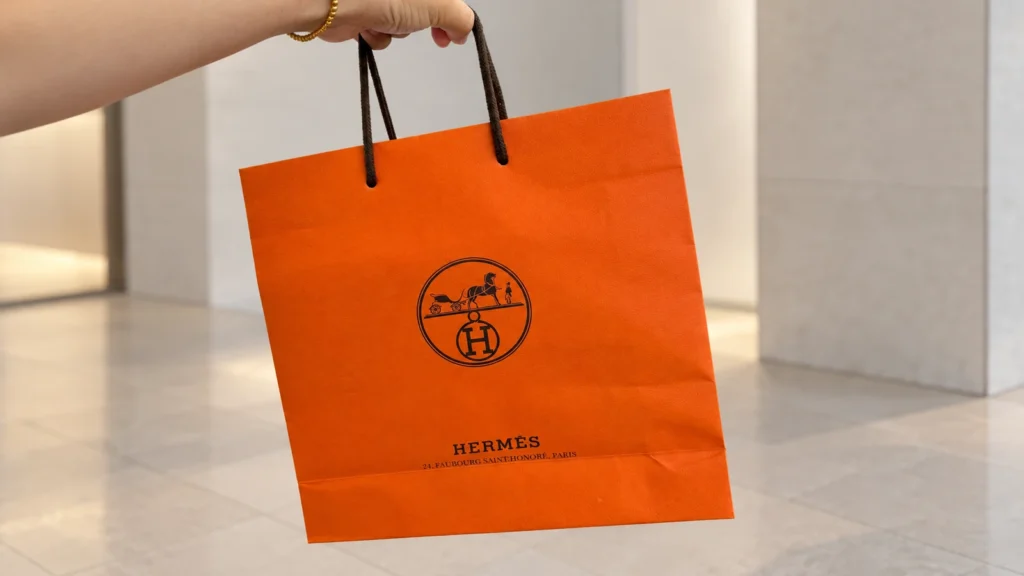
A Hermès paper bag is recognizable before you read the name. The orange catches your eye, the textured paper rewards a closer look, and the dark cord handles keep the design simple. Look inside, and another detail appears: knots secure the ends of the handles.
For a packaging buyer, these references offer three useful ideas: give colour a clear role, let the paper contribute to the design, and consider how the handles are finished inside the bag.
Orange does the first job
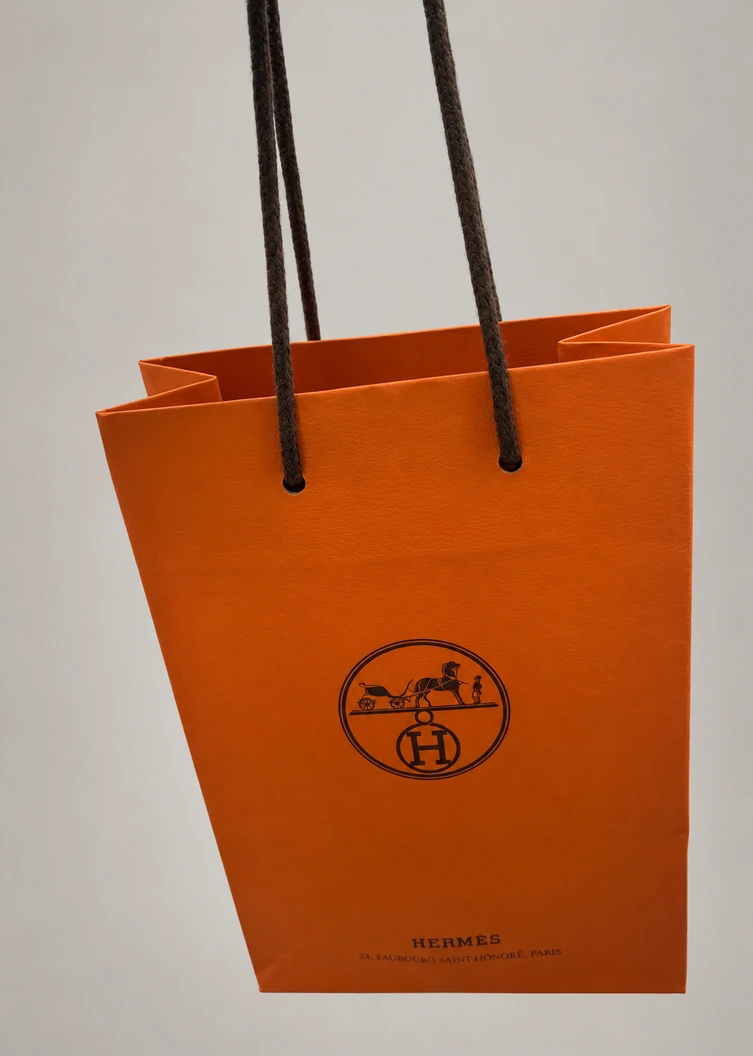
The large orange surface is the strongest part of the design. Dark handles and a compact emblem give it contrast, while the surrounding space lets the colour remain visible. There is little competing decoration.
Orange also carries a long connection with the house. In an official account of its packaging, Hermès links the colour to paper shortages after the Second World War, when orange was what its supplier had available.
The useful lesson for a retailer is consistency. A tall bag and a wider bag can feel like part of the same family when their colour, handles and print work together. The logo does not have to grow to fill every extra centimetre of paper.
For your own range, choose a colour you want customers to remember, then see how it works across your everyday bag sizes. Keep enough open space for that colour to do its job.
The paper adds detail without another graphic
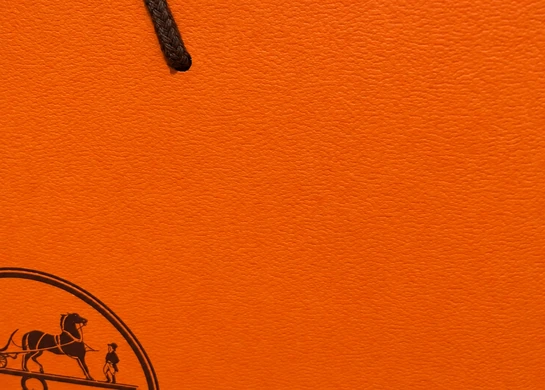
The supplied bags use textured specialty paper. In the close-up, a fine, pebbled surface breaks up the orange with small changes in light and shadow. The front can stay visually simple while still looking interesting at close range.
This is a useful approach for a small logo or restrained layout: let the paper provide some of the detail you might otherwise add through patterns or extra printing. A subtle texture can suit a quiet design; a stronger grain makes the material itself more noticeable.
When choosing your own paper, compare the texture with your actual artwork. Look particularly at small lettering and fine lines, which need to remain clear against the surface. PAQIVA’s paper options include textured specialty papers to explore for a custom project.
A photograph helps explain the look, but it is not a paper specification. For a comparable effect, use a physical swatch to choose the grain and colour rather than guessing a paper grade or weight from the image.
Look inside: the cord ends are tied
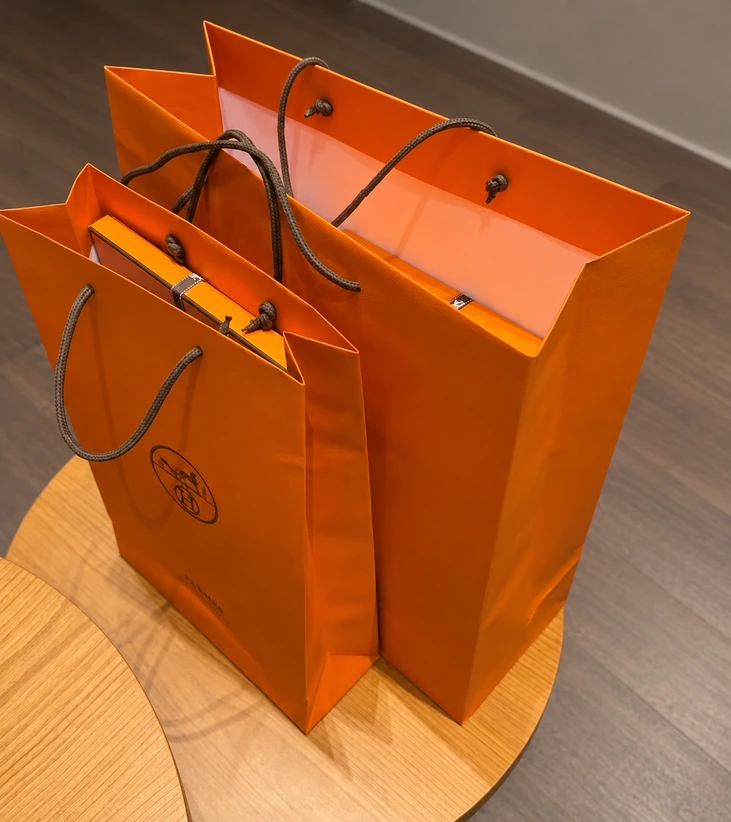
The interior view reveals the construction more clearly than the front. The cords pass through holes near the top, and their ends are tied into knots inside the bag. When you lift the handles, those knots act as stops against the inner face of the folded top.
The outside stays uncluttered: you see the cord entering the paper, while the fastening sits inside. It is a small finishing choice that becomes visible when the customer opens the bag.
What does this change about plastic use? Compared to designs that use separate plastic end-pieces to secure the cords, a knotted connection eliminates the need for these components, thereby reducing the use of plastic fittings. This makes the bag somewhat more eco-friendly.
What does this change about cost? Hand tying adds an assembly step. The cord ends must be threaded and tied, and the finished handle lengths need to look even. Removing a purchased fitting therefore does not automatically make the finished bag cheaper: the saving in parts is weighed against the extra labour.
For a custom order, ask for the handle construction to be named in the quotation. “Rope handles” describes the general style; “threaded rope handles with hand-tied ends” also explains the fastening and the work involved. PAQIVA’s rope-handle bags provide a starting point for discussing cord colour, thickness and attachment.
Which details would suit your own brand?
The appeal comes from how a few choices work together. A bright colour brings visibility, textured paper adds close-up interest, and dark cords finish the bag without crowding the front.
You can apply that thinking to a completely different palette and logo:
- One recognisable colour. Choose a colour that belongs to your brand and works across your bag sizes.
- Texture as part of the design. Compare paper textures with your logo before adding more printed decoration.
- A deliberate handle finish. Choose the cord and its fastening together, allowing for appearance, fittings and assembly labour.
If you choose knotted ends, the finished sample should show the inside as well as the front. Check that the knots remain secure, the handles sit evenly and the holes hold up when carrying your intended contents. This is more useful than judging strength from the paper’s appearance alone.
PAQIVA can help develop a custom paper bag around your own colour, paper texture and handle preferences. Send your product or gift-box dimensions, quantity and design reference to discuss a combination that fits your packaging.