














Paper Bags for Two or Four Drinks: How to Plan the Bag and Cup Carrier
Start with the cups and lids, fit the carrier, then size the bag around the loaded pack. PAQIVA can customize the bag and carrier together to reduce mismatch risk.
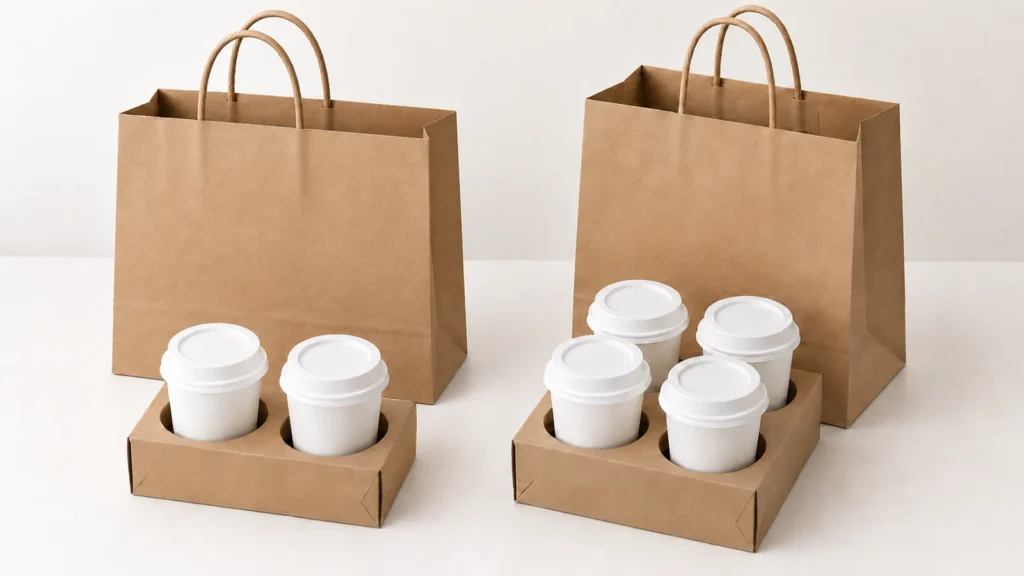
Choose the cup carrier around your actual cups and lids, then size the paper bag around the loaded carrier. For two drinks, a side-by-side layout is a useful starting point. For four, a two-by-two layout usually needs more bag depth, not simply a taller version of the same bag.
PAQIVA can customize the paper bag and cup carrier together to your dimensions. Developing the pair around the same cups and order layout reduces the risk of buying a carrier that holds the drinks but does not fit the bag. If you already have a carrier, we can also plan the bag around it.
The cover is an illustration, and the layouts below are references rather than measured fit tests. The final specification should come from your cups, lids and assembled carrier.
Start with the cup, not its capacity label
A cup described as 12 oz or 16 oz does not give enough information to design its holder. Cups of the same capacity can have different heights, tapers, bases and lids. Include any sleeve that stays on the cup during packing.
Send the cup and lid samples, or a drawing showing the base diameter, rim and lid diameter, and overall height with the lid fitted. The carrier design determines where it supports the cup, so there is no single hole-size formula that works for every structure. A cup should sit securely without being forced into position, and staff should be able to remove it without dislodging its lid.
For a mixed menu, include the combinations customers actually buy: two large cold drinks, a small coffee beside a taller cup, or four drinks with different lids. Developing the pack around only the smallest cup can leave the rest of the menu poorly supported.
Plan two-drink and four-drink layouts separately
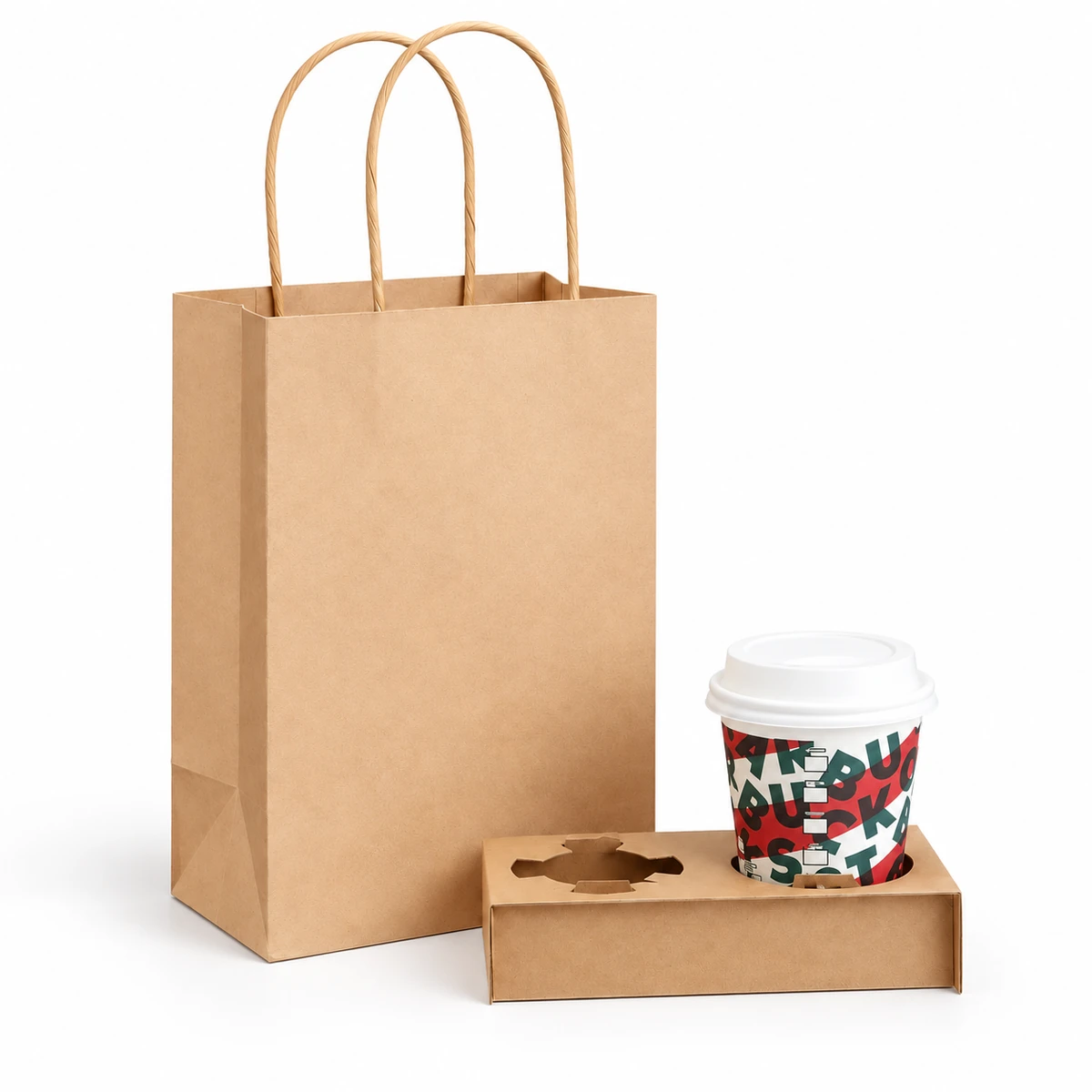
For two drinks, start by placing both cups in the intended carrier. Measure the complete arrangement, including any tray edges, tabs, handles or lids that project beyond its base. An empty second position still takes up space: a two-position carrier does not become a single-cup footprint when only one cup is shown.
For four drinks, a two-by-two layout adds a second row. That changes the base footprint and access into the bag. The carrier must sit level on the bag base without bowing or being squeezed through the opening. Taller side walls cannot make up for insufficient depth at the bottom.
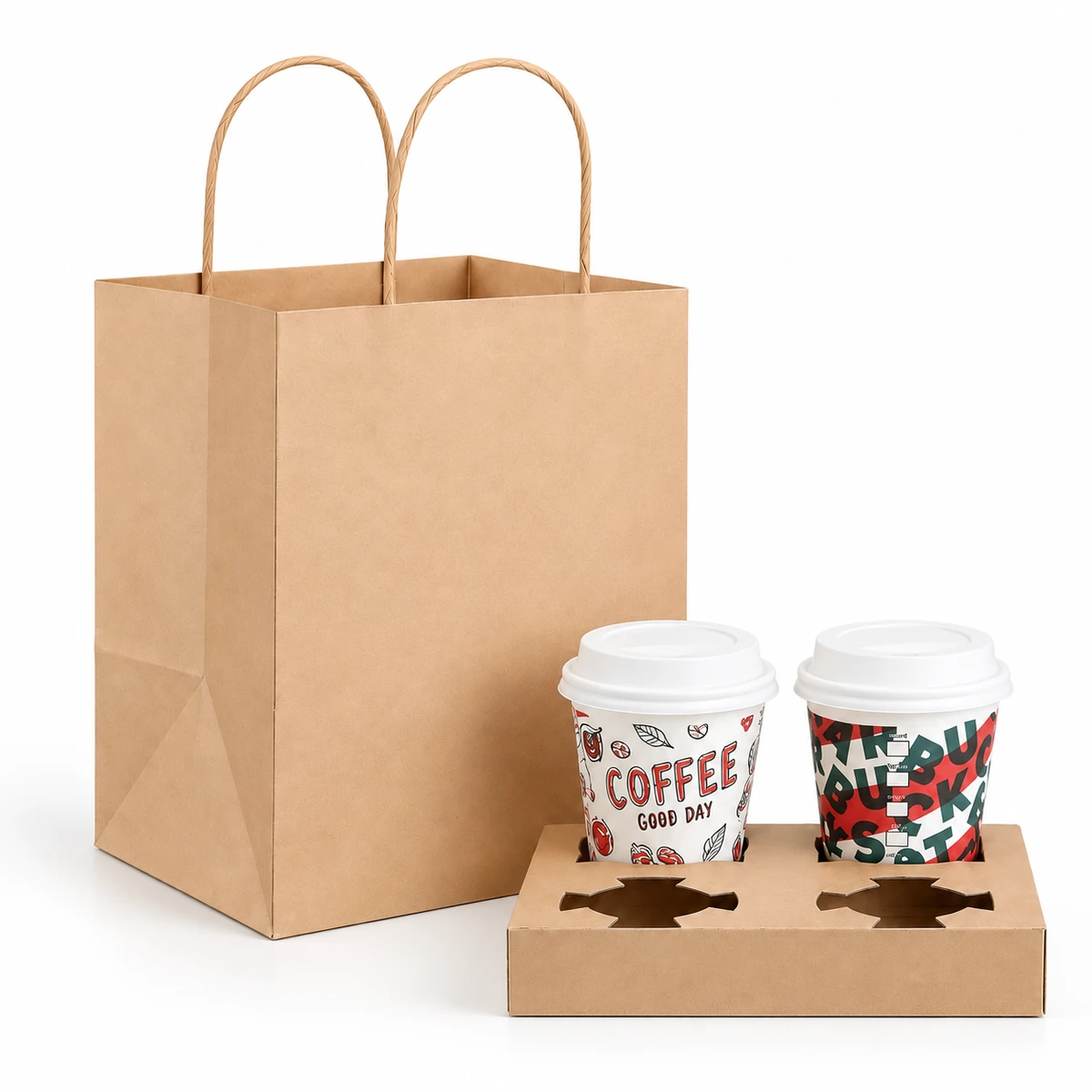
Do not assume two separate two-cup carriers will behave like one four-cup carrier. Their combined edges may take more room, and the pieces may move independently. If that is your preferred arrangement, develop and assess it as a separate pack.
Measure the loaded outline, then the usable bag space
Record the loaded pack's widest width and depth, including cup-lid overhang. The bag must accommodate that outline both at the opening and where the carrier rests. Nominal external bag dimensions are not the same as usable internal space: seams, folds and the assembled base affect the fit.
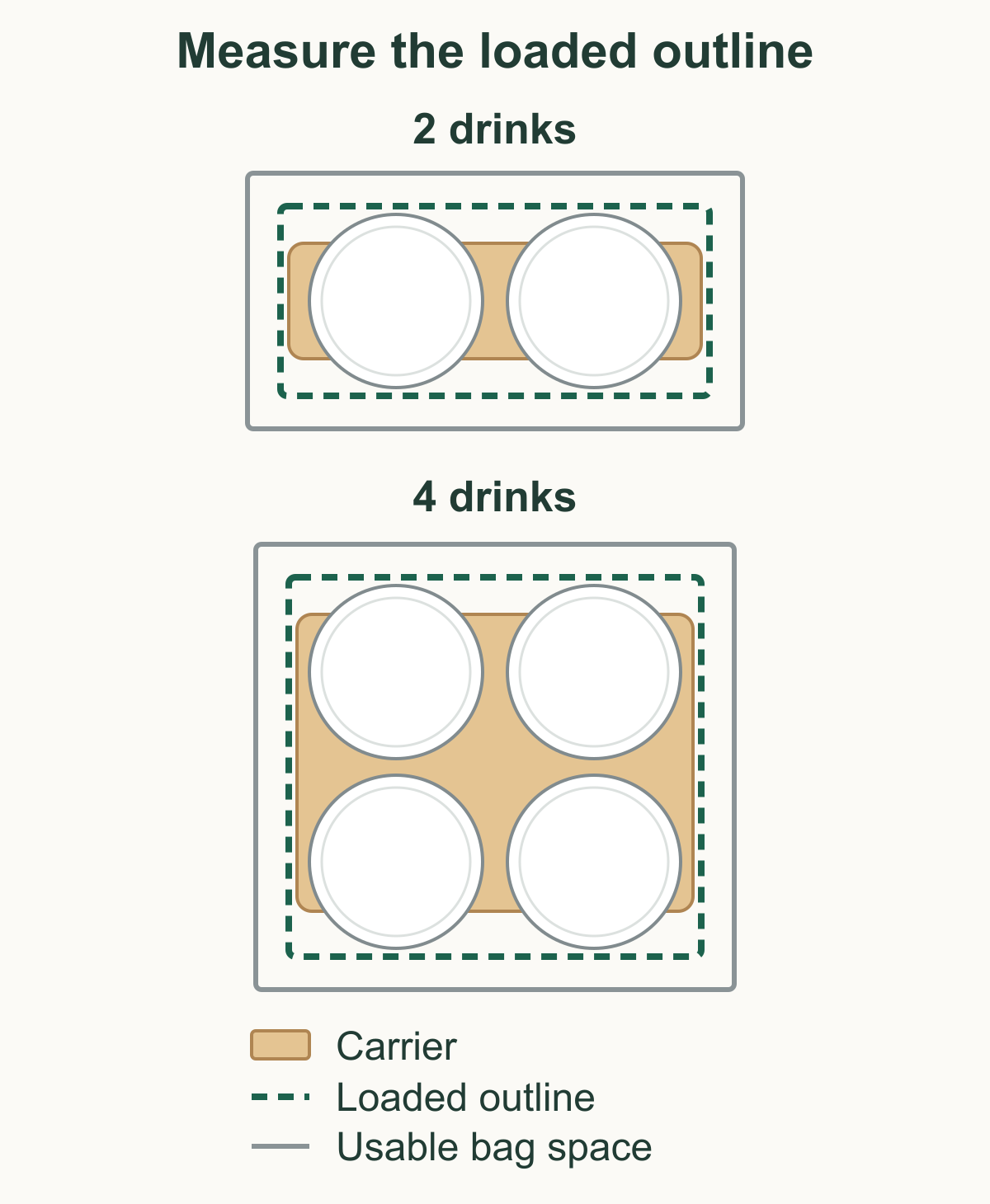
For height, measure from the underside of the assembled carrier to the highest point of the loaded pack, including any carrier handle that extends above the fitted lids. This accounts for any raised platform in the carrier. Then allow room to lower the drinks into the bag, remove them again and bring the handles together comfortably. If the order needs a folded or sealed bag top, include the space that closure uses.
The aim is a practical fit. Too little space makes packing awkward; excessive space can let a carrier shift. Rather than adding a fixed number of centimetres to every design, use a sample to settle the clearance needed for your carrier, cups and packing method.
Our coffee-shop paper bag page gives the following starting references:
| Order layout | Suggested bag dimensions | How to use the reference |
|---|---|---|
| Two drinks | 24 × 14 × 27 cm | A starting size to compare with your loaded two-cup carrier |
| Four drinks | 28 × 26 × 28 cm | A custom example to assess against your four-cup arrangement |
Dimensions are front width × side depth × bag-body height, excluding handles. They are not guaranteed internal clearances, stock-size promises or measurements taken from these pictures. Larger lids, a different carrier or food sharing the bag may require another size.
One bag size or two?
If two-drink orders are your daily standard and four-drink orders are frequent enough to justify separate stock, two matched bag sizes are worth comparing. They let you plan a closer fit for each order without making every customer carry the larger bag.
One larger bag can simplify stock management, but it still needs a carrier that stays positioned with the smaller order. Test the actual two-drink arrangement inside it; a four-position tray with only two cups is a different loading condition from the same tray filled with four.
Some carriers are specifically designed to separate from four positions into two, as this Vegware carrier example shows. That is a designed feature, not a reason to cut an ordinary carrier. Each resulting layout still needs a suitable bag.
For drinks and pastries in the same bag, reserve a separate area for the wrapped or boxed food. Do not plan its support around the cup lids. If the extra items make loading cramped or unbalanced, a second bag may be the simpler arrangement.
Check carrying as a complete pack
Fit is only one part of the decision. Weigh the carrier with the intended drinks filled and lids fitted, then assess the paper, bag base and handle attachments for that complete load. A stronger-looking handle or a higher paper grammage alone does not establish the bag's carrying performance.
Cold drinks also introduce condensation. Tell us how the pack will be used, including counter handover, walking or delivery, and the expected exposure to moisture. A surface finish should not be assumed to make the whole bag waterproof or prevent a lid from leaking.
Use one practical sample check covering the normal order:
- Load and remove. Put every cup in its intended position, lower the carrier without forcing or tilting it, and remove the drinks as a customer would.
- Lift and carry. Bring the handles together and check that they remain comfortable to hold without pressing on the lids. Observe carrier movement and whether the cups stay seated during ordinary handling.
- Inspect after use. Look at the carrier, bag bottom, seams and handle attachments for distortion, loosening or moisture-related changes. Include the intended cold-drink and delivery conditions where relevant.
Approve the bag and carrier as a pair. If the cup supplier, lid style or carrier changes later, check the affected fit again before treating the previous approval as current.
Send one brief for the bag and cup carrier
To develop a coordinated set with PAQIVA, send:
- Cups and lids: samples or dimensions, sleeve details and the hot/cold combinations you sell.
- Order layouts: two or four drinks, mixed cup sizes, and any wrapped food sharing the bag.
- Carrier details: an existing sample or drawing if you have one, or a request to custom-size the carrier together with the bag.
- Order requirements: quantities by layout, branding, destination and the date the packaging is needed.
Email sales@paqiva.com with those details. We can plan the paper bag and cup carrier together, so the quotation and sample review address both cup fit and bag fit before production.