














Chanel Paper Bag Design: Why the White Bag with a Black Border Works
A white face, black frame and restrained wordmark create a clear composition. Explore how proportion, white space and handles bring the design together.
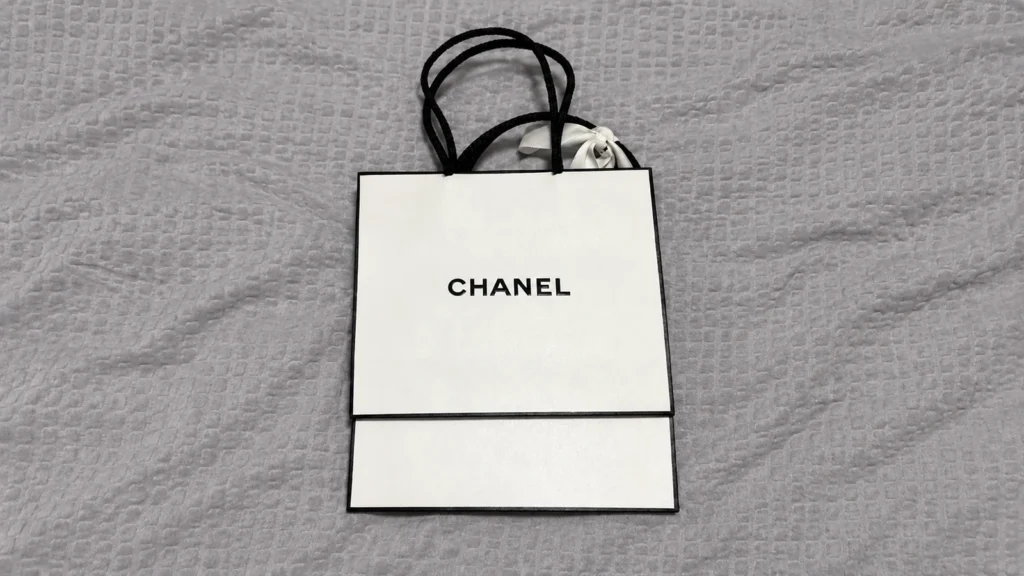
The appeal of a white Chanel paper bag with a black border comes from how a few elements work together: a clearly defined outline, generous white space, a restrained wordmark and dark handles. For another brand, the useful lesson is to balance those elements around its own identity.
Black and white are part of CHANEL's packaging vocabulary. On its US Art of Detail page, the brand presents a black-and-white box-and-bag wrapping option as “The Classic.” The white, black-bordered bags shown here offer a focused way to appreciate that visual language. CHANEL — The Art of Detail
The black border gives the white face a clear shape
The border is a small part of the surface, but it has a strong visual role. It outlines the rectangle of the bag and draws attention to its proportions. Against a pale background, the dark line helps the edge remain distinct; against a busy scene, it gives the white panel a clear boundary.
Inside that frame, there is very little competing detail. The wordmark sits within an open field, with space to be seen as a complete shape. The combination feels deliberate because the frame, lettering and handles share the same dark tone.
That does not make a black border a fixed recipe. Its thickness changes the mood: a fine line can feel light and precise, while a heavier frame gives the outline more presence. The right weight depends on the bag's proportions, the wordmark and the overall design. An independent brand can make that choice deliberately rather than treating the border as an afterthought.
White space needs to suit the bag's proportions
The tall bag below gives the wordmark a large surrounding area of white. Its long handles extend the vertical impression, while the border keeps the face visually contained. The lettering does not need to fill the panel to become its focal point.
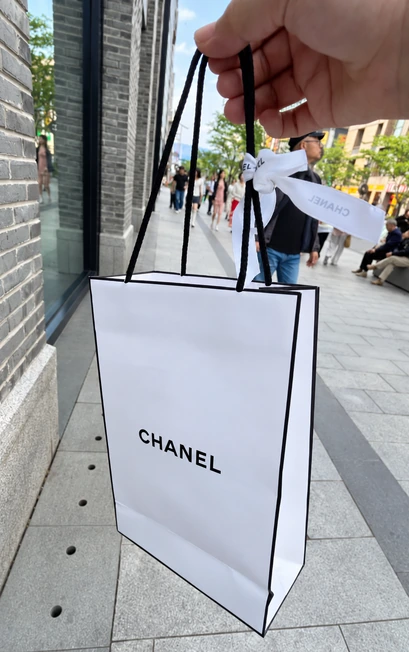
This is a useful lesson when a brand needs several bag sizes. A logo that looks balanced on a wide bag can feel different on a narrow, tall one. Enlarging or shrinking the entire artwork may also change the border weight and the distance between the logo and the frame in ways that were not intended.
Review each size as a composition. Keep the brand relationship recognizable, then adjust the wordmark's scale and placement, the frame weight and the surrounding space for that particular face. A proof at the intended size is more informative than several differently sized designs displayed at the same width on a screen.
Handles and ribbon complete the outline
The black rope handles in these examples continue the dark lines above the white panel. Their curved shape softens the rectangle without introducing another colour. In the angled view below, the open top, folded sides and handle connections also make the bag's three-dimensional form easier to see.

A decorative white ribbon has a different role from the carrying handles. On the tall bag, it adds a small gift-like accent near the top while leaving most of the front unobstructed. It is worth deciding whether that extra detail supports your own presentation, rather than adding it automatically to every order.
For a custom bag, compare the handle profile, width or thickness, drop and attachment position alongside the border. A broader flat handle creates a different visual weight from a narrow round cord. The photographed appearance does not identify the fibre composition or carrying capacity; those belong in the specification for the bag you order. PAQIVA's rope-handle bag guide explains the cord and attachment choices to confirm.
A simple frame makes small alignment differences noticeable
One practical lesson from this style is that a clean outline needs careful placement. When a dark line runs close to a straight edge, a change in the gap between them is easy to see. Corners, side folds and the lower fold all become part of the visual result.
Treat border thickness and border position as separate decisions. Two frames can have the same thickness but look different because one sits farther inside the panel. Judge the result on the assembled bag, where folds and the top edge affect what customers actually see.
Use the confirmed dieline to establish how the frame relates to the cuts and folds. Then review an assembled printed sample, looking at the front, corners and side panels together. PAQIVA's dieline and artwork preparation guide covers that relationship between artwork and the finished structure.
Sparse artwork also leaves the white surface visible. Paper appearance, folds and finishing therefore deserve as much attention as the logo. A photograph can suggest a visual direction, but it cannot supply the paper weight or surface specification for a new order.
Give the same broad idea your own brand character
White panels, dark borders and black handles can support more than one visual identity. The SIMPLE. bags below use a different wordmark and broad flat handles. Their wider faces and heavier handle shapes give the composition a different character from the tall CHANEL example.
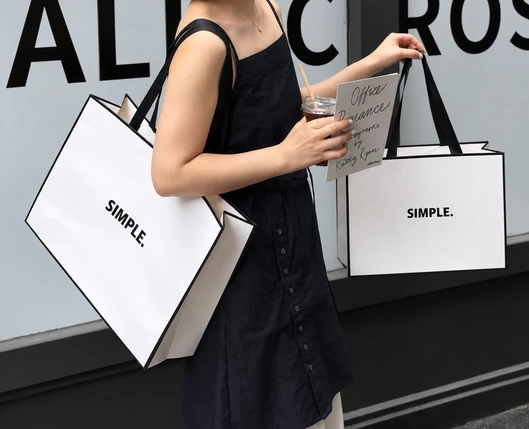
The useful exercise is to work with your own brand name and compare a few deliberate choices. A compact wordmark may suit ample space around it. A wider name may need a broader panel or a different scale. Your border can be finer or heavier, and your handle choice can reinforce that direction.
The unbranded examples below make these choices easier to isolate. The taller bag has broad flat handles, while the wider bag has a narrower round profile. Both use white faces and dark frames, yet their proportions and handle silhouettes create different impressions.
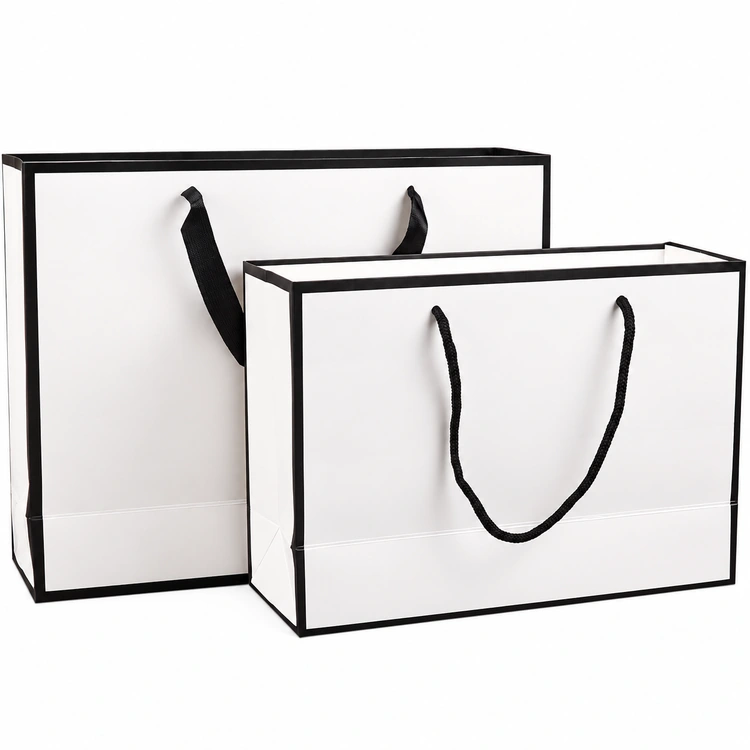
| Design element | A useful decision for your own bag |
|---|---|
| Border | Choose its weight and position relative to the assembled edges |
| Wordmark | Set its scale around your own lettering and available white space |
| Bag proportions | Review each required size as a finished composition |
| Handles | Match the profile and drop to the appearance and carrying needs |
| Extra ribbon or text | Add it when it has a clear role in the presentation |
A limited colour palette does not determine the finished price. Paper, bag size, handles, finishing, quantity and production requirements still matter. Keep the visual brief and the construction brief connected, so the bag looks right and suits what it needs to carry.
Turn the inspiration into a clear design brief
The strongest takeaway from these white Chanel paper bags is the consistency of the whole composition. The border defines the face, the white area gives the lettering room, and the handles continue the colour scheme. Each part contributes without needing much additional decoration.
For your own custom paper bags, start with the contents, required sizes, your logo and the effect you want the frame to create. Share those details, an estimated quantity and your preferred handle style with PAQIVA at sales@paqiva.com. Once the size and structure are confirmed, a custom blank dieline can support the layout; design assistance, revisions and any related charges are agreed for the project.