














Custom Clothing Paper Bags: 7 Styles for 2026
Compare seven handle styles for custom clothing paper bags, from ribbon and rope to die-cut and flat paper handles. Learn what to inspect and how to size the bag around packed garments.

For a clothing store, start with the garment as it will leave the counter: folded, wrapped or boxed. Then choose a handle that suits the presentation and feels comfortable with the complete purchase inside. Ribbon and rope handles are useful starting points for a boutique presentation; rivets make the attachment part of the design; die-cut, twisted and flat handles offer different ways to keep the bag visually simple.
This 2026 guide compares seven handled paper bag styles in PAQIVA’s range. They form a practical shortlist for custom clothing paper bags, grouped by handle construction. Paper choice, bag proportions, printing and finishes create further variations within each group; these seven are not a catalogue of every paper bag structure.
Compare the seven styles
| Style | How to recognize it | A reason to shortlist it |
|---|---|---|
| Threaded ribbon | Ribbon passes through openings near the top | A ribbon detail with visible attachment points |
| Glued-in ribbon | Ribbon is secured inside the bag top | A cleaner outside face around the handles |
| Rope | Cord-shaped carrying loops | A rounded handle profile for everyday boutique use |
| Riveted | Visible rivets attach the handles | Hardware becomes part of the design |
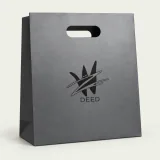
| Die-cut | A carrying opening is cut into the bag body | A compact outline without separate handle loops |
| Twisted | Slender twisted carrying loops | A simple shopping-bag appearance |
| Flat paper | Flat strips form the carrying loops | A broad, flat handle profile |
Use the table to narrow the visual direction, then compare physical samples with the same intended contents. A handle name alone does not establish carrying capacity or the price of a finished bag.
1. Threaded ribbon handle paper bags
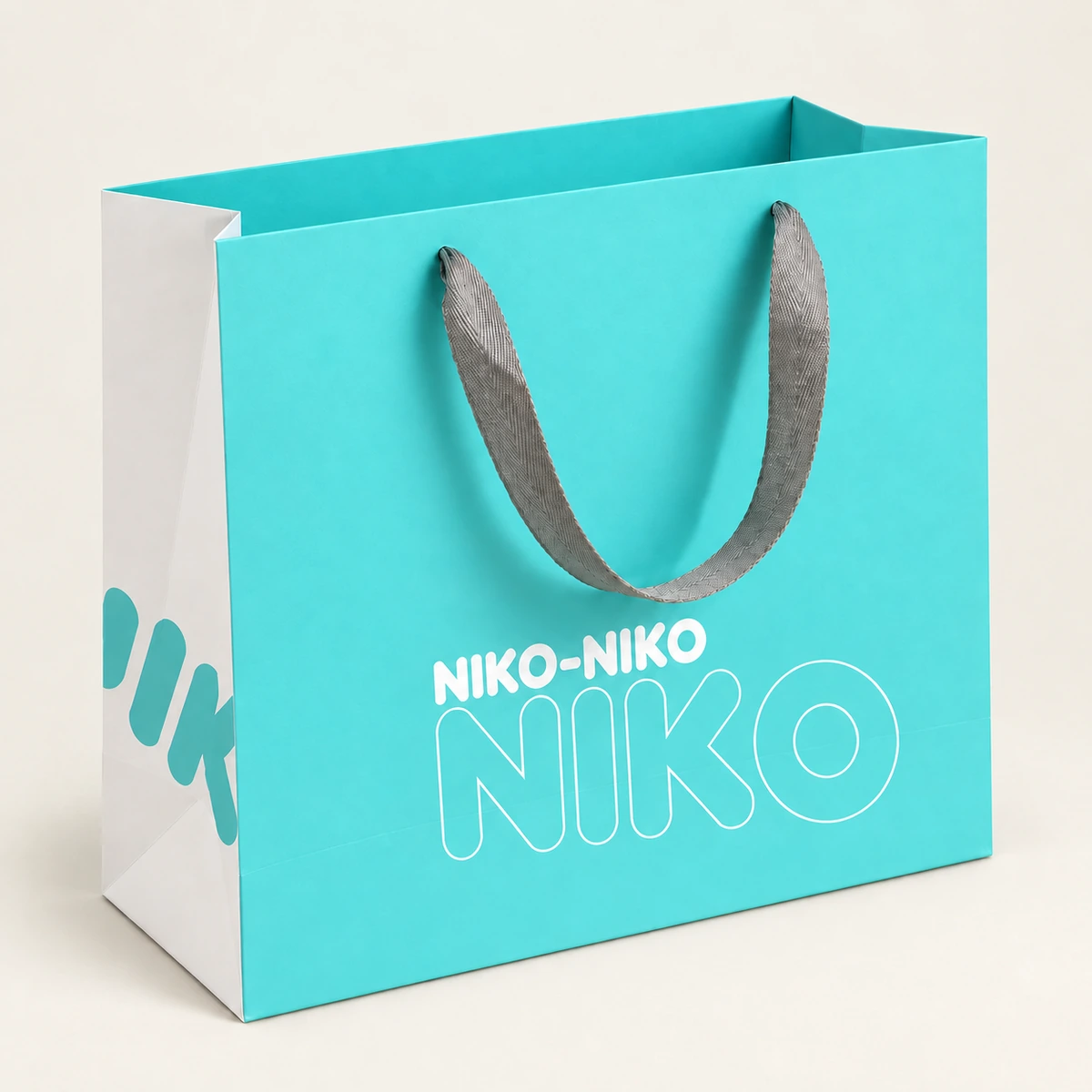
Threaded ribbon handles pass through prepared openings near the bag’s top. That visible connection distinguishes them from ribbon ends secured inside the top fold. Handle color, width and length can all affect the balance between the bag and its branding.
Consider this style for folded shirts, dresses or tissue-wrapped clothing when the ribbon should be a noticeable part of the presentation. A contrasting ribbon can frame the design; a matching color can make the handle less prominent.
On the sample, look at the openings and the way the ribbon is secured inside. The attachment should leave room to load and remove the wrapped garment. Try the loops together in one hand, and review how they fall across the logo when the bag is set down.
2. Glued-in ribbon handle paper bags
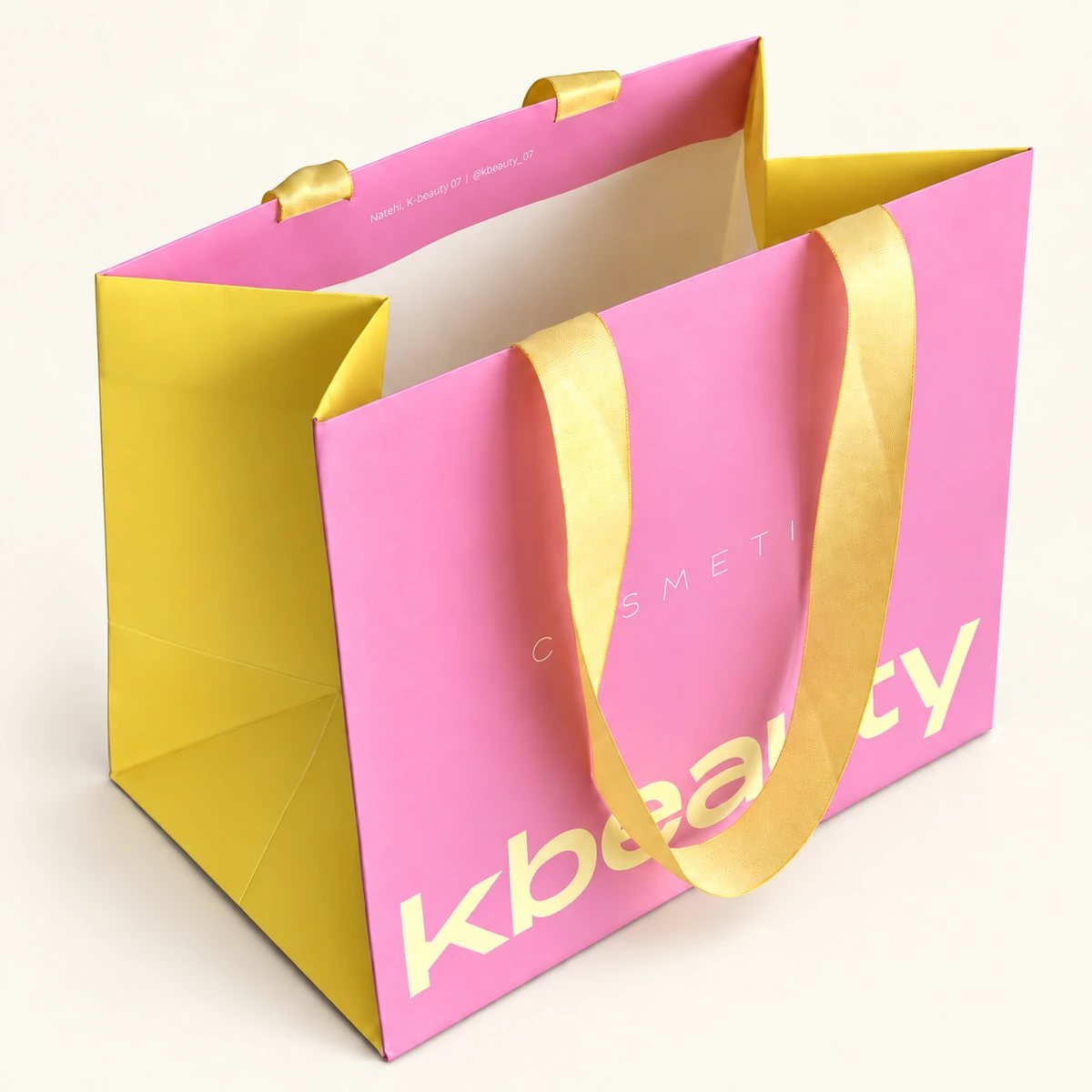
With glued-in ribbon handles, the ribbon is secured inside the bag top rather than threaded through visible face openings. The main difference from the first style is the attachment method, so two ribbon bags can have a similar overall appearance while needing different construction details.
This is an option for apparel packaging where a clean area around the handle entry points supports a simple logo or color layout. Wide ribbon can also become a strong visual feature, as in the example above.
Ask to see the inside of the top fold and the attachment area on the sample. Assess it with the intended load, including any gift box. An attractive ribbon does not by itself tell you how the connection performs, and a photograph of the outside cannot show all of that construction.
3. Rope handle paper bags
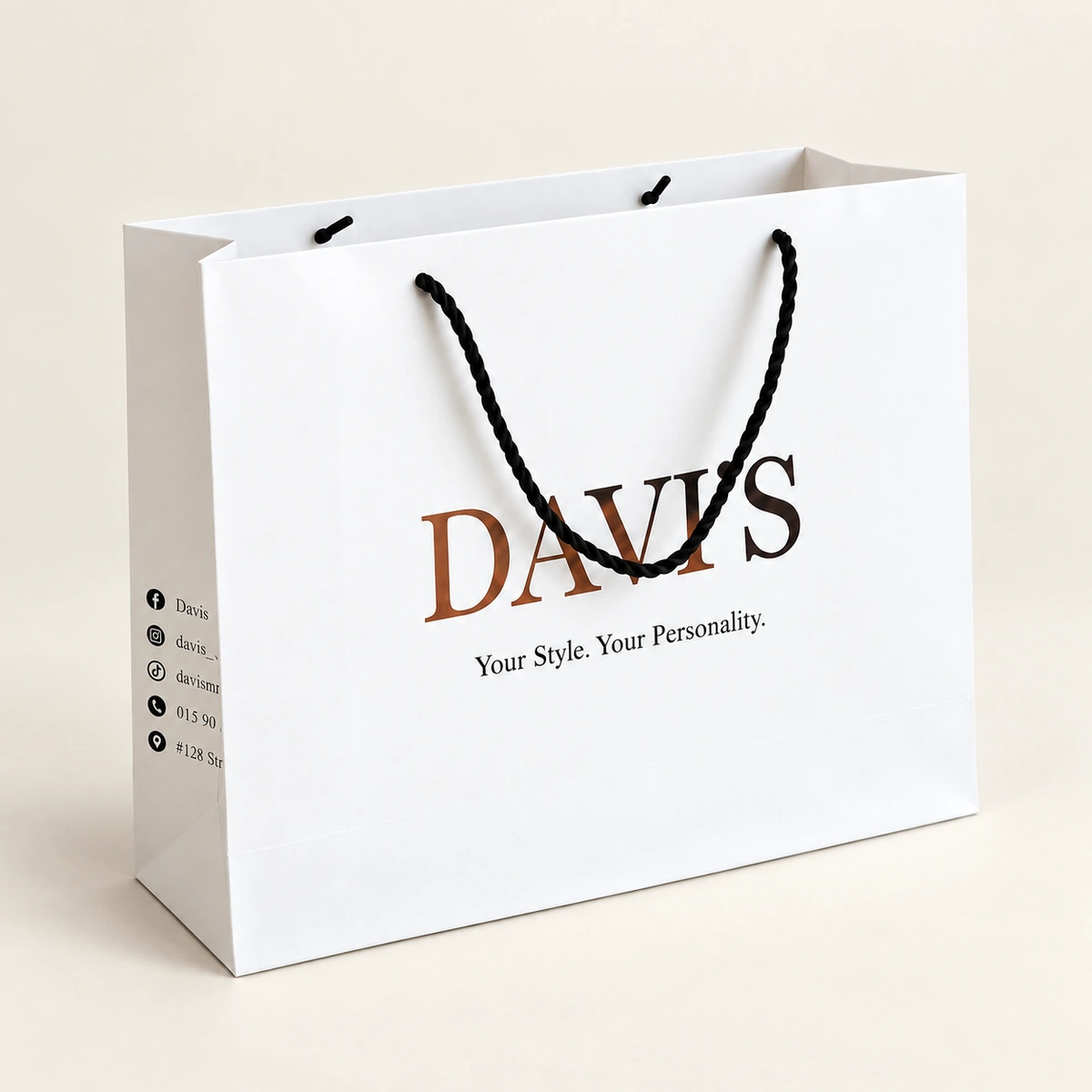
Rope handles have a cord-shaped profile rather than a flat ribbon profile. Their diameter, texture, length and attachment influence the feel in the hand. Specify the material you want in the quotation; “rope handle” does not automatically mean cotton.
For boutiques selling a mix of folded garments and accessories, this style offers a straightforward design to compare across several bag sizes. Keep the handle color consistent if you want the sizes to look like one packaging family.
Try a filled sample instead of judging comfort from an empty bag. Inspect the handle entry points and inside fastening, and make sure the loops give staff enough clearance for loading. A cord that looks proportionate on a small bag may need a different specification on a larger one.
4. Riveted handle paper bags
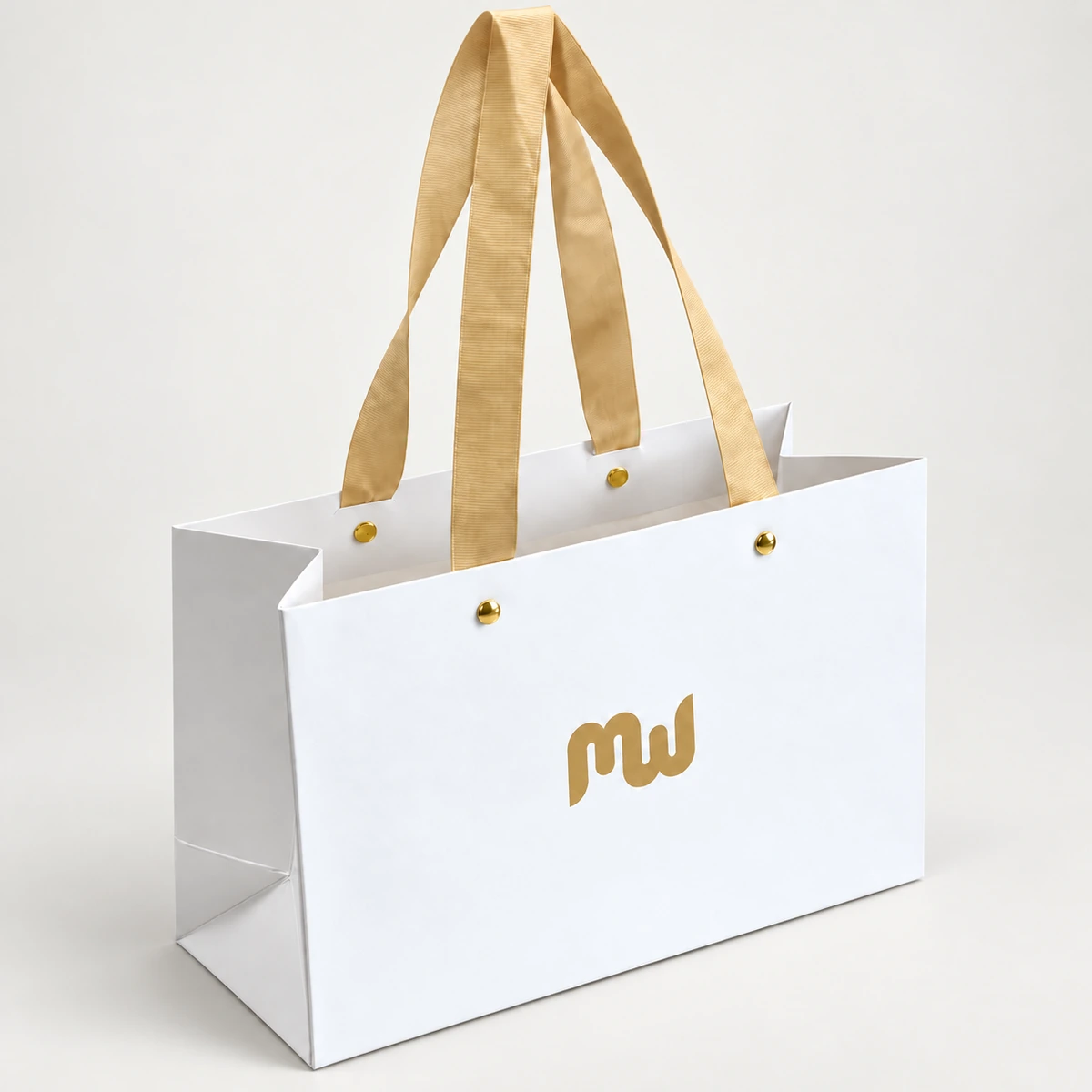
Riveted handles are identified by the visible fasteners at the attachment points. Here, the connection itself becomes a design detail. The handle material and length still need to be specified separately.
This style can suit a fashion collection or gift presentation where the hardware works with the brand’s visual language. Review the rivet color alongside the handles, printed logo and paper, rather than selecting each element in isolation.
Inspect both sides of every attachment on the sample. For clothing, the inside deserves particular attention: exposed edges or an awkward backing could catch tissue or a delicate garment during packing. Also test the intended carrying position. Long handles in a picture do not establish comfortable shoulder clearance for your finished specification.
5. Die-cut handle paper bags
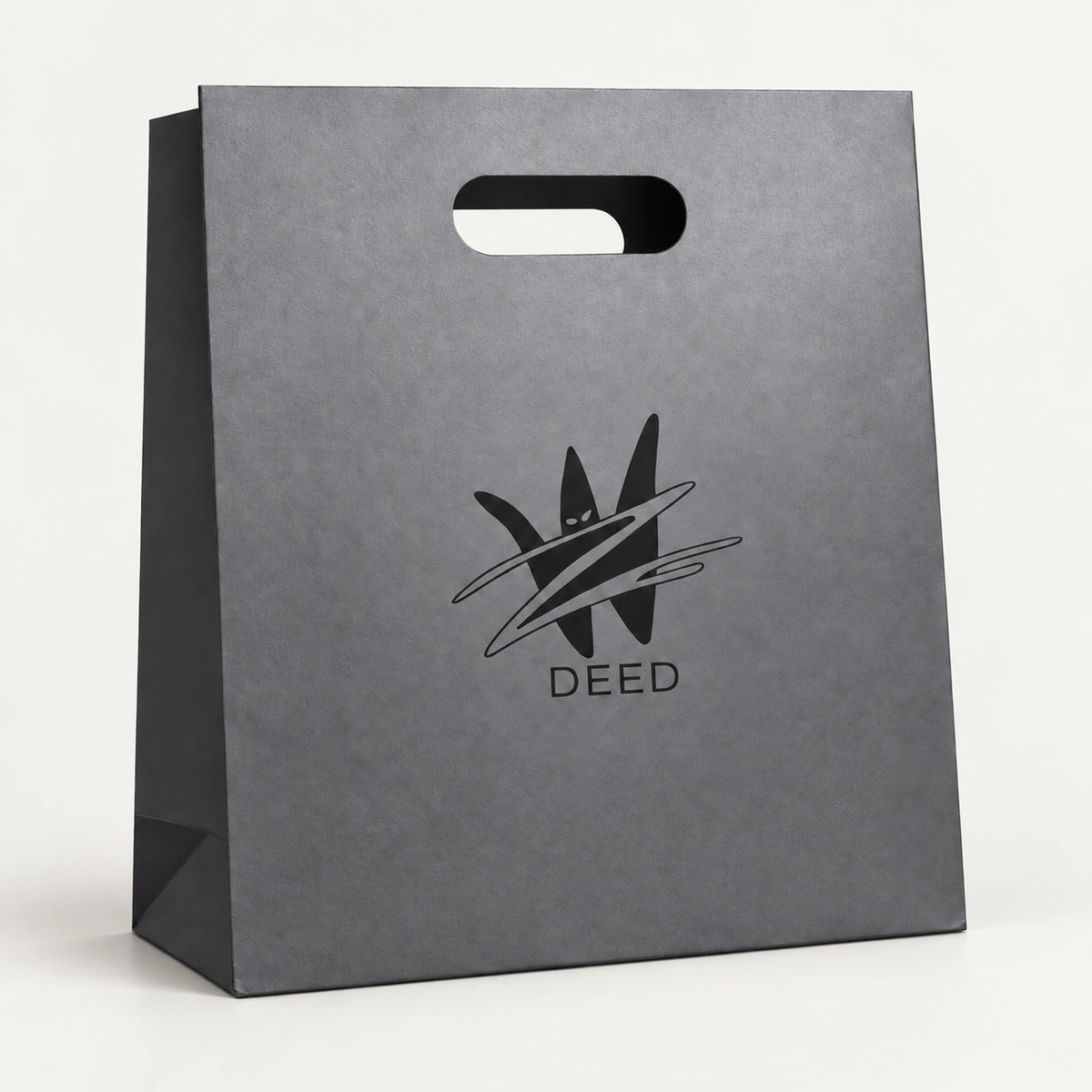
A die-cut handle is an opening in the bag body, so there is no separate carrying loop. The position and shape of the opening influence both the appearance and the space available for your hand.
Consider it for a compact apparel or accessory presentation when a clean outline is part of the brief. Keep the opening clear of important artwork, and plan the garment’s folded height around the grip area. Filling the bag right up to the opening can make it awkward to carry.
Pay attention to the paper and reinforcement around the cutout. Test finger clearance and the edge feel with the actual packed contents. This style should be selected from a suitable sample, especially if a small-looking purchase includes a comparatively heavy accessory or box.
6. Twisted handle paper bags

Twisted handles use slender cord loops with a visibly twisted form. PAQIVA’s Twisted Handle Paper Bags use a paper–plastic composite twisted cord, so this option should be specified by its actual composition rather than described as an all-paper handle.
The style is worth comparing for everyday apparel purchases, such as a folded T-shirt or small accessories, when the brief calls for a simple shopping-bag appearance. Brown paper and restrained printing offer one visual direction; the handle style does not dictate the entire design.
Examine the handle attachment areas and any fixing patches, whether inside or outside the bag, and try the filled sample. If your purchasing brief includes material restrictions, make the handle composition part of the written specification alongside the paper, coatings and other components.
7. Flat paper handle bags
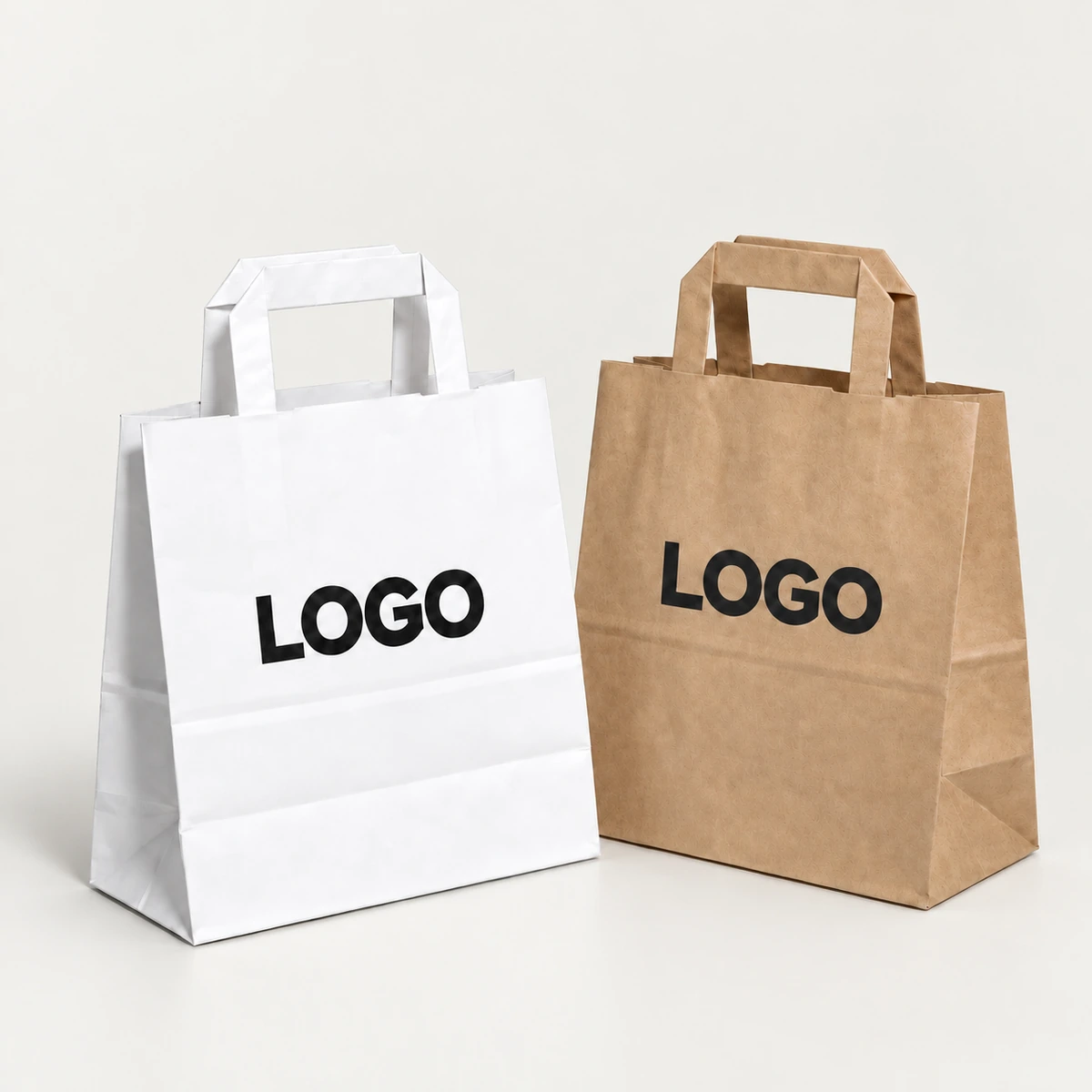
Flat paper handles are made from flat paper strips bonded to the bag. Their broad profile distinguishes them from the rounded loops of twisted handles. The attachment, folding and handle dimensions affect how the bag opens and feels when carried.
For clothing retailers, this is another option to compare for everyday purchases with a simple visual identity. The white and brown examples show how the same handle type can support different paper and print directions.
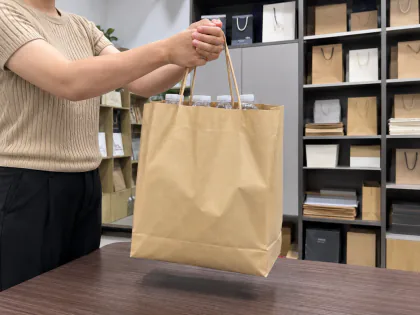
During sampling, have a staff member open the bag, pack a wrapped garment and lift the filled bag by both handles. Look for practical loading clearance and a comfortable grip. A paper handle alone does not establish the environmental characteristics of the complete finished bag.
Size the bag around the packed clothing
Measure the garment after folding it the way staff will pack it. Include tissue, sleeves, gift boxes and any accompanying accessories. A T-shirt, knitwear set and boxed shirt can need different proportions even when they share the same brand packaging.
PAQIVA uses L × W × H: front width × side depth × bag-body height, excluding the handles. State units clearly. Finished external dimensions are not the same as usable internal space, so use a sample to resolve fit rather than subtracting a guessed allowance.
Check that the package sits naturally without forcing the sides outward, and that staff can slide it in and remove it without crushing the wrapping. Leave the handle attachment or cutout area usable. If the store needs several sizes, base them on actual purchase combinations rather than making every bag the same proportions at a different scale.
For size starting points and further garment examples, see PAQIVA’s clothing paper bag guide.
Approve the sample before production
An unprinted sample can help establish size, opening and carrying behavior. Review printed appearance and finishes on a sample that represents those features before approving them for production.
Use one short packing-and-carrying check for the shortlisted styles:
- Pack the full intended purchase, including wrapping and boxes.
- Lift it by both handles and walk with it to assess grip and balance.
- Inspect the handle connections, top edge, base and seams afterward.
- Remove the contents and look for snagged tissue, squeezed corners or difficult access.
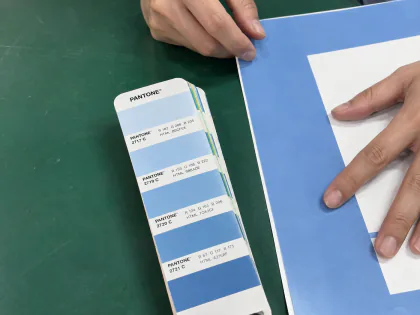
- Compare the logo position, handle fall and agreed colors on the relevant printed sample.
Record the approved size, handle specification, paper, printing and finish together. Comparing quotations on that same basis makes the differences between styles easier to judge.
Request a quotation for your clothing bags
Send PAQIVA your preferred handle style—or two options to compare—along with the packed garment dimensions, expected contents and weight, quantity by size, artwork and delivery destination. Include your required use date so sample, production and shipping arrangements can be discussed for the project.
If the size is still being decided, send the packed-item measurements and explain how the clothing will be presented. Email your brief to sales@paqiva.com, or see PAQIVA’s contact details to discuss the specification.