









Custom Paper Bag MOQ: What Changes at 100, 500 and 1,000 Bags?
See how order quantity affects custom paper bag options, setup cost per bag and production methods, with a practical guide to trial orders and larger runs.
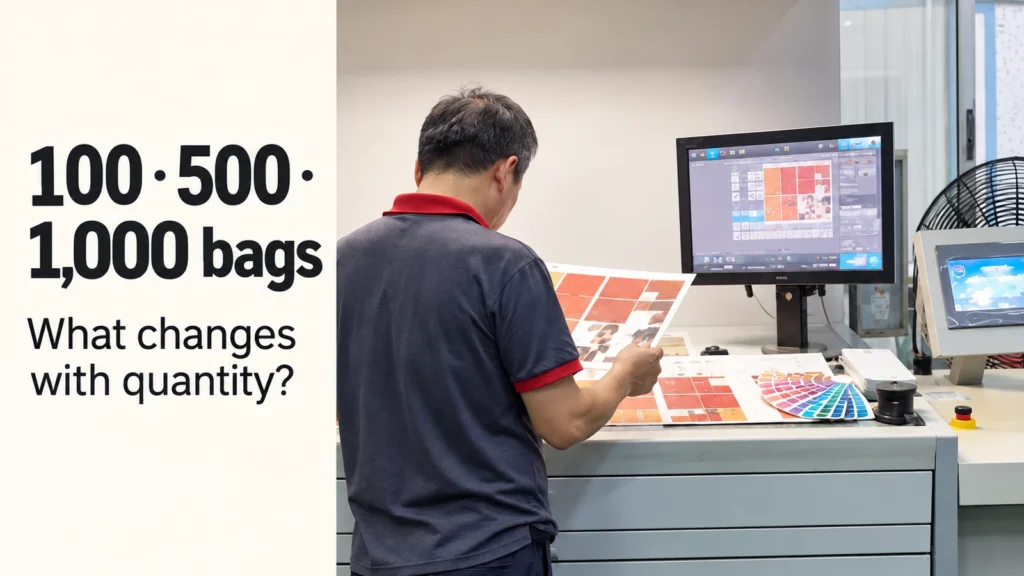
100 bags can suit a trial, 500 can support a small launch, and 1,000 can make sense for a design you expect to reorder. The practical differences are the specifications worth considering, how setup costs are shared, and how much stock you are ready to hold.
PAQIVA offers selected custom paper bag specifications from 100 bags. The right minimum order quantity (MOQ) still depends on the size, paper, handles and finish you choose.
What changes at 100, 500 and 1,000 bags?
Compare quantities for one size, one design and the same specification. An order of 1,000 bags split across ten designs may involve repeated setup work.
| Quantity | When it can make sense | Main trade-off |
|---|---|---|
| 100 bags | Testing a new size, design or selling idea | Less stock to commit to, but more setup cost in each bag. Start by checking readily available materials and handles. |
| 500 bags | A small launch or a design with clearer demand | Setup is spread across more bags. Compare the extra spend with how quickly you will use the stock. |
| 1,000 bags | Repeat use after the size and design are confirmed | Setup contributes less per bag, but cash and storage needs rise. Special materials and finishes still need confirmation. |
These quantities do not automatically unlock different paper grades or guarantee a particular finish. Availability and the production method matter too.
Why a small order costs more per bag
A printed, laminated paper bag may go through paper cutting, printing, lamination, creasing or die-cutting, then folding, gluing and handle fitting. The operations used for your design can each involve preparation or machine setup before the run begins.
The exact route varies: an unprinted bag does not need printing, and an unlaminated bag does not need film lamination. Some automated bag-making routes also differ from sheet-by-sheet die-cutting.
Suppose the total setup cost for one unchanged job is US$100. Dividing it by the order quantity gives:
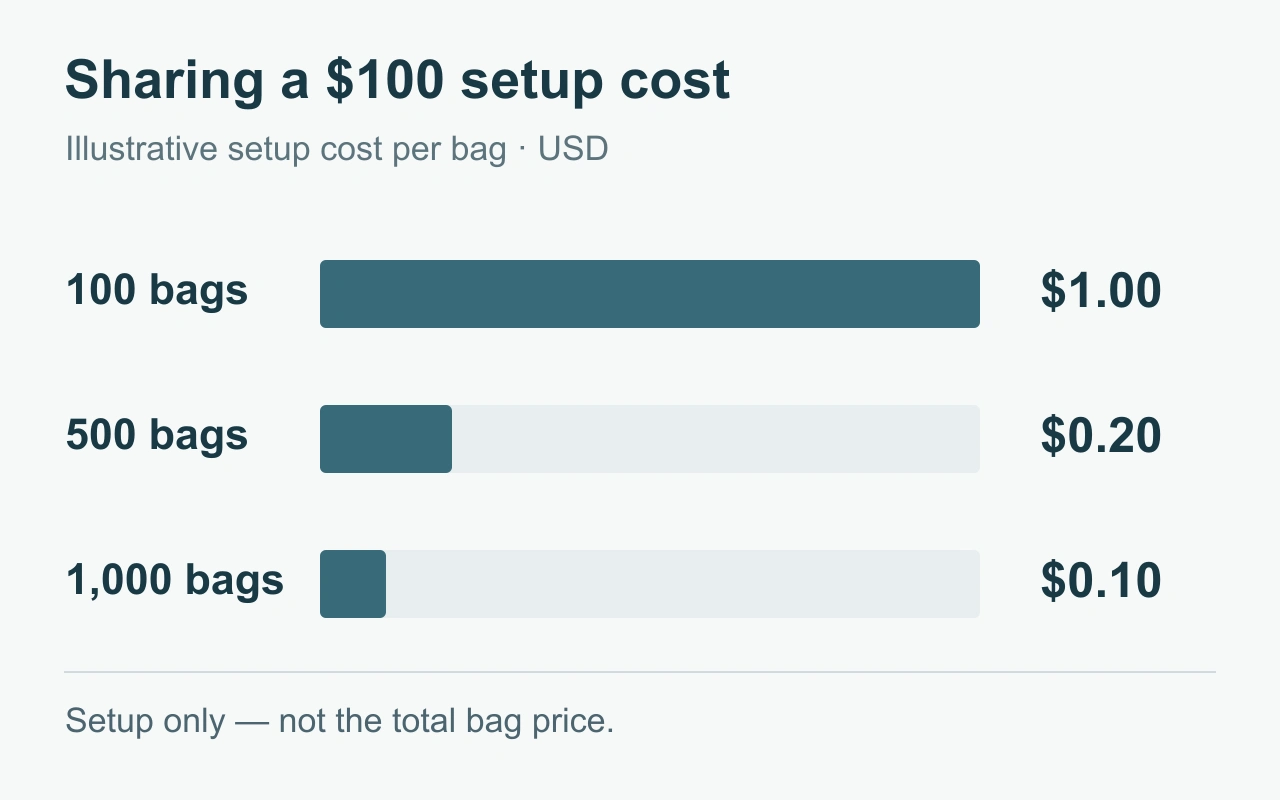
At 100 bags, setup alone adds $1.00 to each bag. At 1,000 bags, the same setup adds $0.10. Paper, printing and finishing, assembly, packing and other quoted charges still have to be included.
That is why a lower unit price can come with a higher total invoice. Compare both figures before increasing the order.
Which specifications are easier to discuss for a small run?
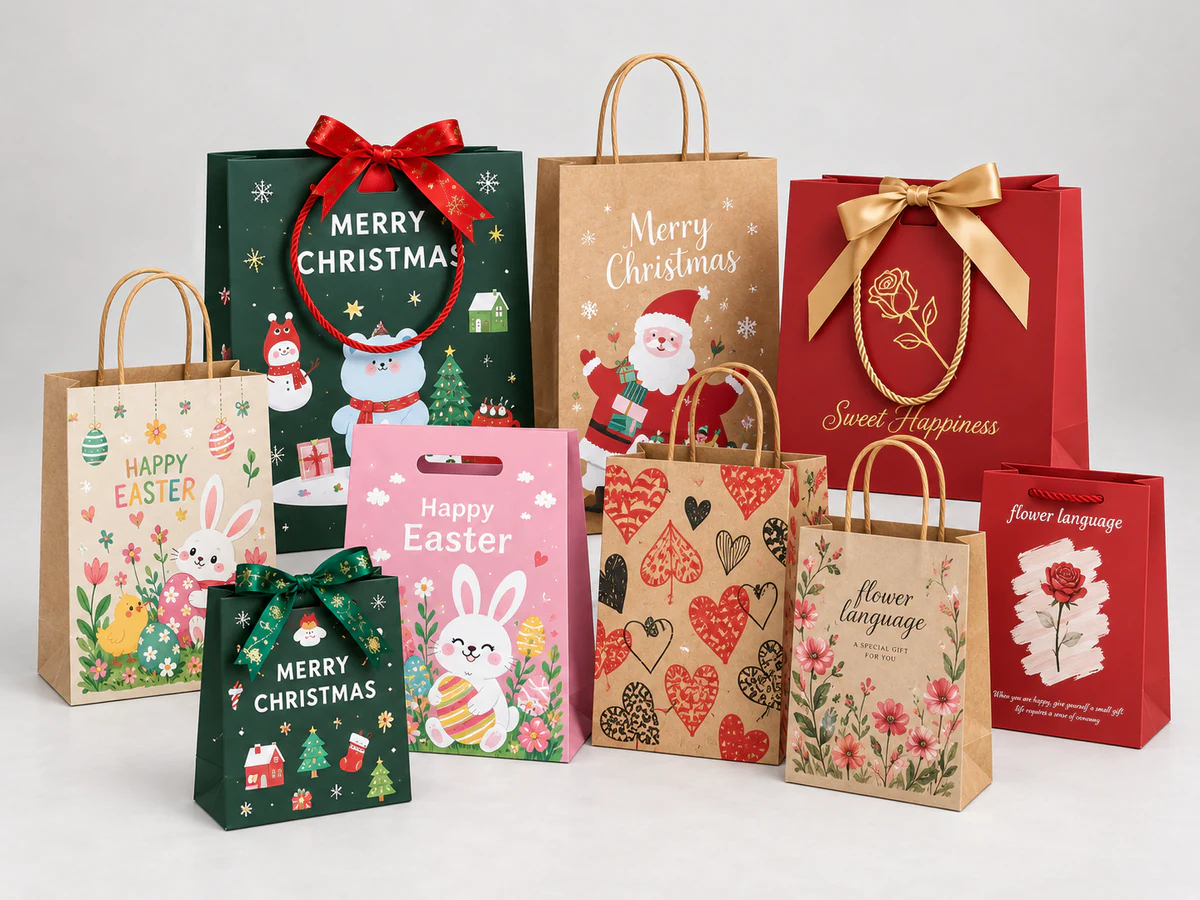
For an initial 100-bag enquiry, start with paper and handle materials already available to the supplier, a straightforward bag structure, one size and one artwork version. A kraft bag or a printed paper bag may both be candidates; the material name alone does not establish the MOQ.
A small run does not have to look plain. Ask whether your preferred print and one selected finishing effect can be made economically at that quantity. Full-colour printing or foil stamping should be checked against the actual production route, rather than assumed available or unavailable.
Ask for separate confirmation when the design needs:
- Special-order paper, a custom paper colour or an unusual thickness.
- Custom-dyed ribbon, uncommon handle components or a special insert.
- Several finishing operations, such as foil, embossing and spot UV together.
- An unusual size or structure, or several artwork versions in one order.
These choices may change the minimum quantity, material purchase requirement or setup cost. Ordering 500 or 1,000 bags does not remove every constraint.
Around 2,000 bags: check whether automation helps
Small runs often use hand-assisted bag forming or handle fitting because the time spent setting up compatible automated equipment may outweigh the labour saved. This does not mean every step is performed by hand.
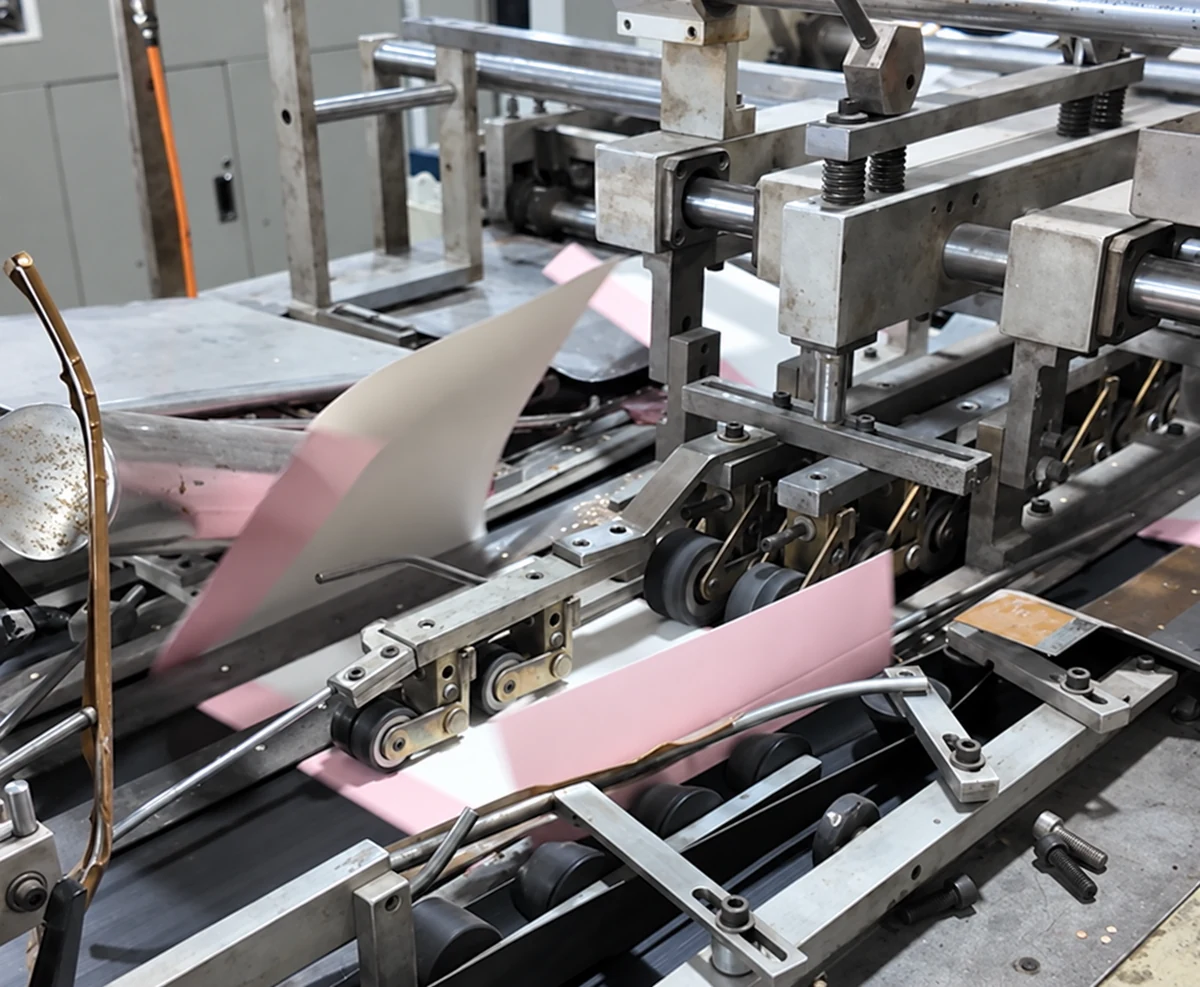
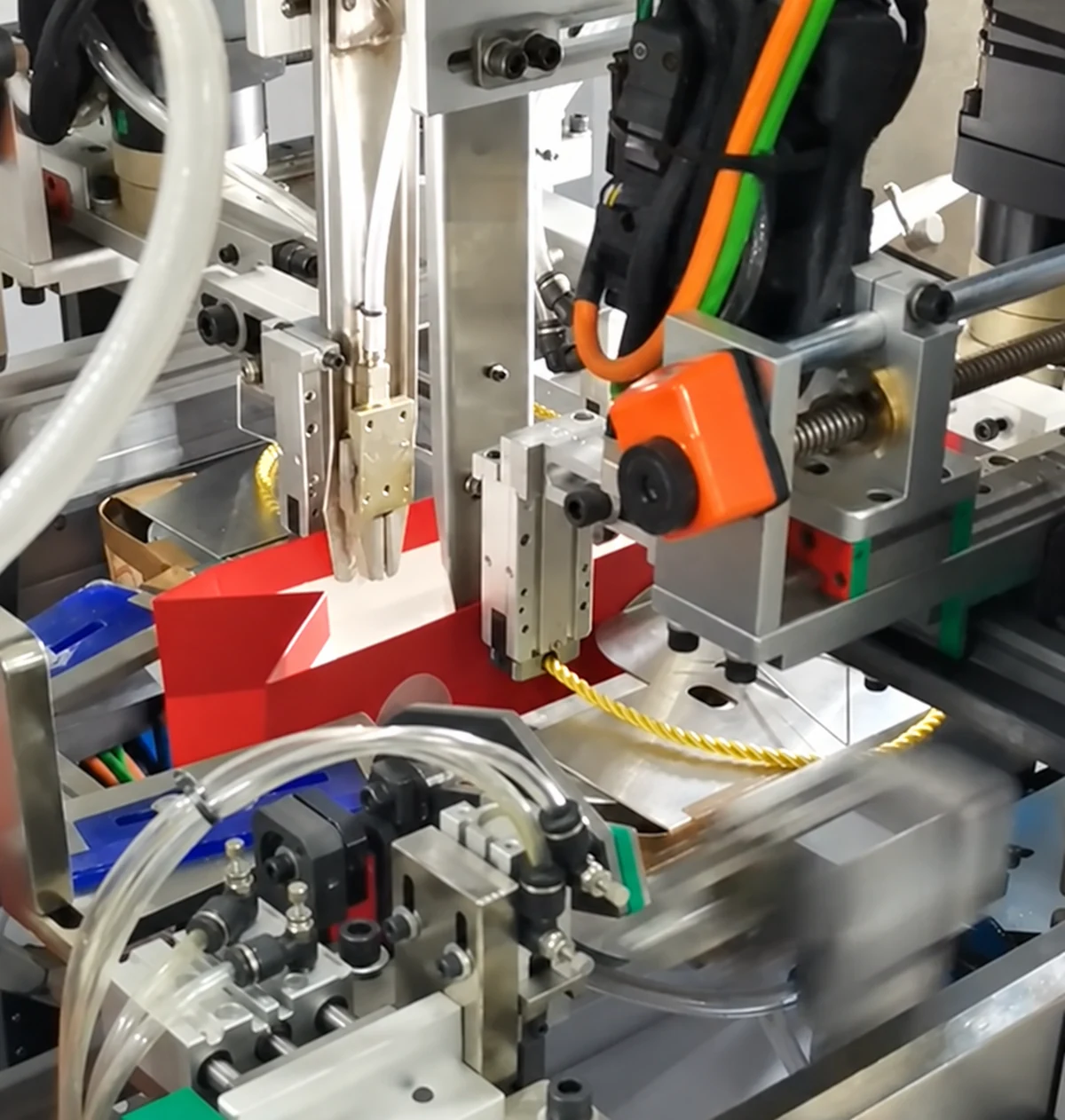
At around 2,000 bags and above, ask whether an automated route could reduce the unit cost more noticeably. The answer depends on the design and equipment available. For example, NEWLONG's sheet-fed bag-making equipment has defined paper and bag-size ranges; a higher quantity alone does not make every specification suitable.
Handle work matters as well. A machine-compatible handle arrangement may allow a different production method from one requiring individual hand fitting.
Why savings can become smaller at 6,000–10,000 bags
For the same specification, further unit-price reductions can become less noticeable around 6,000–10,000 bags. By then, setup is already shared across many units, while paper, production and packing still carry a cost for each bag.
In the same $100 example, the setup share is about $0.017 at 6,000 bags and $0.01 at 10,000 bags. That explains diminishing setup savings; it does not predict the full quoted price. Material purchasing and production changes can still affect the result.
Start with a trial or order more at once?
Choose a smaller first run when the packed fit, artwork or demand is still uncertain. Check a physical sample before confirming production; a 100-bag order is still a production commitment, not a substitute for sample approval.
Consider 500 or 1,000 bags when the sample is approved, the branding is unlikely to change and you can use the stock within a realistic period. For example, at 100 bags a month, 500 bags represent about five months of stock; 1,000 represent about ten months.
Ask for like-for-like prices at all three quantities, including setup, packing and delivery on the same basis. If you use several designs, state the quantity of each one separately.
Send PAQIVA your enquiry with the bag size, paper, handles, artwork and finishes, delivery destination, and quantities you want compared. That makes it easier to decide whether a trial run or a larger order offers better value for your project.