











Custom Ribbon Handles for Paper Bags: Textures and Logo Printing
Compare three ribbon textures and plan the width, handle drop, attachment and printed logo as one part of your custom paper bag design.
Custom ribbon handles let you coordinate a paper bag's texture, colour and branding down to the part customers hold. Start by choosing the ribbon surface, then specify its width, finished handle drop and attachment. PAQIVA can also customise ribbon printing, so a logo or short brand name can appear on the handles as well as the bag.
For a visibly ribbed finish, consider grosgrain. For a subtle chevron weave, look at herringbone. For a smoother surface with a soft sheen, consider satin. These three options appear in PAQIVA's handles and attachments selection. The right choice depends on the overall bag design and how the finished handle will be used.
Compare the three ribbon textures
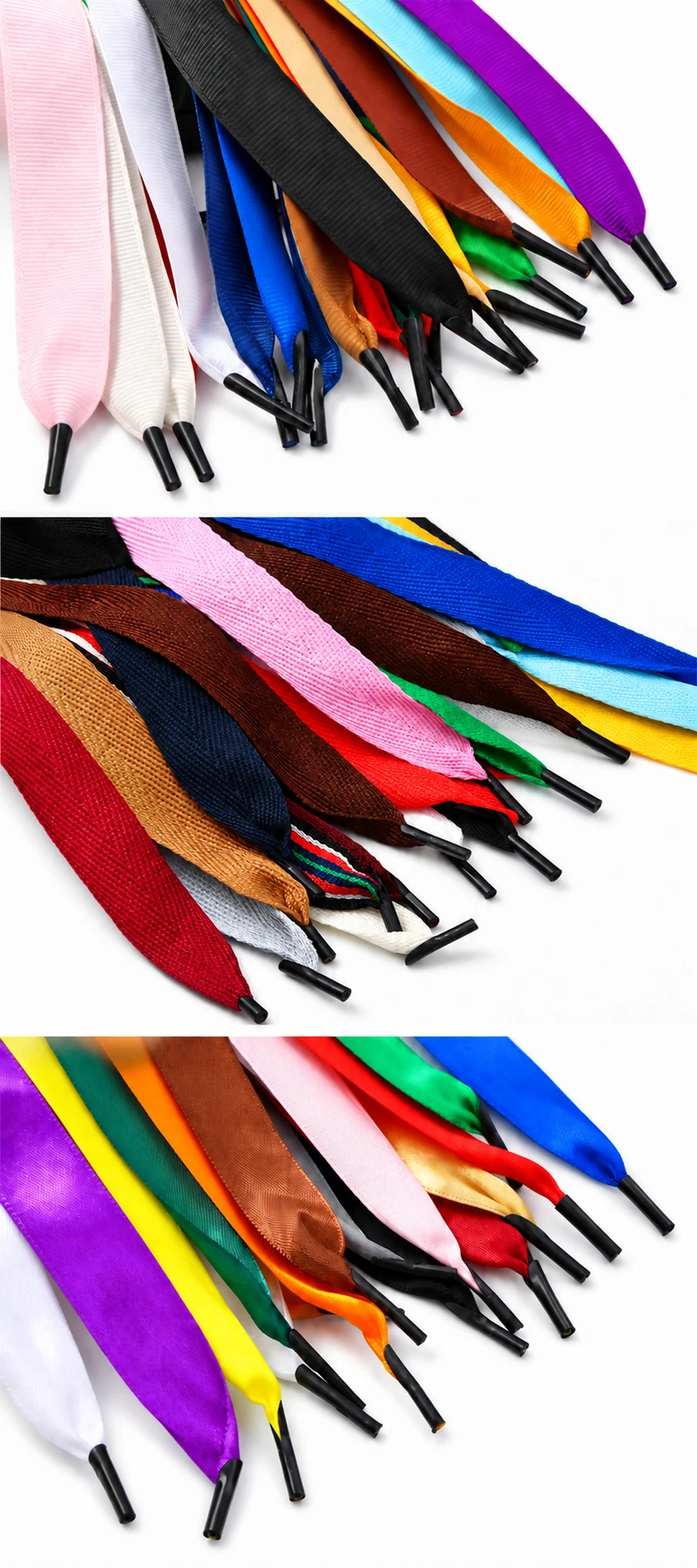
Grosgrain ribbon
Grosgrain has closely spaced ribs running across the ribbon. The texture remains part of the design even when the colour is plain: a black ribbon on a black bag can add detail without introducing another colour. It is a useful direction when you want a tailored, structured appearance alongside clean typography or textured paper.
If the ribbon will carry a logo, review the lettering on the actual ribbed surface. A small wordmark that looks clear on a screen may read differently across those ribs. Keep the artwork simple enough to remain recognisable at the finished ribbon width.
Herringbone ribbon
Herringbone has a woven chevron pattern, giving the surface a fabric-like character. PAQIVA's examples include solid colours and striped options. It is worth considering when the handle should add woven detail to a restrained bag design, especially where a smooth, shiny ribbon would create a different mood.
Look at the pattern and the printed artwork together. A striped ribbon already has a visual rhythm; adding repeated logos needs enough contrast and space to keep both legible. The herringbone name describes the pattern, so specify fibre composition separately if that matters to the project.
Satin ribbon
Satin offers a smoother appearance and a soft sheen. It can complement a metallic-looking logo, a pale gift bag or a dark presentation bag. The changing highlights give the handle its own presence even with a small amount of printing.
For a printed design, check which ribbon face will be visible after assembly and whether the reverse appearance meets your expectations. Inspect the sample under ordinary lighting as well as a product photography light. A pale logo on a reflective ribbon needs to remain readable when the ribbon curves or turns.
These names describe different surface constructions; they do not establish that a ribbon is silk, cotton or any other particular fibre. The exact material, width and colour are part of the specification. The website also lists Flat Textured Strap Handles with prepared holes as a separate option. Those straps should be discussed separately when comparing ribbon handles.
Coordinate the ribbon with the whole bag
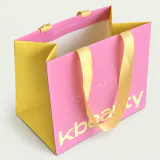
A matching ribbon colour can keep attention on the bag's logo. A contrasting ribbon can become a second brand element: for example, a light ribbon against a dark bag creates a clear outline at the top. Treat these as design choices rather than rules about which finish is more luxurious.
Compare physical ribbon and paper samples together. The same intended colour can look different on a woven surface, a smooth ribbon and printed paper. A screen image is useful for choosing a direction; the paired samples are what you should use to approve the combination.
Width and length affect both appearance and use. The visible loop must leave enough room for fingers and for opening the bag around the packed product. A shoulder-length handle is a different brief from a short hand-carry loop. State the intended carrying style instead of relying on a photograph to communicate the length.
| Detail to specify | What it means for the finished handle |
|---|---|
| Ribbon width | The flat band width, including the space available for printing |
| Finished handle drop | The vertical distance from the bag's top edge to the top of the loop in the agreed measurement position |
| Ribbon cut length | The total piece used, including ends needed inside the bag or at the fixing points |
| Attachment position | The spacing and location of the holes, slots or internal fixing areas |
Handle drop and cut length are different measurements. Two bags with the same visible drop may need different ribbon lengths because their fixing positions and concealed ends differ.
Add a printed logo to the ribbon
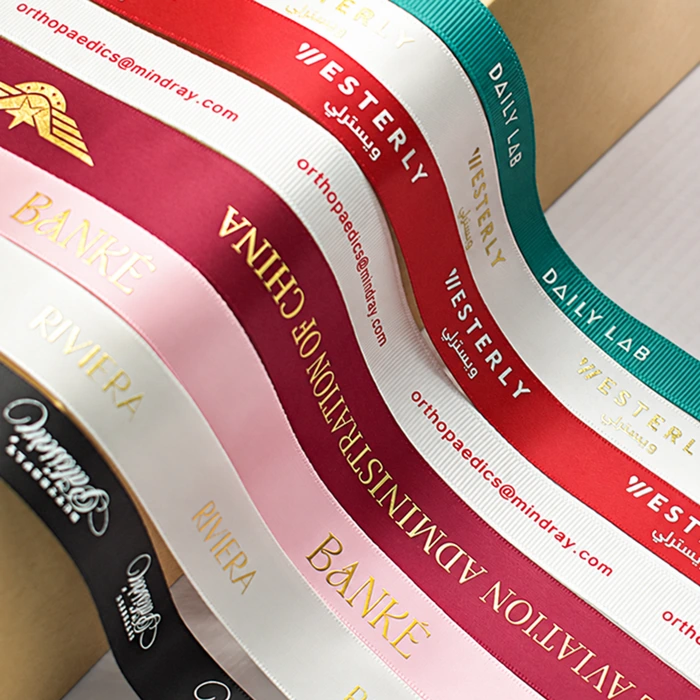
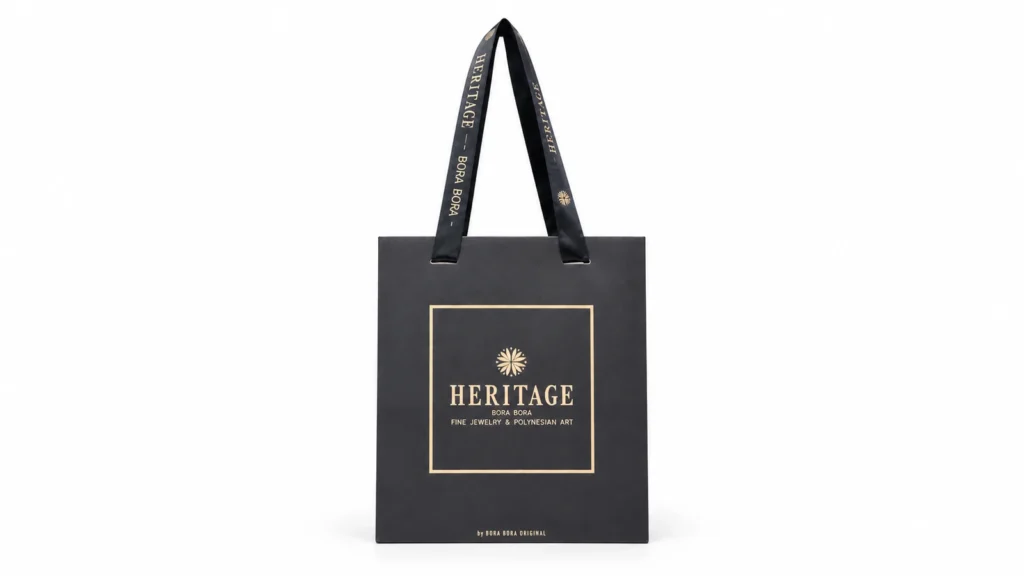
Printed ribbon can extend the bag's branding through a repeated name, a small emblem or a short phrase. Used here as a design example, the black bag shown at the beginning combines a gold-coloured front design with matching lettering on the handles. The two surfaces create a coordinated appearance while the handles give the brand name another visible position.
Start with the approved logo artwork and a ribbon colour. Then decide whether you want a repeating design along the ribbon or a particular logo placement on the visible handle. Repeating print and a logo positioned at a specific point require different layout instructions. Do not assume that a logo will land in the same place on every assembled handle unless that placement has been specified and confirmed.
The most useful print decisions are:
- Logo size and edge clearance. Define the printed width within the ribbon, leaving space beside the edges. Review fine lines and small letters at actual size.
- Repeat spacing. State the distance between repeated marks, or show the intended spacing in the artwork. A long company name may need a different arrangement from a small symbol.
- Reading direction. Show how the text should face on both sides of the loop. Check it on an assembled bag, where the ribbon bends and returns towards the second fixing point.
- Printed face and colour. Identify the face to be printed and the intended colour or appearance. A gold-coloured result in a photo does not establish whether it was made with foil or another process.
The printing method, detail level and repeat layout need to suit the selected ribbon. Ask for a printed sample of that combination, rather than approving artwork only on a flat digital drawing. The sample should show whether the logo remains clear as the ribbon curves and whether the print surface is suitable for handling.
Choose the attachment separately from the ribbon
Ribbon texture does not determine how it is fixed to the paper bag. A satin, grosgrain or herringbone option still needs an agreed attachment and end preparation.
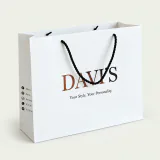
Threaded ribbon handles pass through prepared openings in the bag. Specify the opening shape, visible ribbon position and how the ends are retained. The black tips in the texture samples illustrate those particular sample ends; they are not a required feature of every ribbon handle.
Glued-in ribbon handles have their ends fixed inside the bag. This can keep the outside face free of visible handle holes. The embedded length, fixing area and surrounding top construction belong in the sample review. Our threaded versus glued-in ribbon handle guide explains the structural comparison in more detail.
Riveted attachments use visible hardware as part of the design. The ribbon or strap, hole preparation, rivet and backing need to work together. Choose the appearance and structure as one assembly rather than treating a rivet as a universal strength upgrade.
Approve the printed handle on an assembled sample
A ribbon swatch helps you select texture and colour. A finished sample shows how the chosen ribbon behaves as a handle. Load it with the intended packed contents, bring the loops together and carry it as a customer would. Check comfort, twisting, the fixing areas and the bag around them; ribbon width alone is not a load rating.
For printed handles, inspect both loops from the front and back. Look for readable lettering, the agreed repeat position and acceptable appearance around bends. Include handling and rubbing of the printed area in the agreed sample checks, and discuss likely damp exposure if relevant. Approve the complete combination before mass production.
Send PAQIVA your bag dimensions, intended contents, quantity, preferred ribbon texture and colour, carrying style and logo artwork. Include a reference for the printed handle layout if you have one. Request a custom paper bag quotation to develop the ribbon, attachment and bag together. PAQIVA also provides free custom-size dielines and paper bag design assistance to help prepare your project.