











Matte vs Gloss vs Anti-Scratch Lamination for Paper Bags
Choose a paper bag finish by appearance, daily handling and cost. Compare a supplied matte scuff demonstration, then check real samples before paying for extra protection.
If you are choosing a matte film for black, dark brown or deep purple printed paper bags, PAQIVA usually recommends anti-scratch matte lamination. It is worth considering when visible handling marks would spoil the presentation, especially for higher-value products. Standard matte or gloss can still be the right choice when the sample looks good after the handling it will actually receive.
First check whether the paper needs lamination at all. If it does, choose the look you want, then decide how much surface protection the bag needs. In this guide, the anti-scratch option means anti-scratch matte lamination, matching the supplied comparison below.
Matte, gloss and anti-scratch matte: what changes?
| Finish | Appearance and feel to check | A useful starting point |
|---|---|---|
| Standard matte | Softer reflections and a quieter appearance. Check the actual surface texture by hand. | A matte look where the tested level of everyday marking is acceptable. |
| Gloss | Stronger reflections and a shiny appearance. Tilt the sample to see how glare affects the print. | Colourful or bold designs where shine is part of the intended look. |
| Anti-scratch matte | A matte appearance with added resistance to everyday scuffing. Check the actual texture by hand. | Dark matte bags, higher-value presentation or bags that will receive more handling. |
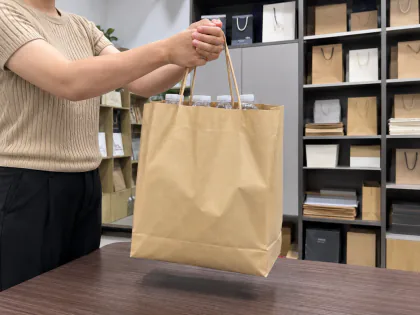
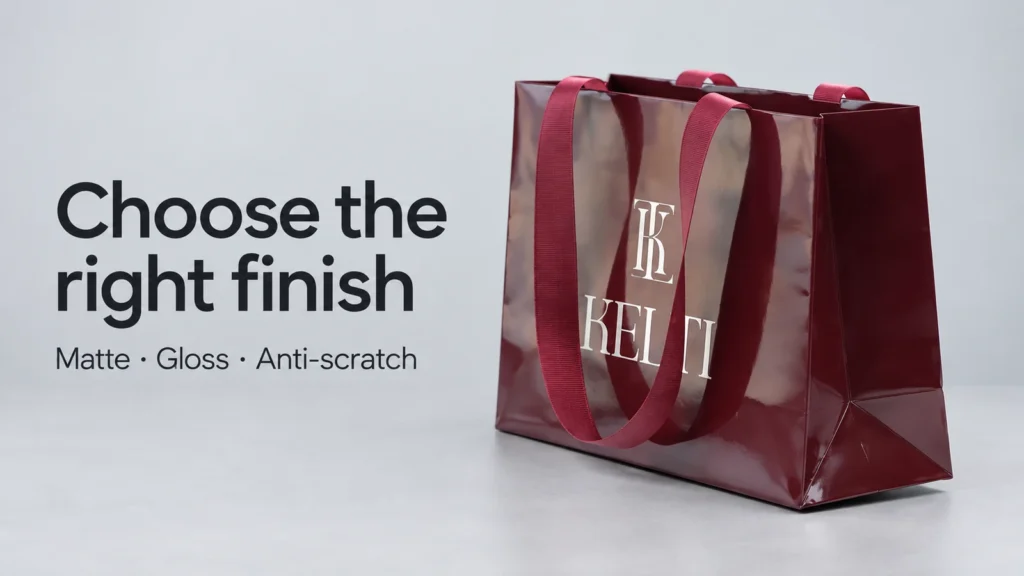
The glossy burgundy bag in the cover and the lower-sheen orange bag below are appearance references photographed separately. Their different colours and lighting do not make them a controlled finish comparison.
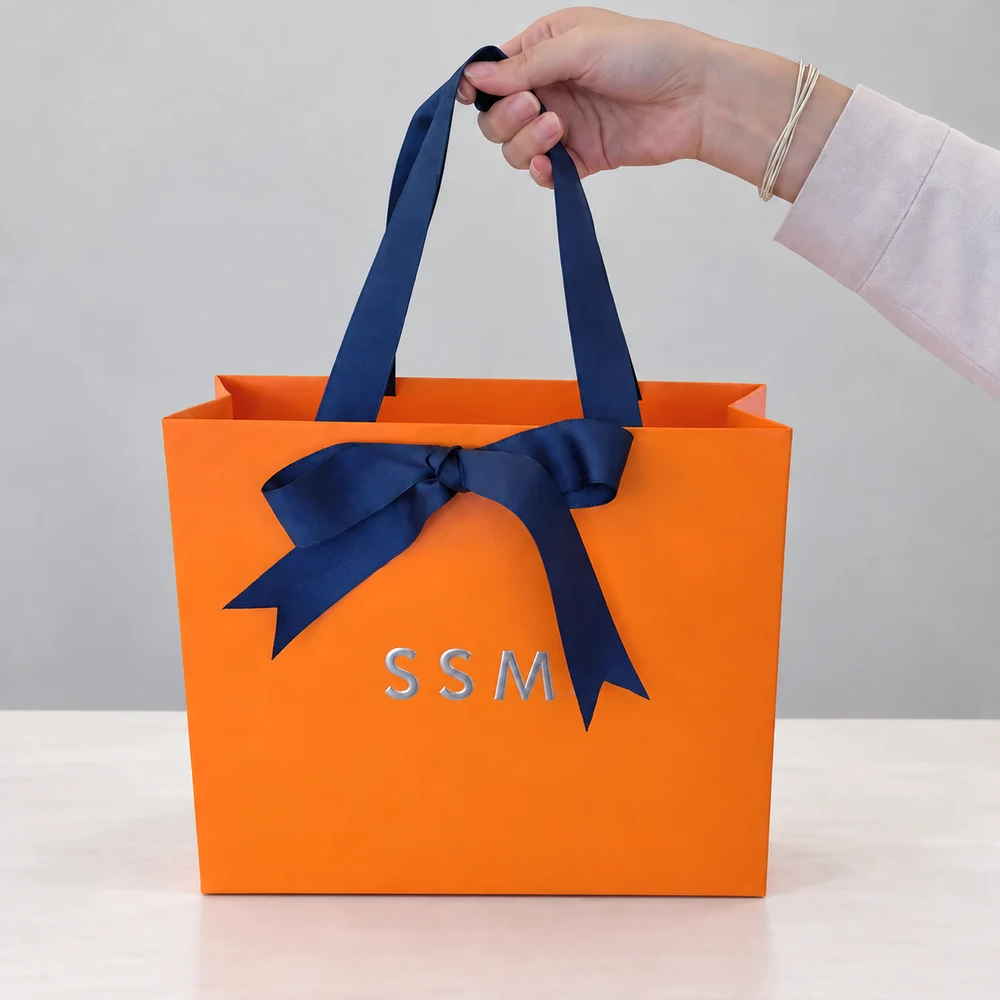
A photograph cannot tell you how a film feels. Matte does not necessarily mean velvety, and an anti-scratch film does not automatically give a soft-touch feel. If a soft or silky touch matters, request that property separately and handle the sample. Fingerprint visibility also needs its own check.
When no lamination is the better choice
For textured speciality papers and kraft papers chosen for their natural paper texture, PAQIVA usually suggests leaving the surface unlaminated. The paper itself provides the intended appearance and feel; adding a film can change those qualities and add an unnecessary process.
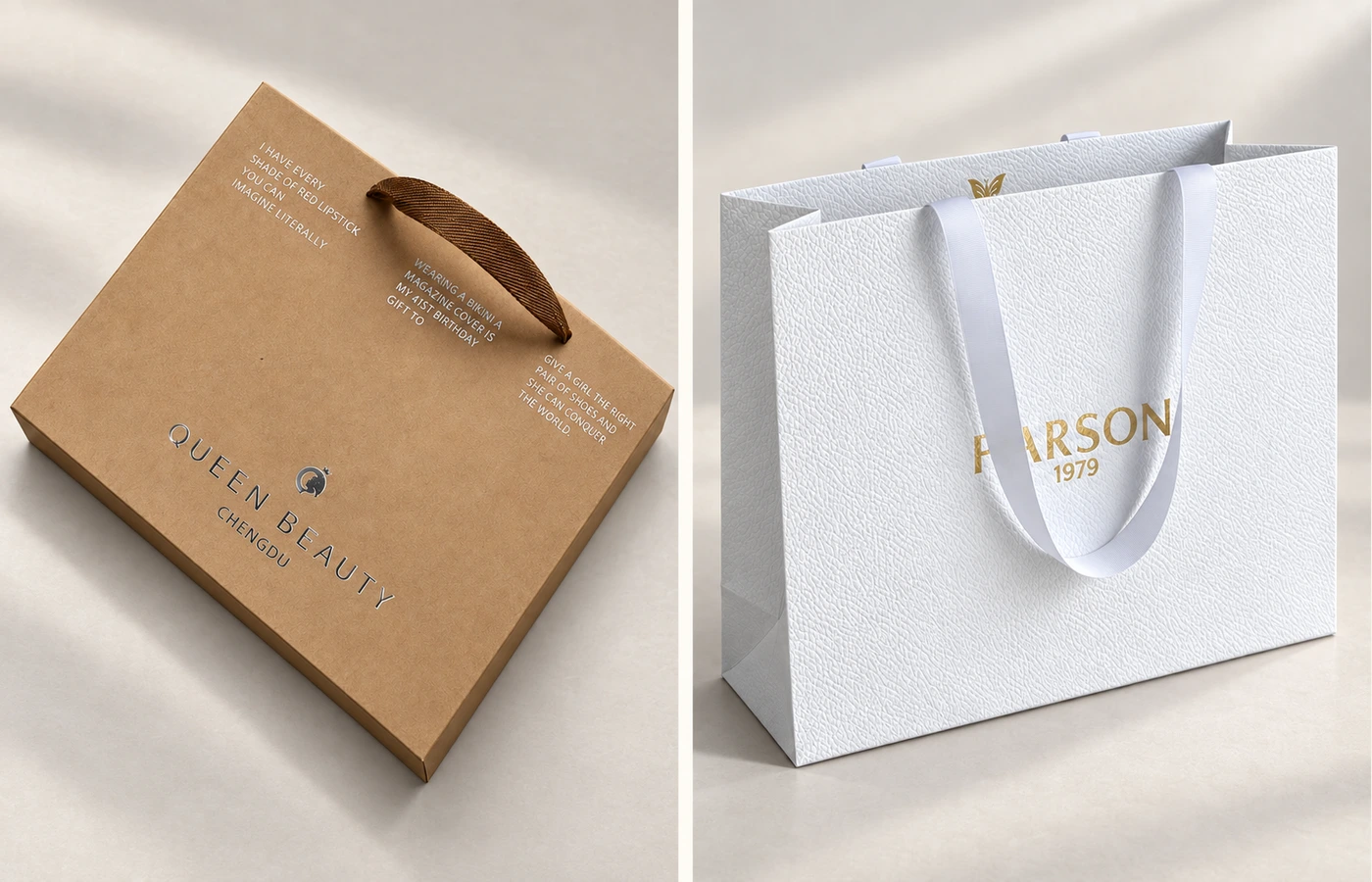
This also applies when the textured paper is dark. Colour alone is not a reason to cover its texture with anti-scratch film. Start by deciding whether you want to retain the exposed paper surface, then check printing, handling and any protection requirements on the sample.
Confirm the final treatment for the specific paper, design and use. If extra protection is needed, check how it changes the texture before approving the sample.
What the same-condition scuff comparison shows
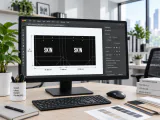
The two supplied demonstration frames below were made under the same lighting and rubbing method. They compare standard-matte and anti-scratch-matte panels; gloss is not part of this test.
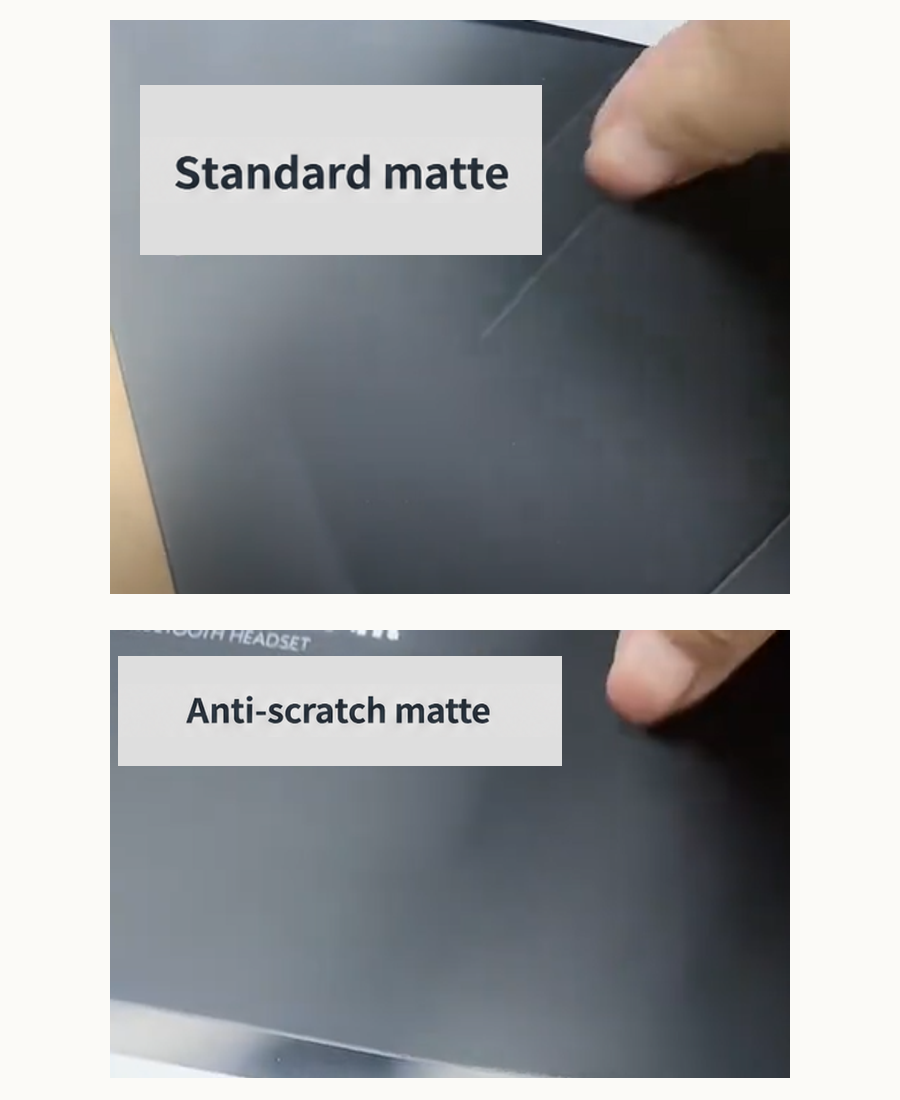
This is the practical reason to consider the upgrade on a dark matte bag: a light-looking surface mark can interrupt a large, plain printed area. Film makers also address this use. Taghleef describes scratch-resistant films for protecting packaging, particularly dark or black surfaces, while Cosmo identifies scuff-free matte films for friction during production, transport and handling.
Anti-scratch lamination helps with ordinary light scuffs from daily handling. It can still be damaged by sharp objects, grit or harder rubbing. This demonstration does not establish fingerprint resistance, feel or a guaranteed number of rubs before damage.
When is anti-scratch matte worth the extra cost?
- Dark, plain designs: black, brown and deep purple matte bags are the first cases where PAQIVA usually suggests it. Check the broad printed panels, where visible marks can be distracting.
- Higher-value presentation: a small improvement in how cleanly the bag reaches the customer may justify the upgrade for jewellery, cosmetics or a premium gift. The customer's expectations matter more than a rule that every expensive product needs it.
- More handling before use: bags may rub against one another during packing, transport, unpacking and counter handling. Compare samples after a similar routine to the one your order will follow.
In PAQIVA's experience, the difference is often modest when comparing the lamination cost alone. That is not a fixed price difference for the complete bag. Ask for two quotes with the same paper, size, printing, handles and quantity, changing only standard matte to anti-scratch matte. Compare both the extra cost per bag and the total for the order.
When can standard matte or gloss be enough?
Keep standard matte when it gives the appearance you want and the sample stays acceptable through your handling check. A light-coloured or patterned design may not need an upgrade if minor marks do not disturb the finished result. A bag used briefly with little handling may also gain less from additional scuff protection.
Choose gloss when you want a shiny, light-catching finish. Check how glare and visible handling marks affect the actual artwork under your intended lighting.
There is little reason to pay for an upgrade whose benefit you cannot see in the use that matters to you. If your design combines lamination with foil or another finish, approve the combination on the sample as well.
A simple sample check before ordering
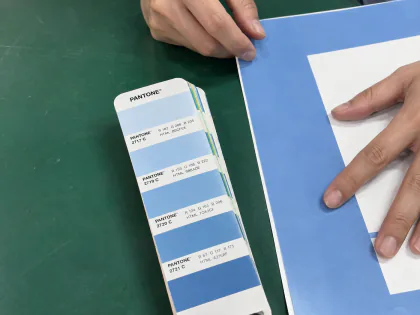
Use the same printed colour and artwork on the same paper for each candidate film. Label the samples, then compare them together:
- Look under one light. Keep the light, camera and viewing angle the same. Tilt each sample by the same amount and note whether glare hides any part of the design.
- Feel the surface. Handle the samples with clean hands. Decide whether the texture is suitable, rather than relying on a finish name or a photograph.
- Check handling marks separately. Look for fingerprints after comparable handling. For a light rubbing comparison, agree on the same clean contact material, pressure and number of passes. Photograph before and after without changing the lighting.
- Check the complete bag. Pack, unpack and handle the finished sample as your team would. Decide which visible marks are acceptable before approving production.
This is a practical selection check, not a laboratory rating. Keep the approved sample as the reference for your order.
Explore PAQIVA's print and surface finish options, or send your project details with the bag colour, artwork, quantity, intended use and any special feel or fingerprint requirements. Ask to compare standard matte and anti-scratch matte on the same design before deciding whether the extra cost is useful.