













Why Paper Bags Fail: Reinforced Tops and Bottom Inserts Explained
A neater base is only part of a dependable paper bag. Compare interiors with and without bottom cards, see where top reinforcement works, and confirm the construction through your quotation and sample.
If a paper bag tears around a handle or sags under its contents, adding a thicker bottom card may address only part of the problem. A dependable bag needs support where the product sits and where the handles pull on the paper. The folded base, glued seams and bag body must work with those areas too.
Reinforced paper bags are worth discussing when the contents are heavy, compact, rigid or likely to be carried repeatedly. A bottom insert also has a visible benefit for lighter retail purchases: it covers the folded base and gives the inside a neater, flatter finish. The right decision starts with what the bag will carry and how customers will use it.
Start with the part that is giving way
Look at the point where a sample first changes shape or starts to fail. A handle hole that elongates, a handle attachment that lifts and a bottom seam that opens are different problems. Ask the supplier to examine that area before simply increasing the paper weight or adding another piece of card.
The CEPI Eurokraft and EUROSAC industry guidelines discuss paper, glue, converting and handle construction together when assessing paper carrier bag quality. That is a useful buying principle: specify and test the finished bag as a construction, rather than treating one material feature as its load rating.
A bottom card does not reduce the weight hanging from the handles. It cannot compensate for a poorly attached handle or a base seam that has not bonded properly.
Why we include a bottom card
At PAQIVA, we currently include a bottom card as standard in our paper bags. In our experience, the added cost is usually modest, while the cleaner interior and firmer base noticeably improve presentation and everyday use. The final cost still depends on the project specification.
The card sits over the folded paper base. A suitably sized, sufficiently stiff insert can provide a flatter contact surface and spread a product's local pressure over a wider area. It can help limit sagging and support the bag's shape, particularly under a box or another compact item. Its contribution depends on its fit, stiffness and the bag underneath it.
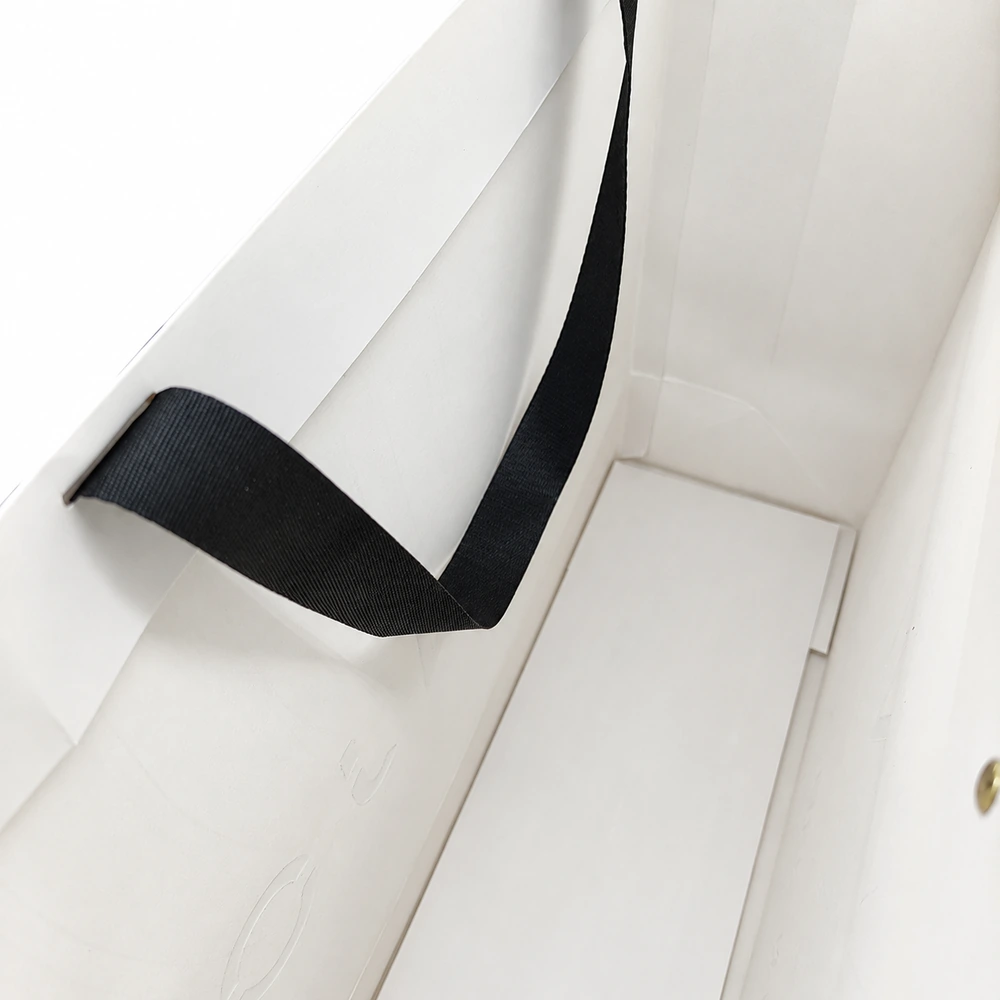
The second sample below has no additional bottom card. Its overlapping base flaps and fold edges remain visible. That is a more utilitarian interior finish, which may be perfectly suitable for some simple carry bags. For a premium presentation, covering those folds can make the bag feel more considered even before any weight is added.
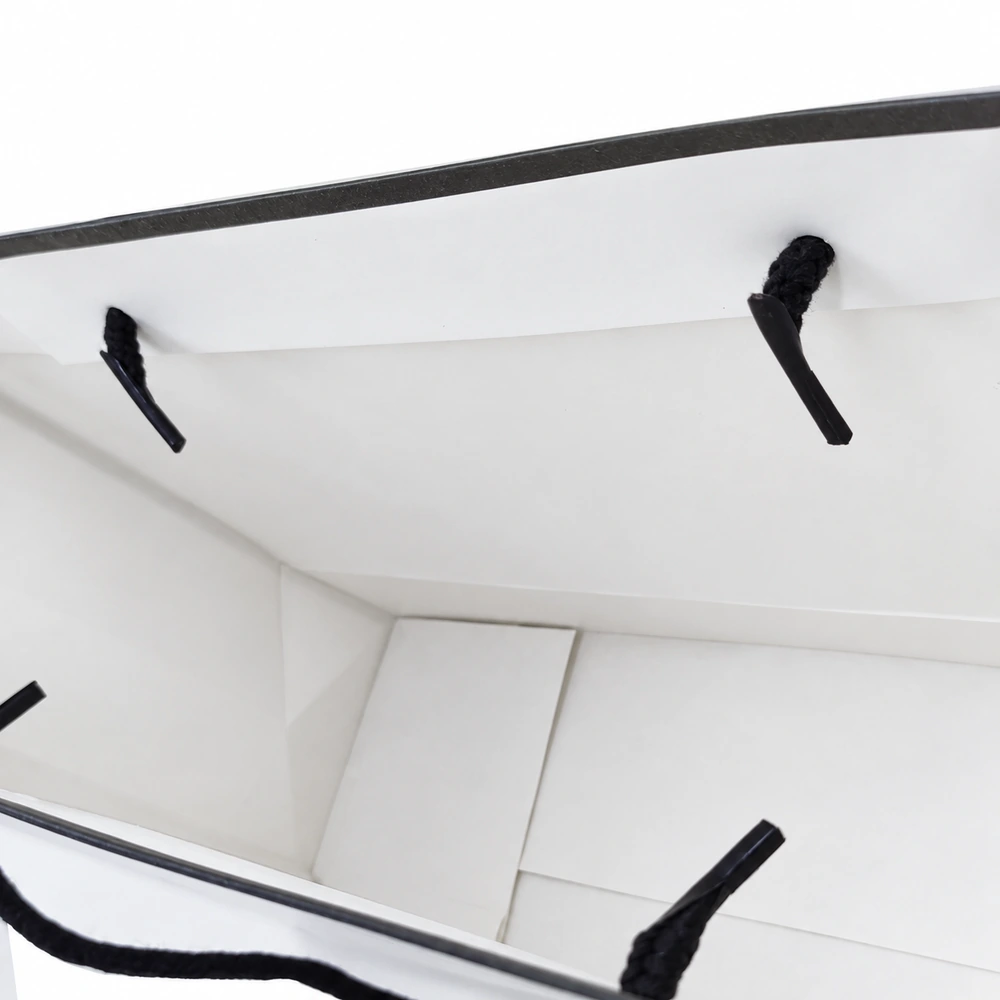
These photographs show different sample bags, so they illustrate the interior finish rather than a controlled strength comparison. The uncovered folds alone do not prove that the second bag has an inadequate load capacity.
Check the insert's fit in the opened bag. It should lie flat, cover the intended base area and allow the bag to open properly. A card that shifts, curls upward or presses sharply into a fold can make packing awkward. Confirm whether it is loose or fixed in place; neither arrangement should be assumed from the phrase “reinforced bottom.”
When the handle area needs extra support
When the bag is lifted, the handle attachments transfer the contents' weight into the bag body. Depending on the construction, extra support may come from a turned-over top edge, a card strip inside that fold or a patch around an attachment. A folded rim and a separate reinforcing card are different features. An interior photograph may show the fold without revealing what is inside it.
Give this area particular attention for heavier contents, repeated carrying or a sample that shows distortion around the connections. The useful reinforcement is the one that supports the actual attachment, rather than simply making the top edge look thicker.
For threaded cord or ribbon, inspect the holes or slots, the material around them and the way the ends are retained. For glued-in handles, ask about the attachment area, any covering patch and the bond to the chosen paper. For riveted handles, check the backing structure around the fixing. A different handle style changes where support is needed; its appearance alone does not prove it is stronger.
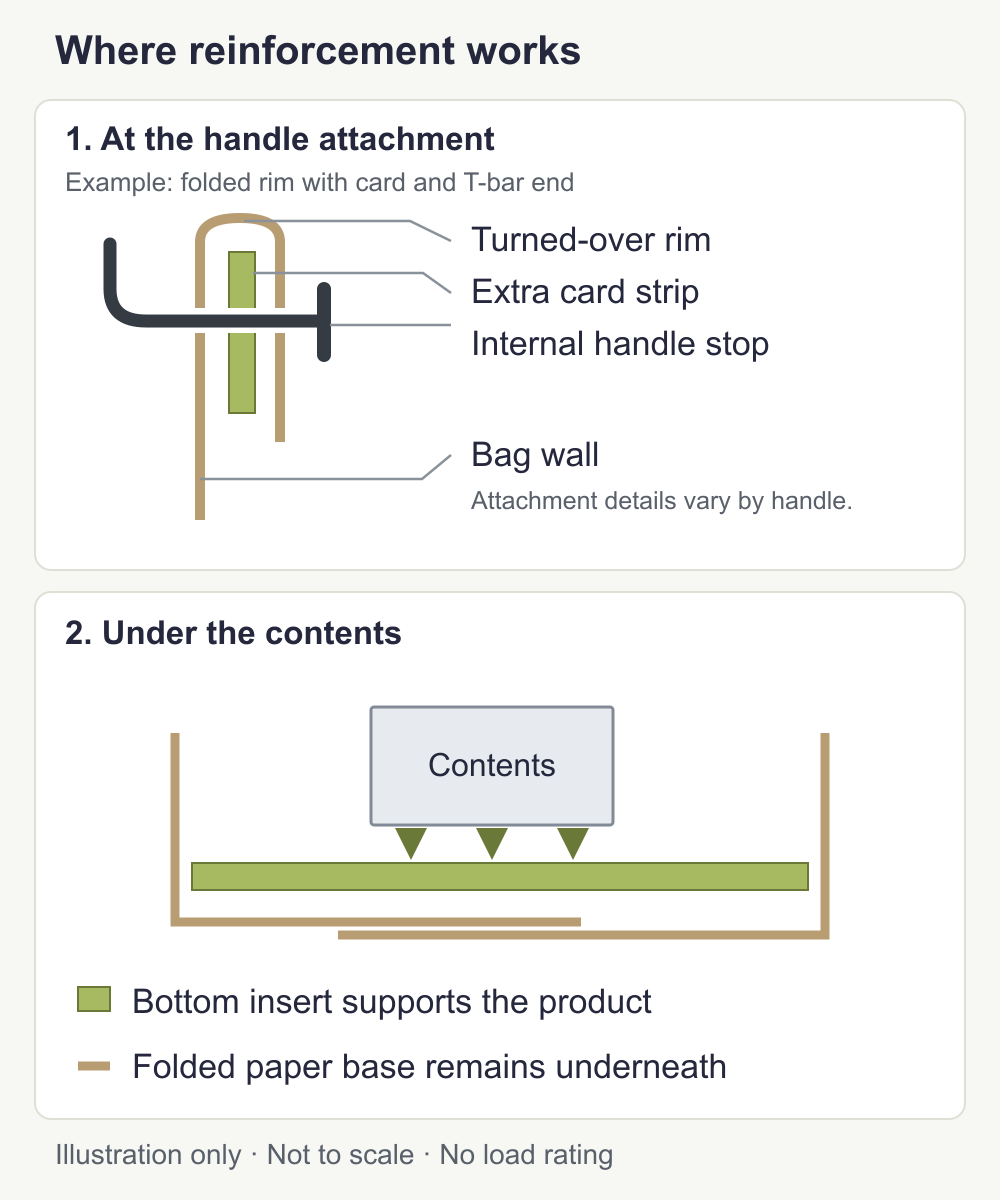
Ask for a close photograph of the inside top edge and handle connections on the proposed sample. Where a card is concealed, a labelled construction drawing or a separate cut-open sample can explain it. PAQIVA's handle and attachment options are a starting point for choosing the appearance; the supporting structure should be agreed alongside it.
Match the structure to the actual contents
Start with the packed product's weight and outer dimensions, including its box, wrapping and accessories. Then consider the contact area. A broad folded garment and a compact rigid item can place the same total weight on very different areas of the base. A sharp box corner may also need protection that a flat insert alone does not provide.
Bag size matters beyond whether the product fits. A wide base gives the insert a larger area to support, while an oversized bag can allow contents to move and load one side. Choose the usable space and insert together, then check the result with the actual product.
Also describe the journey: a short carry from a counter, a longer walk or repeated reuse. Mention likely exposure to rain, moisture or condensation. These conditions belong in the material and sample discussion; adding a card does not make a paper bag waterproof. Compare paper options for the complete design, without converting GSM into an assumed carrying capacity.
Put the construction in the quotation
“Strong paper bag” leaves too much open. Give the supplier the intended contents and use, then ask the quotation and sample specification to identify:
- Bag body: finished dimensions, paper grade and weight, plus the agreed finish.
- Top and handles: turned-over rim, any extra card or patch, attachment method and the area being reinforced.
- Bottom: folded and glued base construction, insert material, thickness or grade, dimensions, and whether it is loose or fixed.
- Acceptance checks: what will be packed, the agreed load and handling conditions, and the signs that would cause the sample to be rejected.
Confirm whether the bottom insert is supplied already in place or needs to be positioned during packing. If requesting alternative prices, keep the rest of the specification consistent so the difference relates to the proposed construction. There is no universal card thickness that makes every bag suitable for the same load.
Test the complete bag before approval
Use a finished sample made with the proposed paper, handles, attachments, glue and insert. First check that the product fits and that staff can pack and remove it comfortably. Then carry out the agreed lifting, carrying and setting-down checks with representative contents, as part of the carrying and handle integrity review. Looking at a loaded bag resting on a table does not exercise the handle connections.
Inspect it again afterwards: look for enlarging holes, tearing around attachments, lifting patches, opening seams, excessive base distortion and movement of the insert. Record the contents, load, conditions and what changed. If a weakness appears, revise the affected construction and retest the complete bag.
These practical approval checks are separate from a formal performance test. For a documented carrying-capacity requirement, agree a suitable method with the supplier or testing provider. The EN 13590 scope published by SIS covers volume and carrying-capacity testing for flexible carrier bags with handles; its application to particular retail goods is a matter for buyer–supplier agreement. A reference to the standard is not evidence that a particular bag has passed it.
Send PAQIVA your bag requirements with the packed product dimensions and weight, intended use, quantities, artwork and preferred handles. Include photographs of any existing bag problem. We can discuss the top and base construction as part of the project, with free custom-size dielines and free paper bag design support, then confirm the proposed details through the sample.