









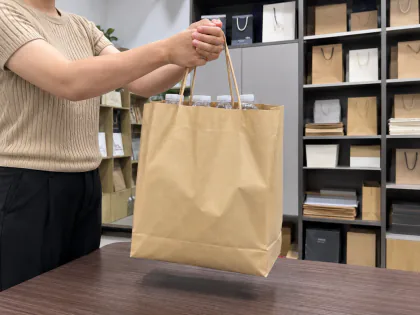
Wine Paper Bag Sizes: A Guide for One or Two Bottles
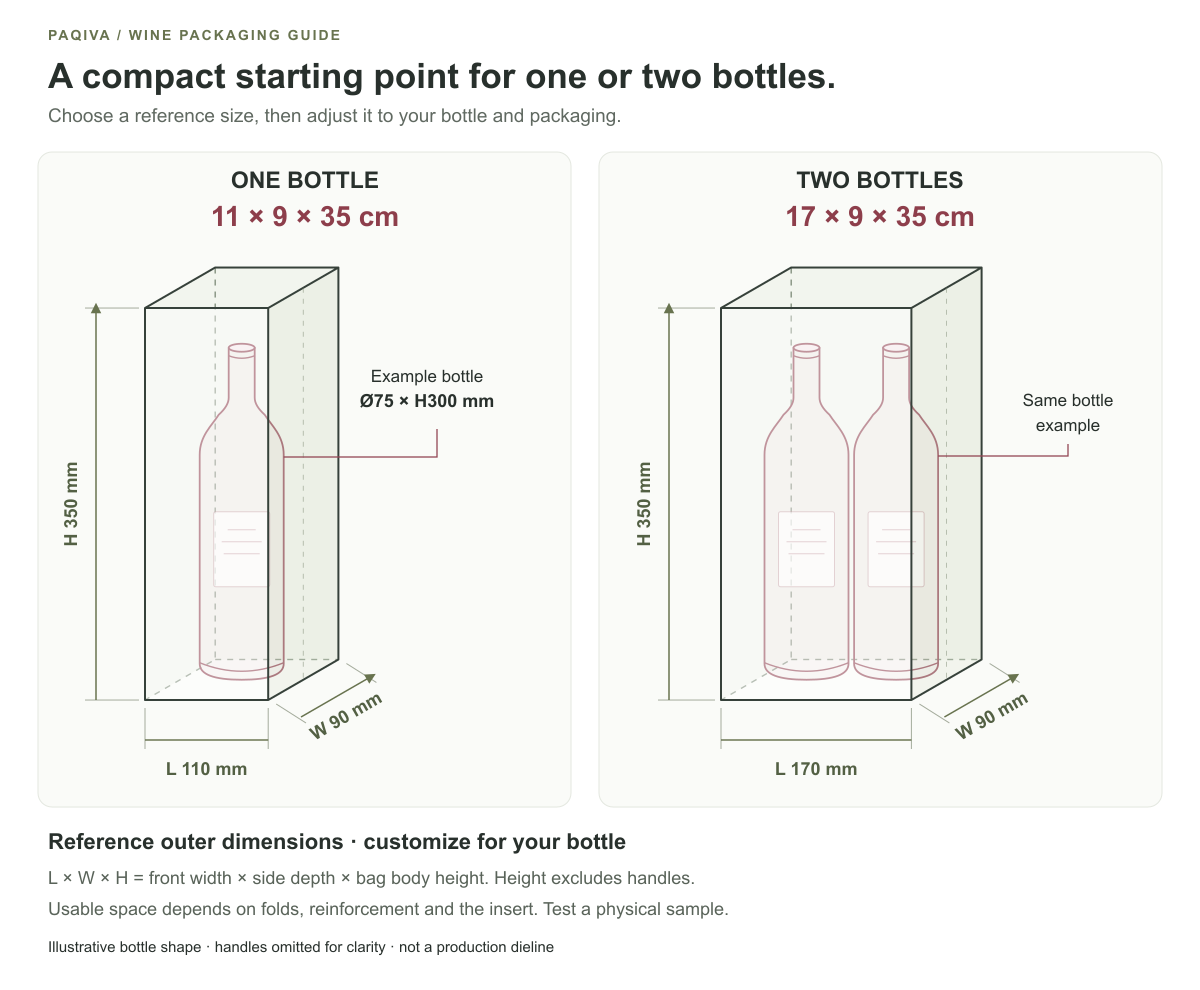
Start with 11 × 9 × 35 cm for one wine bottle or 17 × 9 × 35 cm for two. Adjust the bag around your bottles, insert and wrapping, then confirm the fit with a physical sample.
For a single wine bottle, start with 11 × 9 × 35 cm. For two slim bottles side by side, start with 17 × 9 × 35 cm, together with a fitted card insert to help control movement. These are the compact reference sizes shown on PAQIVA's wine bag page.
Both sizes are useful starting points for slim 750 ml bottles around 75 mm across and 300 mm tall. The bag can be customised to your actual bottle, insert and wrapping. Test a sample with everything in place before approving production.
Recommended paper bag sizes for one or two wine bottles
All bag dimensions below follow L × W × H: front width × side depth × bag body height, excluding the handles. They are nominal outside dimensions, so the usable interior will be smaller.
| What you are packing | Suggested bag size, L × W × H | Where to start |
|---|---|---|
| One slim bottle, without a gift box | 11 × 9 × 35 cm / 110 × 90 × 350 mm | PAQIVA's compact single-bottle reference; check the widest shoulder and handle clearance |
| Two slim bottles, side by side, without gift boxes | 17 × 9 × 35 cm / 170 × 90 × 350 mm | PAQIVA's compact double-bottle reference; plan and sample the fitted insert at the same time |
| One wider or taller bottle | 14 × 12 × 38 cm / 140 × 120 × 380 mm | A roomier starting option; measure the actual bottle, including the closure |
| Two broader bottles or a pair needing more room for the insert | 22 × 12 × 36 cm / 220 × 120 × 360 mm | Explore more usable room for bottles around 80–90 mm across, subject to the complete packed fit |
These reference sizes match the PAQIVA wine paper bag page. They are starting dimensions for a custom project, rather than a fixed set you must choose from. For a gift box, protective sleeve or unusual bottle shape, measure the complete packed item instead.
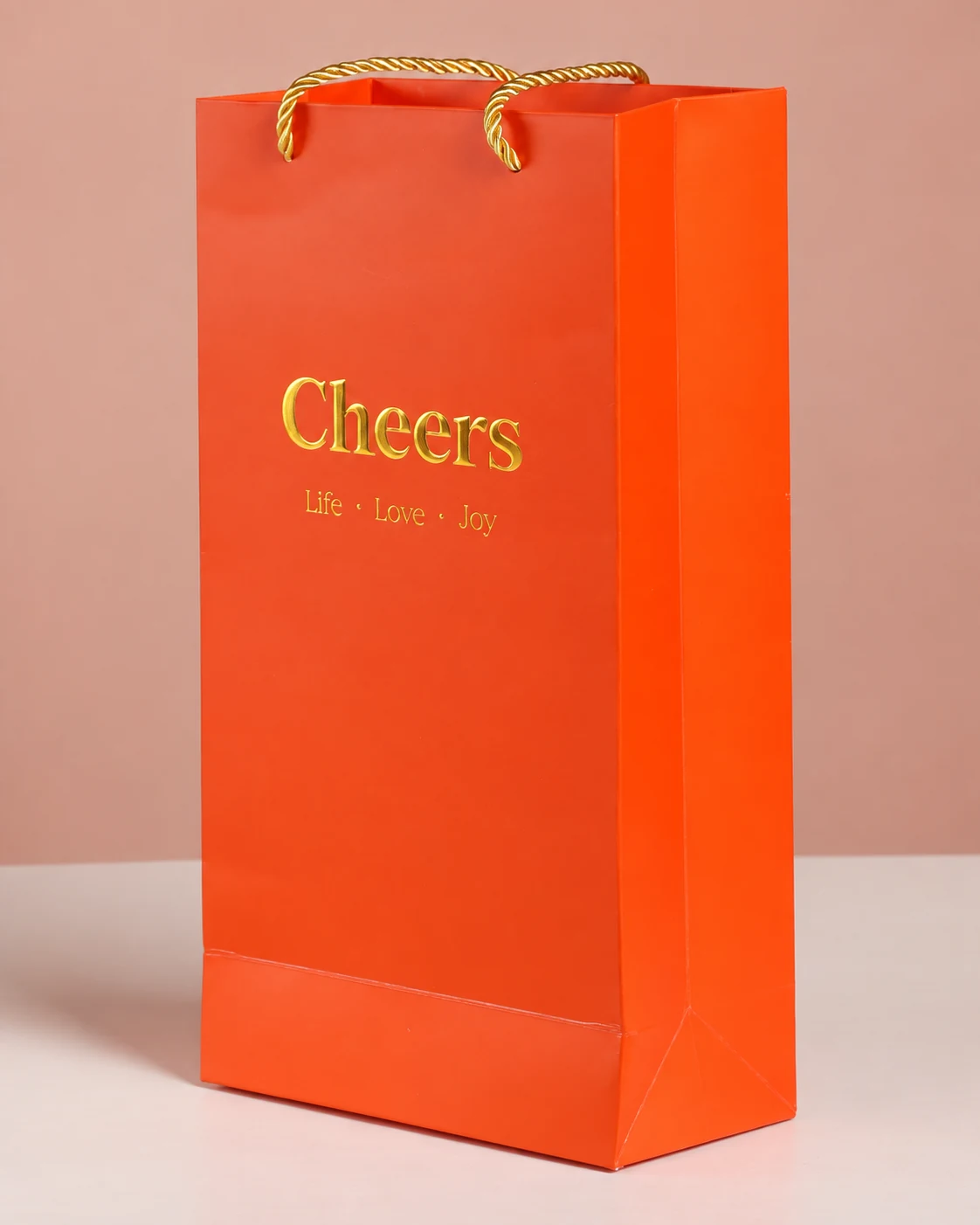
A similar double-bottle size in a product example
The original reference for the orange bag below gives 17.5 × 9 × 34.5 cm. It is a nearby size example, with a slightly wider front and a slightly shorter body than the 17 × 9 × 35 cm reference. This nearby example shows how the specification can vary; it does not establish a manufacturing tolerance or a guaranteed fit.
Start with the bottle's widest point, not just “750 ml”
Capacity describes the wine inside; it does not specify the bottle's outside dimensions. Even bottles sold in the same capacity can have different shoulders, bodies and heights.
The following manufacturer examples show why measuring matters:
| 750 ml bottle example | Listed bottle height | Relevant width or diameter |
|---|---|---|
| Saverglass Bordeaux ANTIQUA NU 70, reference 6716 | 300 mm | 80 mm at the shoulder; 72 mm at the base |
| Saverglass Burgundy TRADITION, reference 1824 | 296 mm | 82.2 mm body diameter |
| Saverglass Champenoise MILLESIME, reference T101 | 300 mm | 95.1 mm body diameter |
These are individual models, not standard dimensions for each bottle style. The first example is especially useful: sizing from its 72 mm base alone would miss the wider 80 mm shoulder. For your order, measure the bottle at its widest point and include the closure in the overall height.
A bottle around 95 mm wide is already wider than the compact bag's nominal 90 mm side depth. Choose a deeper custom bag. Even a slimmer bottle needs space for paper thickness, folds and internal components.
How the suggested bag dimensions are worked out
For a single bottle, allow for its widest diameter in both directions across the bag's base. Then consider the folded bottom, any base board, wrapping and the space needed to lift the bottle out.
Using an illustrative Ø75 × H300 mm bottle, a 110 × 90 × 350 mm bag is 35 mm wider, 15 mm deeper and 50 mm taller in nominal outside measurements. Those differences explain the starting size; they are not measurements of clear space inside the finished bag. The top fold and handle attachments can occupy some of the height, and a base board raises the bottle slightly.
For two bottles, plan their arrangement across the front of the bag and the positioning insert together.
Start with both maximum bottle diameters, then allow for separation, the insert, packing and the bag's construction.
For example, two 75 mm bottles with an illustrative 5 mm gap between their bodies span 75 + 5 + 75 = 155 mm. Compared with the compact bag's nominal 170 mm front width, that leaves a difference of 15 mm in total. This is a planning allowance for the complete construction, not a measured 7.5 mm of usable clearance on each side. The sample must show whether the chosen insert and packing method work within it.
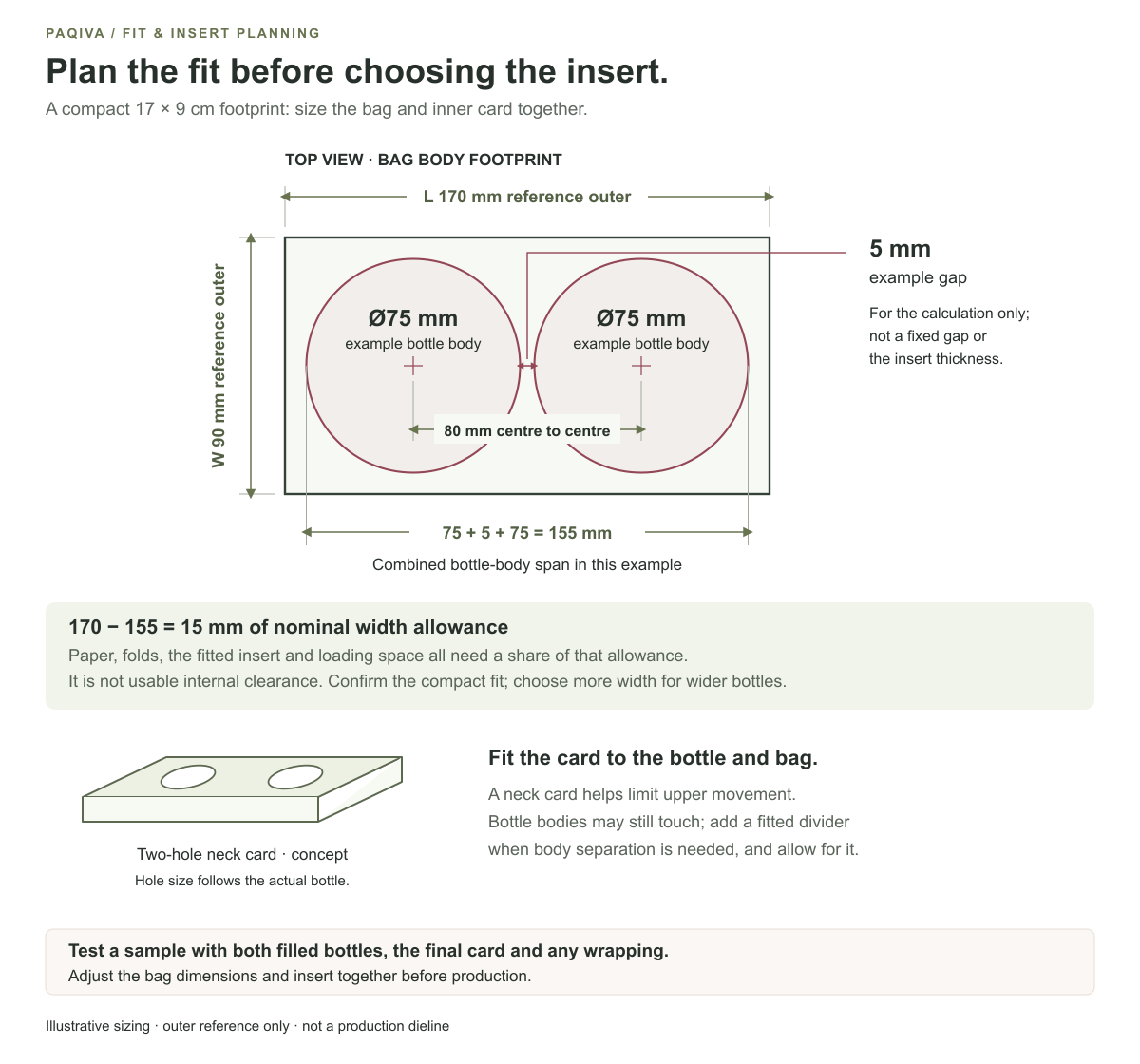
Two 80 mm bottles already occupy 160 mm before any gap or insert is considered. That leaves much less room within a 170 mm outside width, so discuss a wider custom size rather than assuming every pair of 750 ml bottles will fit the compact format.
If the bag feels too loose, improve the positioning insert before simply making the bag smaller. A close-fitting bag still needs enough room for staff to pack it and for the recipient to remove the wine comfortably.
For two bottles, add an insert and check movement
A fitted card insert is a useful addition to a double wine bottle paper bag. A two-hole neck insert helps keep the bottles in their intended positions and limits movement near the top.
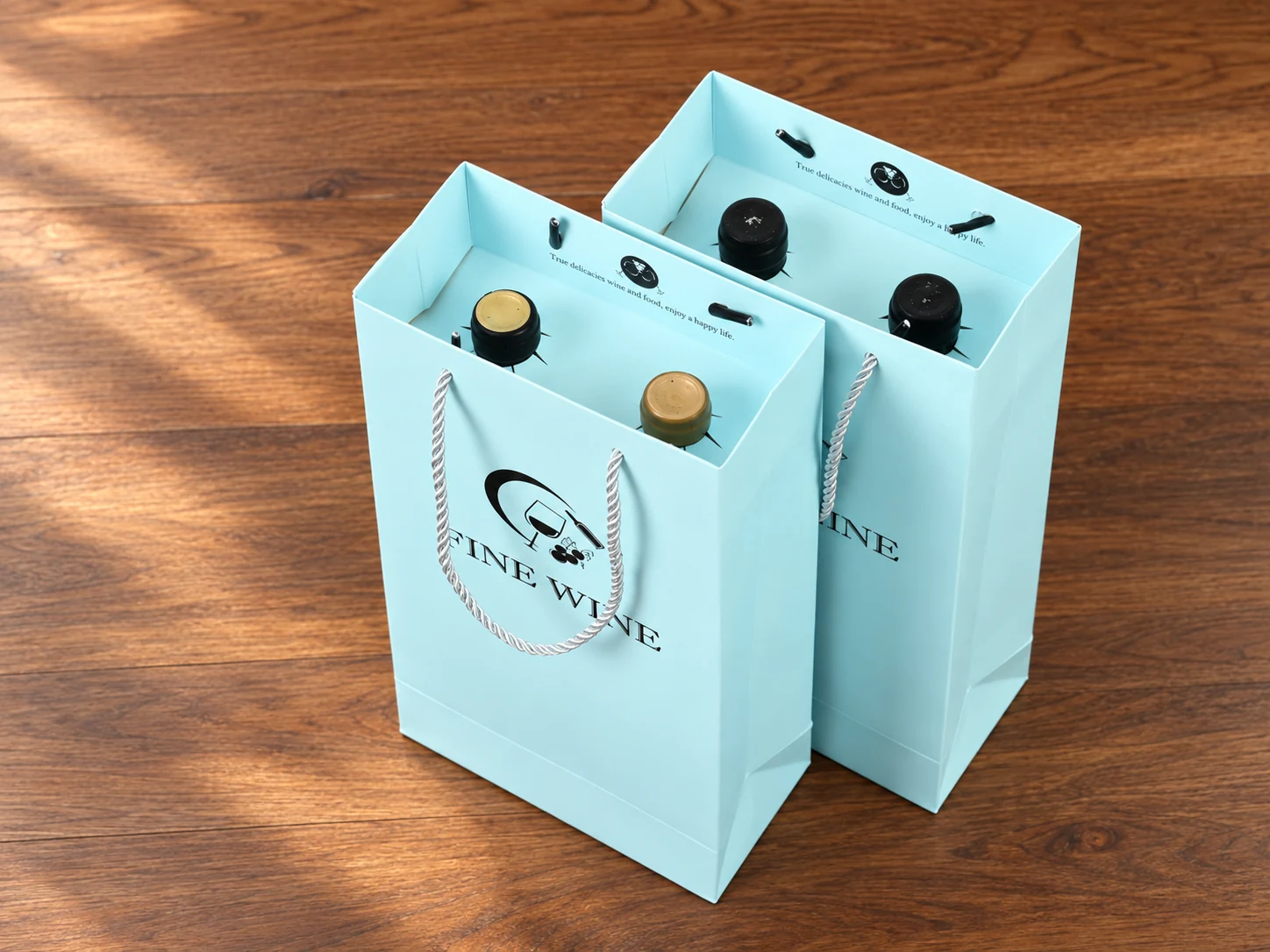
Plan the bag and insert together. Hole spacing must suit the bottle bodies as well as the necks, and the opening design must allow the chosen assembly method. A hole designed around a narrow neck may need a different opening or slit arrangement to pass over a wider closure.
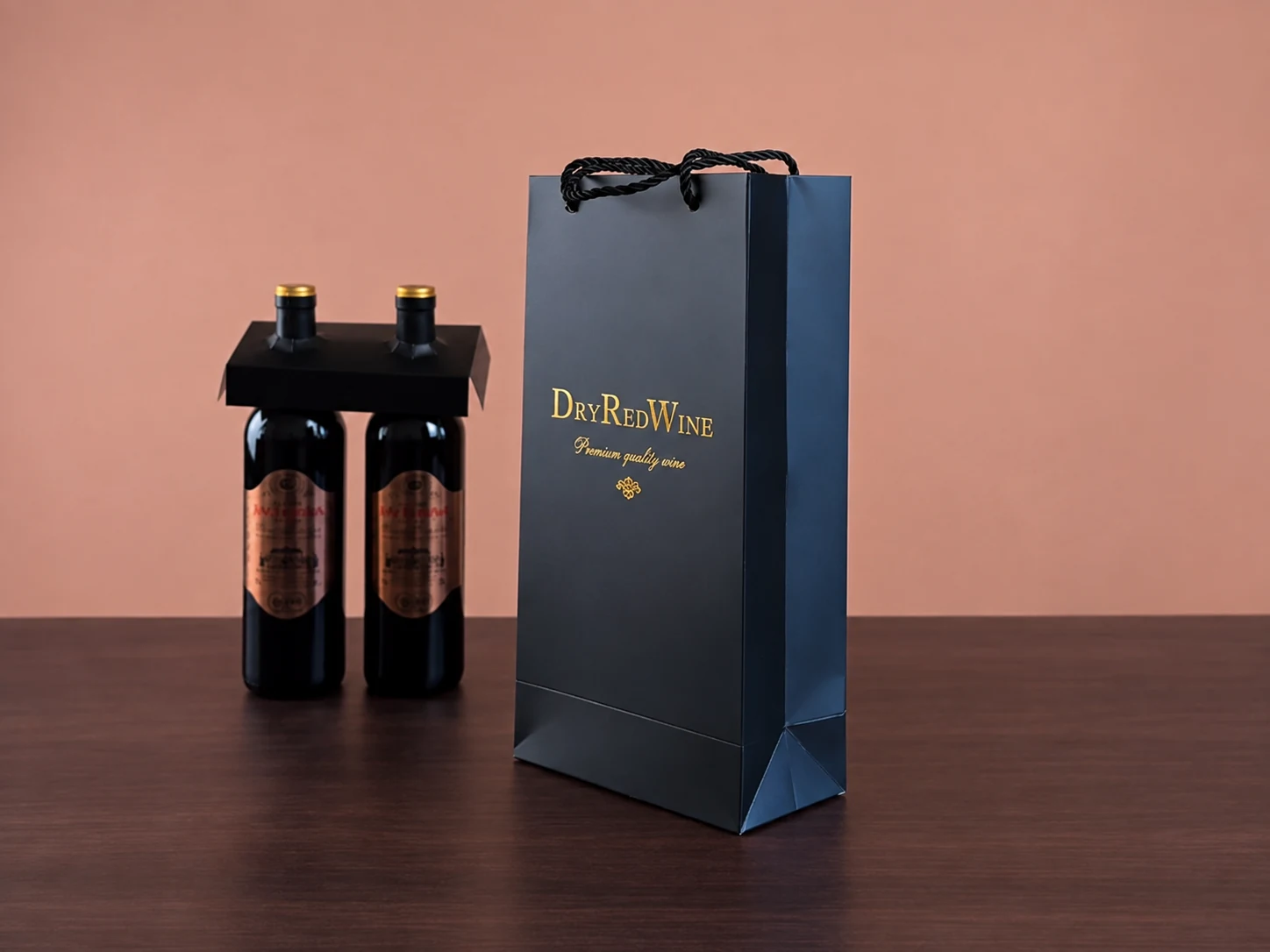
During sampling, check whether the lower bodies can still touch. If they can, discuss a divider or additional lower positioning support. The neck card helps locate the bottles; the bag base and its reinforcement carry the load. An insert does not provide a breakage guarantee or make a retail gift bag suitable for courier shipping.
Choose a finish that suits the wine and the occasion
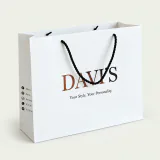
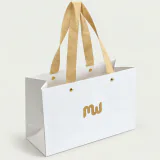
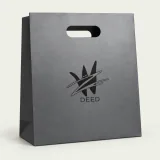
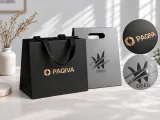
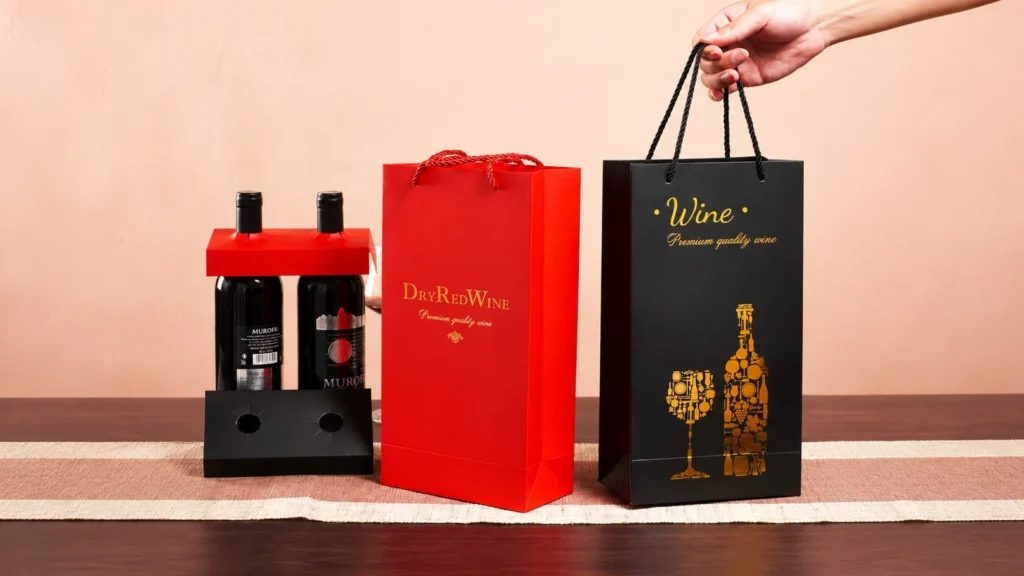
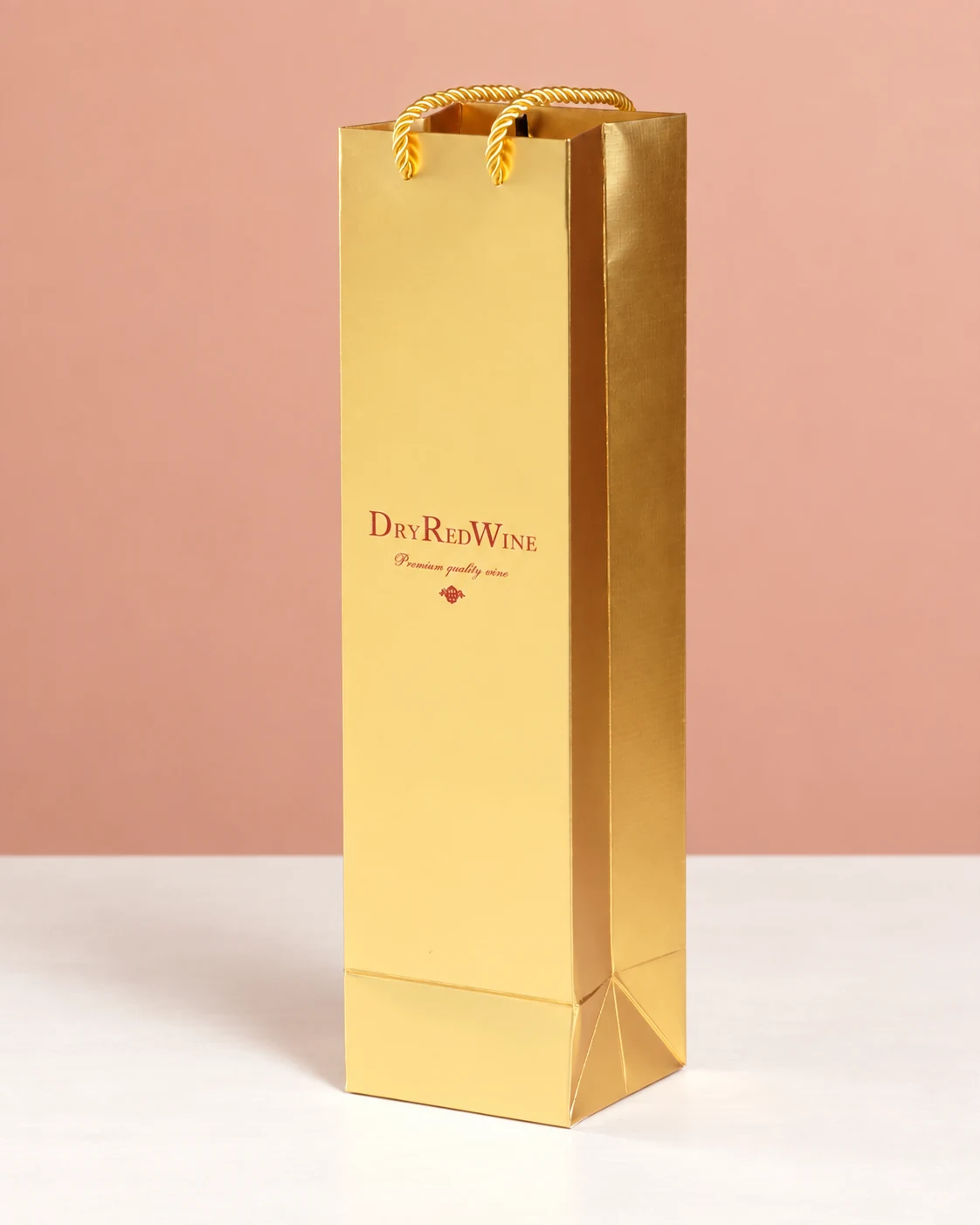
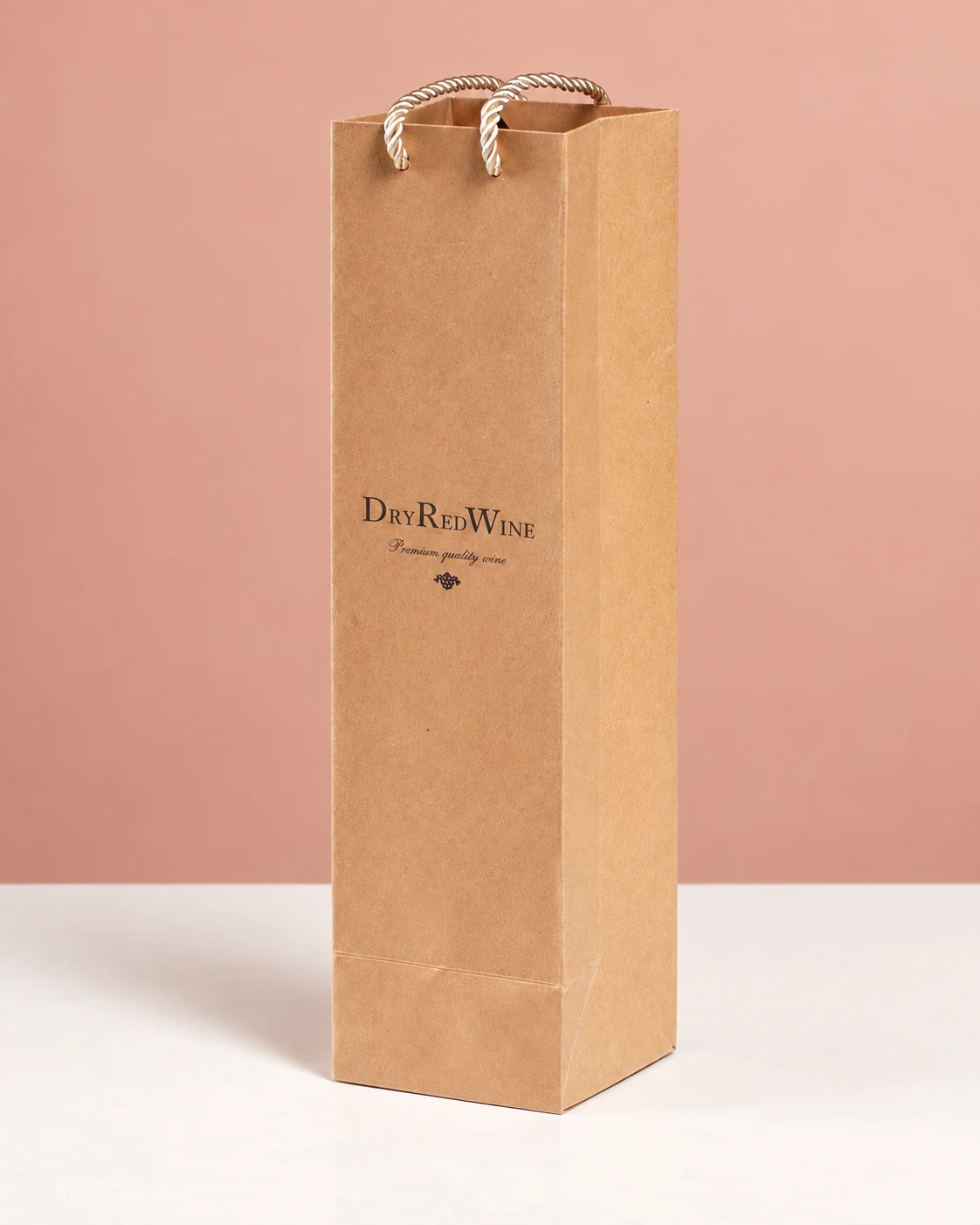
Once the size and structure work, the paper, colour and artwork can shape the presentation. The single-bottle photos below show three useful design directions: a dark surface with gold-coloured lettering, an overall gold-coloured surface, and a natural brown paper look.
Use these product images for design inspiration; they do not verify the fit of your 750 ml bottle.
Gold foil for a more formal gift presentation
Gold foil can give a winery name, crest or short message a reflective focal point. On a dark background, a restrained gold detail can create a more formal, premium impression without filling the entire front panel.
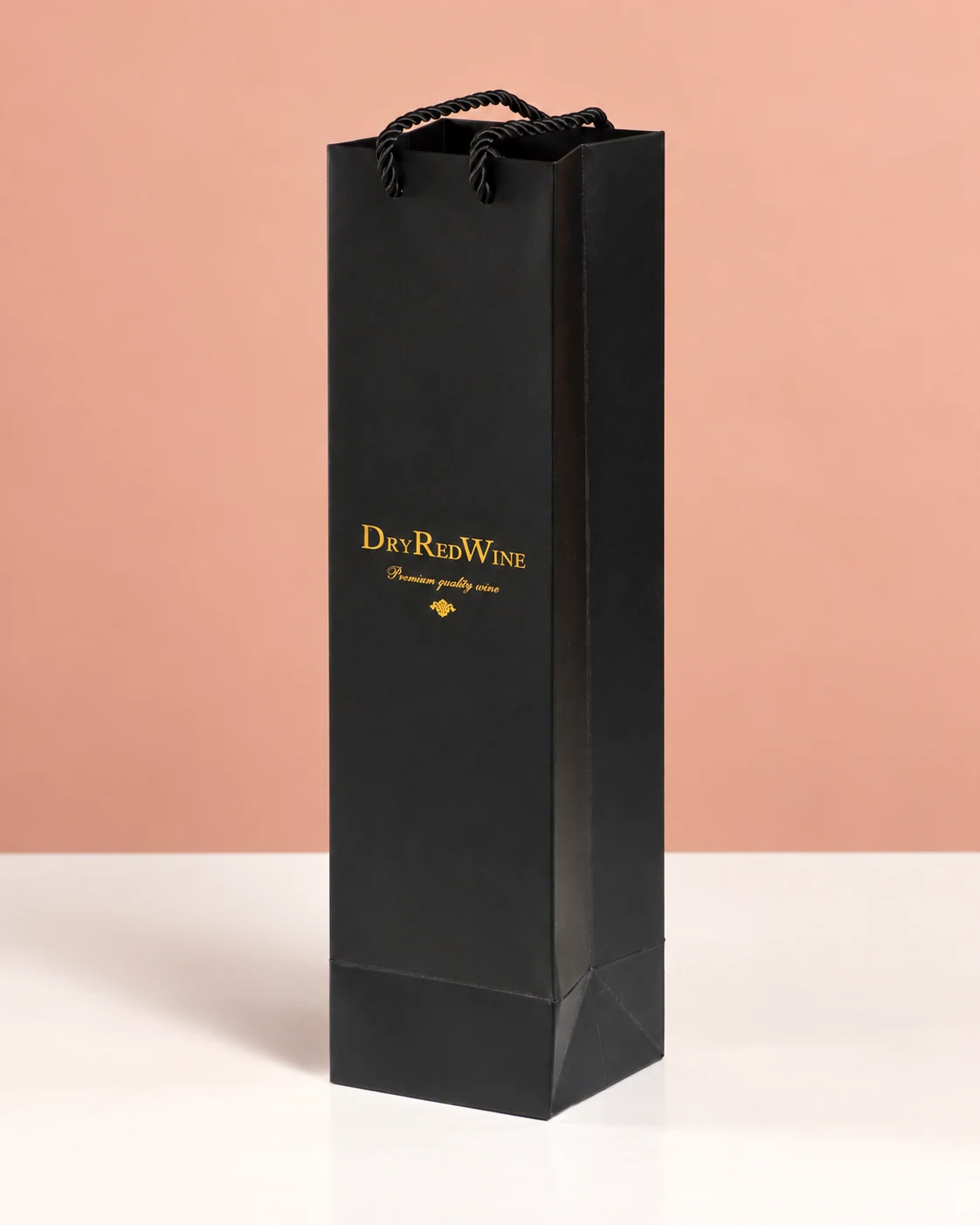
If you choose foil stamping, inspect fine lettering, edges and placement on the selected paper. Ask to see the finish represented in the sample: a blank fit sample can confirm dimensions, but it cannot confirm the final foil effect.
An overall gold-coloured surface for a bolder look
For a stronger metallic colour direction, consider a gold-coloured bag with simple contrasting artwork. This creates a different balance from a small foil-stamped logo on a dark bag. Discuss the selected paper and surface treatment separately from the logo decoration.
Kraft paper for a natural, understated look
Brown kraft paper works well with simple dark artwork and a restrained colour palette. It can suit a wine shop or brand seeking a natural paper appearance and a less formal presentation.
Describe the environmental attributes separately from the look. Brown colour alone does not establish recycled content or recyclability. If these matter to your project, request the paper composition and details of the complete bag, including handles, coatings and inserts. For U.S. marketing, the FTC's Green Guides summary also advises against broad, unqualified claims such as “eco-friendly.”
Test a sample before approving the order
Start the enquiry with 11 × 9 × 35 cm for one bottle or 17 × 9 × 35 cm for two slim bottles, then adjust to the actual packed contents. Sampling resolves the details that measurements alone cannot show, including the available space around the insert and handle fixings.
Use the actual filled bottles and the intended insert and wrapping. Check:
- Loading and removal: bottles pass through the opening without forcing the sides, and can be removed comfortably.
- Positioning: the insert seats correctly and the bottle bodies do not knock together during a gentle movement check.
- Top clearance: closures, neck cards and wrapping leave the handle attachments and grip usable.
- The complete bag under load: inspect the base, seams, handle holes and fixings during a basic carrying check over a supported surface.
- Final appearance: review artwork placement, paper colour and any foil or surface finish on an appropriate sample.
PAQIVA can discuss a blank sample for checking fit, removal and carrying before the size and customisation are finalised. Sample cost, timing, delivery and the features represented are agreed for the project. Approve the sample and requirements before bulk production.
To start a custom wine paper bag enquiry, send the bottle's maximum diameter, total height and filled weight; the number of bottles per bag; insert or wrapping requirements; quantity; and your preferred paper and design. Share your wine bag requirements with PAQIVA.