











Kraft Paper Bags with Handles: A 120 gsm Buying Guide
Start with PAQIVA's 120 gsm recommendation for everyday kraft carriers, then match the size, handles, print and base construction to your packed products.
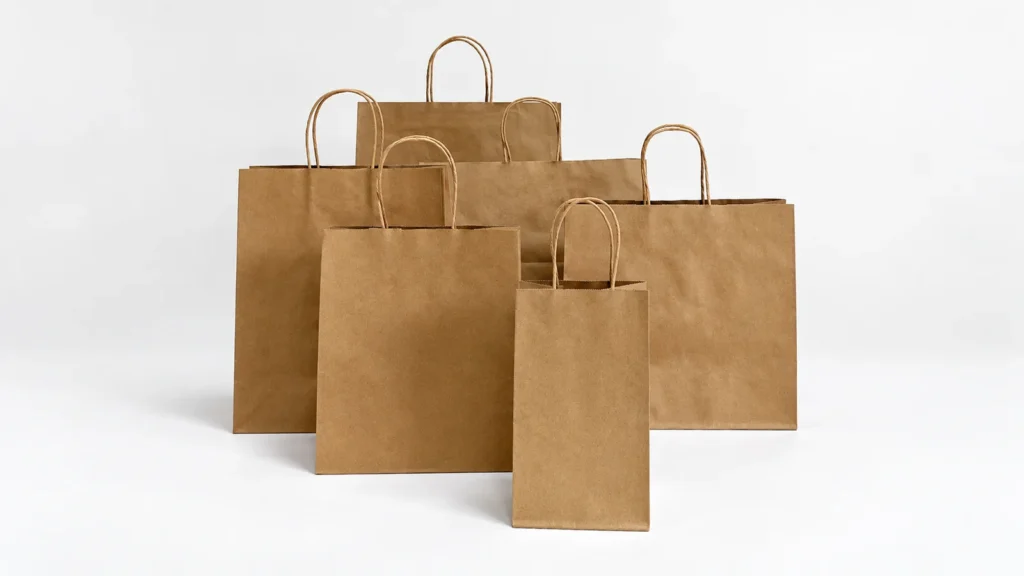
For the everyday carrier styles shown here, PAQIVA recommends 120 gsm kraft paper as a starting specification. Pair it with the right bag dimensions, handle attachment and base construction, then check a sample with the products your customer will actually carry.
Kraft paper bags with handles can suit clothing shops, gift retailers and takeaway orders packed in their own containers. A simple brown bag keeps the presentation understated; a printed logo or coloured finish can give the same general format a different identity. The useful buying decision is how to combine those choices around your product and budget.
Why choose this style of kraft paper bag?
These carriers have a straightforward format: an open top, two carrying handles, side gussets and a folded base. They can be stored flat and opened at the counter. Compared with a specification involving decorative hardware, several finishing steps and elaborate presentation details, a simple kraft version can keep production requirements more manageable. The actual price still depends on size, paper, printing and quantity.
A plain bag can work for everyday purchases, while a small printed message adds a more personal touch. In the example below, a black bow and “thank you” design create a clear focal point without filling the whole surface. The folded stack also shows why carton quantity and storage space are worth asking about when ordering.

For a branded order, develop the bag around your own logo and required dimensions. PAQIVA's twisted-handle bag options are made to order; the photographs are design references rather than a list of ready-stock sizes.
What does 120 gsm tell you?
GSM means grams per square metre. 120 gsm describes the mass of the paper per unit area, not the weight of one finished bag, its exact thickness or a carrying limit in kilograms. It is a useful specification to put on a quotation, provided the paper grade and construction are also identified.
For the bags in this guide, start a sample discussion at 120 gsm rather than automatically moving to a heavier card-stock construction. The aim is a practical everyday carrier with a simple paper appearance. Larger bags, concentrated loads, sharp box corners or longer carrying periods may call for a different paper or added support.
Paper performance involves more than grammage. For example, paper producer Billerud discusses tensile strength, burst strength and tear resistance for its Xpression carrier-bag papers. Those are properties of its paper range, not specifications for the bags pictured here. For a wider comparison of paper choices, see our paper bag GSM guide.
Brown, printed or coloured: choose the visual direction
Brown kraft gives the paper itself a visible role in the design. A dark logo with open space around it is one straightforward direction. If your artwork depends on pale colours, fine details or a close brand-colour match, ask to see the design on the proposed paper before approving the production specification.
Coloured bags offer another route. The examples below combine bright front panels with white handles, while darker bags use brown handles. Matching or contrasting the handles changes the overall appearance without changing the basic shopping-carrier format.

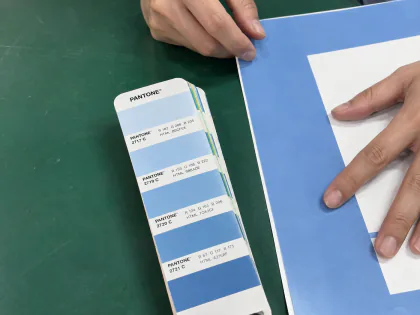
When requesting a coloured bag, specify whether you want a coloured paper stock or a printed background. They are different specifications, and the cut edges, inside surface and print appearance may differ. The photograph alone does not establish how each colour was produced. An approved physical sample is more useful than choosing a shade from a screen.
Choose the dimensions around the packed product
Start with the item as it will leave the shop: folded clothing in its wrapping, a closed gift box or a sealed takeaway container. Measure the complete package, including anything that projects beyond the main body.
State bag dimensions as front width × side depth × bag-body height, excluding the handles, and include the unit. Our paper bag measuring guide explains the same order. Also check usable internal space: the folds and construction can reduce clearance compared with the quoted outside dimensions.
For a box that must stay level, side depth deserves as much attention as front width. A tall, narrow bag is not a substitute for a wide base. For clothing, check how easily staff can insert the folded item and whether the customer can bring the handles together without compressing the contents. Where several sizes are needed, allocate quantities to actual product groups instead of ordering equal amounts of each size by default.
Look inside the handle attachment and beneath the base
A finished sample should show how the handles transfer the load into the bag body. In the upper detail below, a rectangular patch covers the handle ends inside the bag. Inspect the bonding area, the surrounding paper and both handle positions. A patch that looks neat should still be checked during a loaded trial.
The middle detail shows the folded outside base. Look for well-aligned folds and sound bonded joints; it does not show a separate internal bottom insert. The lower detail shows the side gusset and opening, which should expand cleanly without tearing or interfering with loading.
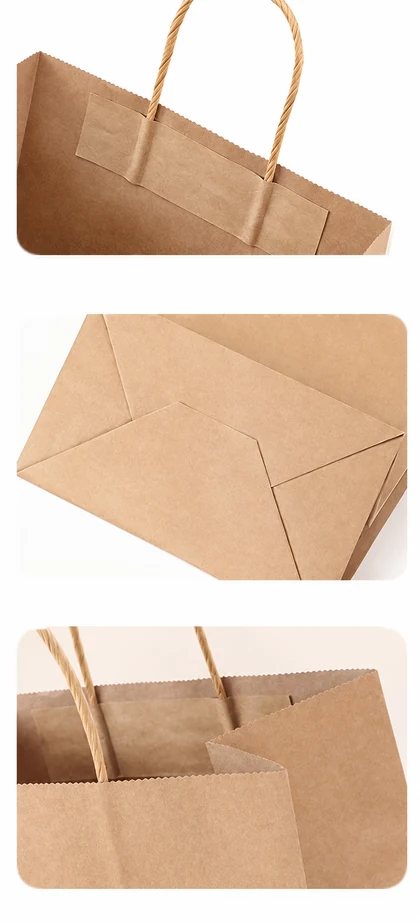
If a bottom insert is included in the specification, confirm its size, fit and position in the sample. It can help support the contents and distribute contact across the base, but the handle attachment, bag paper and glued joints still have to work together.
Handle appearance does not establish its composition. PAQIVA's current twisted-handle option uses a paper-and-plastic composite, so an order for this option should not be described as all-paper or plastic-free. Include any material requirements in the enquiry rather than inferring them from a brown paper finish.
What to include in your enquiry and sample check
A useful brief combines the 120 gsm starting point with the information needed to assess the whole bag. This keeps two quotations comparable and gives the sample a clear purpose.
| Include in the enquiry | What it helps establish |
|---|---|
| Product, packed dimensions and total carried weight | Required usable space and the load to assess |
| Bag width × depth × body height, with units | The proposed format, excluding handle height |
| 120 gsm kraft as the starting paper specification | A basis for discussing the grade and sample |
| Brown, coloured-stock or printed-background preference | The intended appearance and material route |
| Logo artwork, print locations and handle preference | The branding layout and carrying details |
| Quantity by size, destination and required arrival date | A project quotation and production discussion |
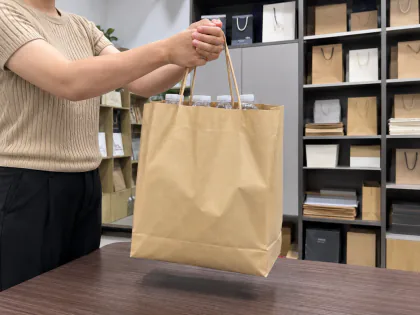
Test the sample with the intended contents, including wrapping or boxes. Open it, load it, bring the handles together and carry it in the way a customer would. Check for lifting handle patches, tearing near the attachment, opening joints or a base that deforms around the product. Where the bag may encounter condensation or damp conditions, include that use in the sample brief; a dry carry check does not answer it.
Send your dimensions, quantity and artwork to PAQIVA for a custom paper bag quotation. We can develop the paper, handles and printing around the project, starting with the recommended 120 gsm where suitable. PAQIVA also provides free custom-size dielines and paper bag design assistance to help prepare your design.