













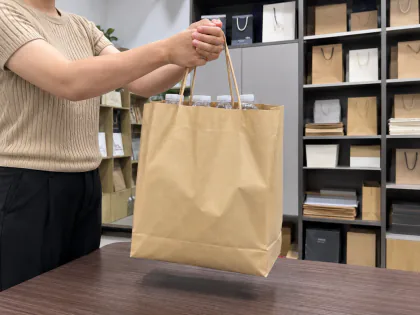
How Many Paper Bag Sizes Does a Clothing Store Need?
Plan three everyday clothing bag sizes and a fourth for coats or gift boxes, with practical starting dimensions, order quantities and a replenishment example.
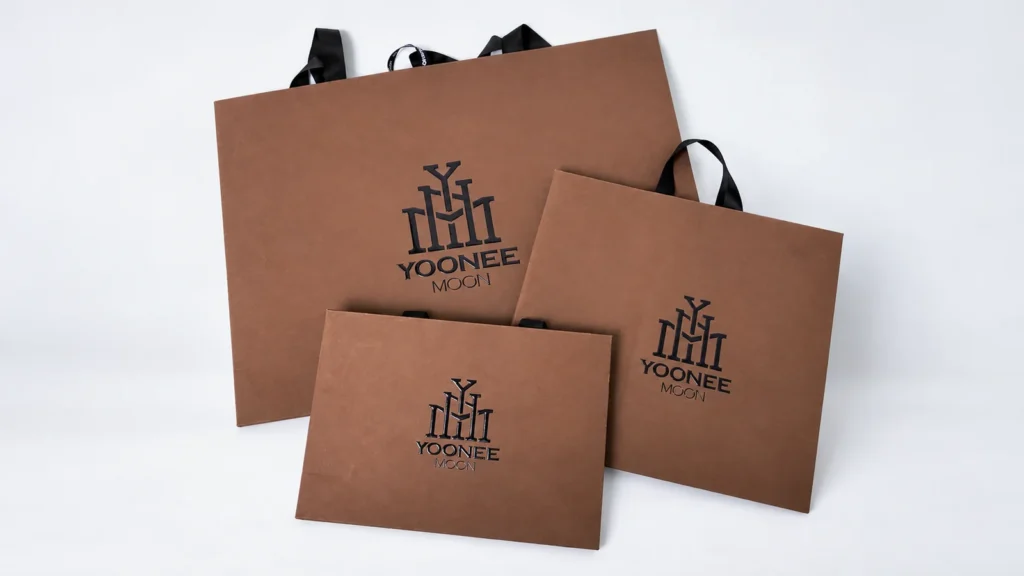
Start with three paper bag sizes: small, medium and large. Add a fourth when coats, bulky purchases or a recurring gift-box format need a different fit. For a clothing store selling a mixed everyday range, this is a practical starting configuration: a compact bag for light purchases, a main bag for regular garments and a wider, deeper bag for fuller baskets.
Give each size a clear job. A store focused on a few lightweight products may manage with two; a broad clothing range should not have to squeeze every purchase into one oversized bag.
Start with these three sizes, then assess the fourth
The following dimensions come from PAQIVA’s clothing paper bag range. All are suggested finished external sizes in centimetres: front width × side depth × bag-body height, excluding handles.
| Bag size | Starting size, cm | Purchase to trial-pack |
|---|---|---|
| S | 26 × 12 × 32 | A single folded T-shirt or light top |
| M | 32 × 12 × 40 | A shirt, light trousers or a day dress |
| L | 42 × 16 × 35 | Knitwear, jeans or a combined light-garment purchase |
| XL, if needed | 50 × 20 × 45 | A folded coat or bulky jacket |
These are custom-size starting points, not stock items or guaranteed garment capacities. Folds, reinforcement and handle fixings reduce usable room. Thick puffers and full dresses may need a different specification.
Notice that L is wider and deeper than M, but 5 cm shorter. Keep M for longer, slimmer folds if your products need that height. Moving up a size label does not make every dimension larger.
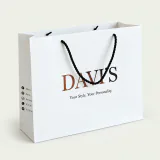
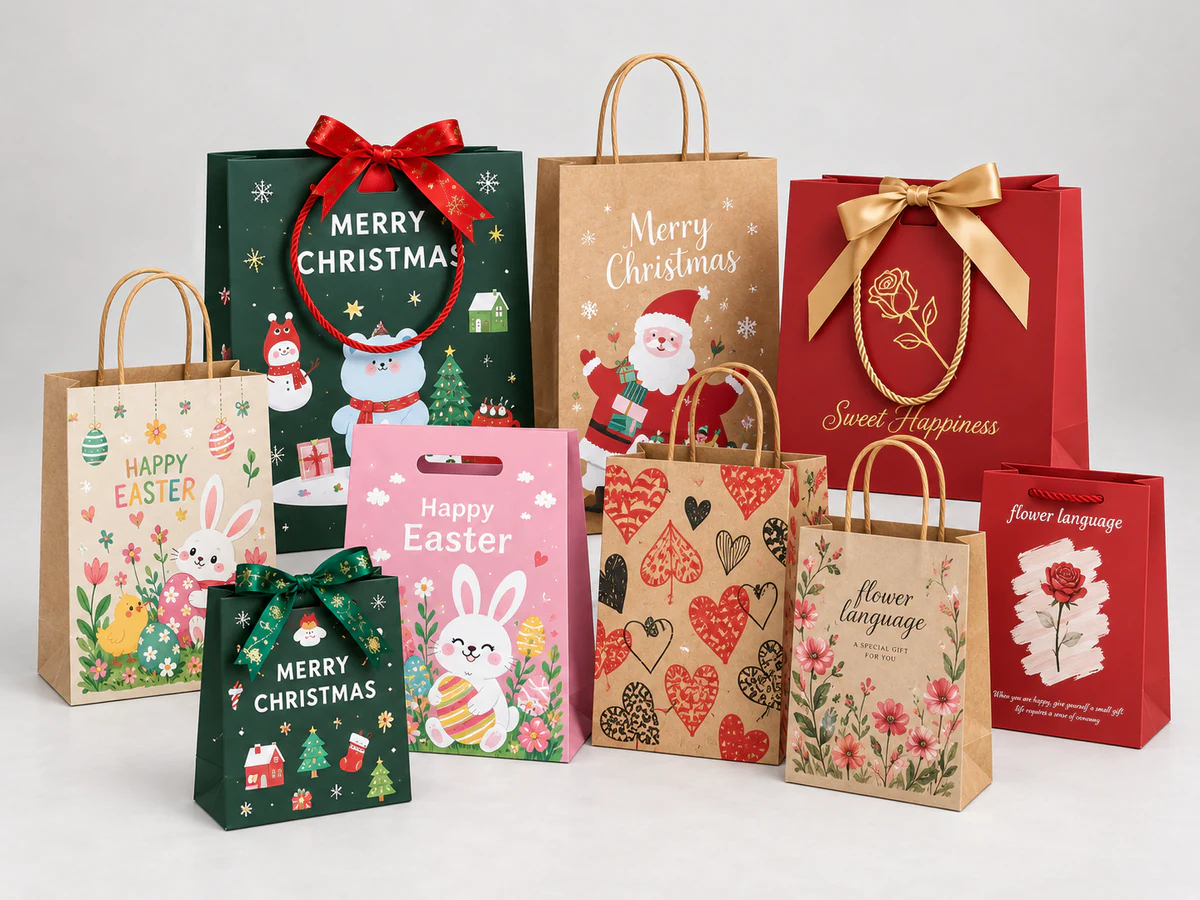
The bags shown in the photographs are design and packing examples; their dimensions have not been measured for this guide.
Build the range around purchases, not individual garments
Lay out the purchases staff actually pack: a single top, a shirt with trousers, a knitwear purchase, an outerwear sale and a gift presentation. Fold and wrap them as they leave your counter, including sleeves, tissue and boxes.
Then assign each purchase to the smallest bag that allows comfortable packing, removal and carrying. This gives the three sizes distinct roles:
- S handles the compact purchase. If staff routinely move single tops into M because S is too narrow, change S around your folding method rather than continuing to order an unused size.
- M handles the everyday purchase. Use the garment and bundle you sell most often to judge this size. A shirt and light accessory may fit together; a thick sweatshirt creates a different requirement.
- L handles extra bulk. Two thin T-shirts and two heavy knits are both two-item sales, but their packed thickness differs. Side depth often decides whether the second purchase needs L.
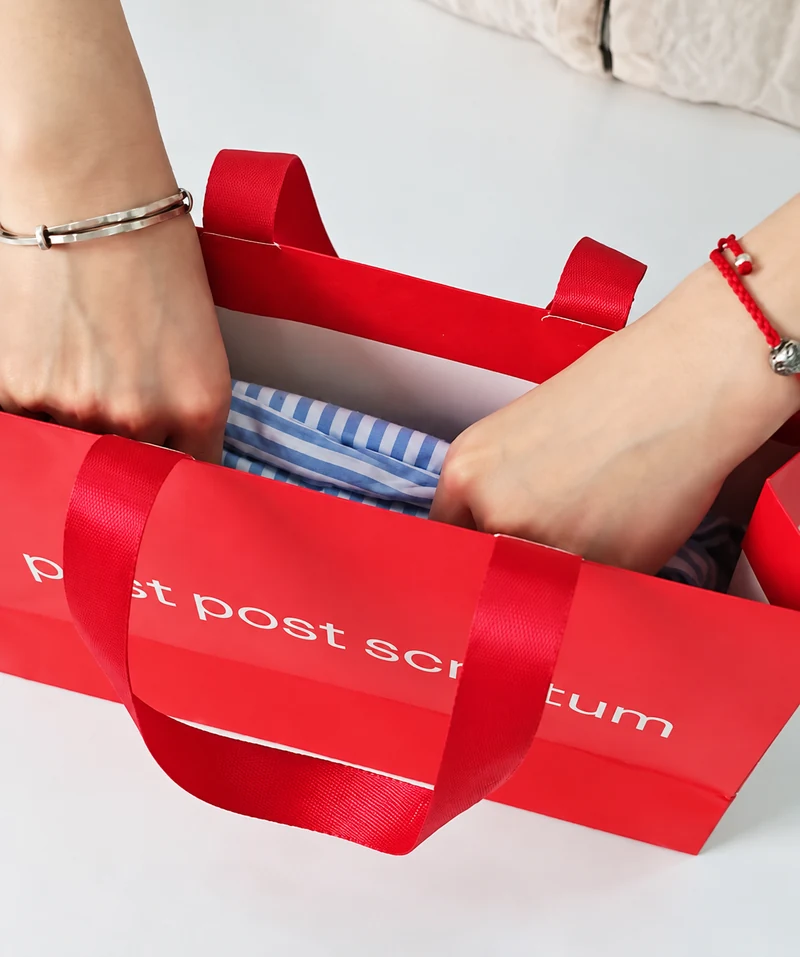
For each sample, check more than whether the clothing goes inside. Staff should be able to lift it out without pulling the handles aside or crushing the wrapping. The filled bag should not bulge sharply at the sides. Trial-carry the planned contents and inspect the handle attachments, seams and base; a bigger bag is not automatically a stronger one.
Use the same fold across the trial and daily packing. If one employee folds a shirt narrowly and another leaves it wide, bag-use records will reflect packing differences as well as customer purchases. The separate paper bag measuring guide explains the measurement convention if your team needs it.
Choose the fourth size for coats or gift boxes
Add XL when outerwear is a regular part of the assortment. Start the trial with 50 × 20 × 45 cm, then use your actual folded coat, wrapping and any accompanying item. A large but occasional purchase does not necessarily justify a fourth size ordered all year; an outerwear launch needs its own forecast before the season begins.
For stores with frequent gift-box sales, a deeper box-fitting bag may be a better fourth size than XL. The box’s carrying orientation matters. Consider an illustrative closed box measuring 32 × 24 × 10 cm:
- If the contents allow it to stand on an edge, its required envelope can be 32 cm across, 10 cm deep and 24 cm high. L is a candidate to sample; M’s 32 cm external width leaves no allowance even before considering its construction.
- If it must stay flat, the same box needs a 32 × 24 cm base. The suggested XL bag is only 20 cm deep externally, so it cannot provide that footprint. Extra height does not solve this problem.
Order the fourth size around the repeated packing problem. Ask for a custom depth when necessary, rather than buying a taller bag that still cannot hold the box correctly. If both coats and flat gift boxes are frequent purchases, test whether one additional size can cover both before committing to separate runs.
How many of each size should you order?
For a mixed clothing store without bag-use history, start planning S/M/L at 25% / 50% / 25%. Make M the largest share and give the compact and fuller purchases smaller allocations. For a similar store adding a limited outerwear range, start the four-size discussion at 20% / 45% / 25% / 10%.
These are initial planning examples, not industry averages. Here is how they divide an illustrative first order of 1,000 bags:
| Size | Three-size plan | Four-size plan |
|---|---|---|
| S | 250 bags · 25% | 200 bags · 20% |
| M | 500 bags · 50% | 450 bags · 45% |
| L | 250 bags · 25% | 250 bags · 25% |
| XL or box-specific fourth size | — | 100 bags · 10% |
| Total | 1,000 bags | 1,000 bags |
Treat the mix as a starting brief for a quotation. Minimum quantities and workable quantities for each size and design must be confirmed; the example does not establish a 100-bag minimum for every option.
A T-shirt-led store should test a larger S allocation. A winter outerwear store may need substantially more than 10% in its fourth size. A gift campaign should be forecast from the actual box orders, not from the share of coats sold last season. Equal quantities of every size make sense only when actual use is close to equal.
Replace the starting ratio with real bag-use counts
During a representative sales period, have staff tally bags issued by size, alongside sales that needed an awkward substitution. One transaction can use two bags; another customer may decline a bag. Neither garment units sold nor transaction count alone is a reliable bag forecast.
Also record when a smaller size ran out. If customers received L only because M was unavailable, those transactions do not prove that demand for L increased. Check a normal week and the product mix expected for the next order, rather than allowing one promotional weekend to determine the entire range.
Calculate replenishment separately for each size:
Quantity to order = expected bag use over the coverage period + reserve − usable stock − confirmed inbound bags arriving in time.
If the result is zero or negative, this forecast indicates no replenishment for that size.
Choose a coverage period that accounts for the agreed replenishment lead time and your next ordering review. As an example, if M is expected to use 500 bags in that period, a selected reserve of 50 bags, 80 usable bags on hand and 100 confirmed inbound bags give 500 + 50 − 80 − 100 = 370 M bags to order, before adjusting to the quoted order increment or minimum. The 50-bag reserve is an example, not a universal 10% rule; judge it against demand swings and delivery reliability.
Keep the forecast by size even when you place one combined order. A surplus of S will not replace a missing bag for a coat or a wide box.
Keep one brand across the range and quote each size clearly
Coordinate the paper colour, logo treatment and handle appearance across S, M, L and any fourth size. Adapt the logo placement and carrying structure to each bag’s proportions. Choosing a consistent look does not require making every bag a scaled copy; the separate clothing bag styles guide compares the handle options.
PAQIVA makes paper bags to order, with size, materials, print and quantity agreed for the project. For a useful clothing bag quotation, send the proposed dimensions and quantity for each size, your main folded purchases or closed gift boxes, expected filled weights, artwork and delivery destination. Identify whether the fourth size is for coats, gift boxes or both, so the sample can answer the right packing question before production.