













Flat Gold Foil vs Embossed Foil on Paper Bags: Which Should You Choose?
Flat foil adds shine. Embossed foil adds a raised surface. Compare real paper bag designs to decide when that extra detail is worth choosing.

Choose flat gold foil when you mainly want a bright, metallic logo. Add embossing when you want that logo to stand above the paper and be felt as well as seen. For an everyday retail bag, flat foil is a sensible starting point. For a prominent wordmark or gift presentation, raised foil may justify the extra tooling and setup.
The examples below show both approaches on real paper bag designs. They are different designs and papers, so they illustrate the choices rather than provide a controlled comparison of price or performance.
Flat foil or raised foil: the quick choice
Both finishes can look refined. The useful question is what you want the logo to do.
| Priority | Flat foil | Foil + embossing |
|---|---|---|
| Metallic shine | Yes | Yes |
| Raised logo | No intentional relief | Yes |
| Small supporting text | A useful starting point | Needs careful artwork review |
| A tactile focal point | Limited | The main attraction |
| Simpler tooling budget | Usually preferable | Usually more demanding |
These are starting recommendations, not limits on what either process can achieve. The actual paper, lettering and finished size still matter.
Flat gold foil: let the reflection do the work
Flat hot foil stamping transfers a thin decorative layer onto the paper using heat and pressure. The logo catches the light without being intentionally raised. A slight impression from stamping pressure is possible; that alone does not make it embossed foil. The distinction is also illustrated in ITW Foils’ hot foil stamping primer.
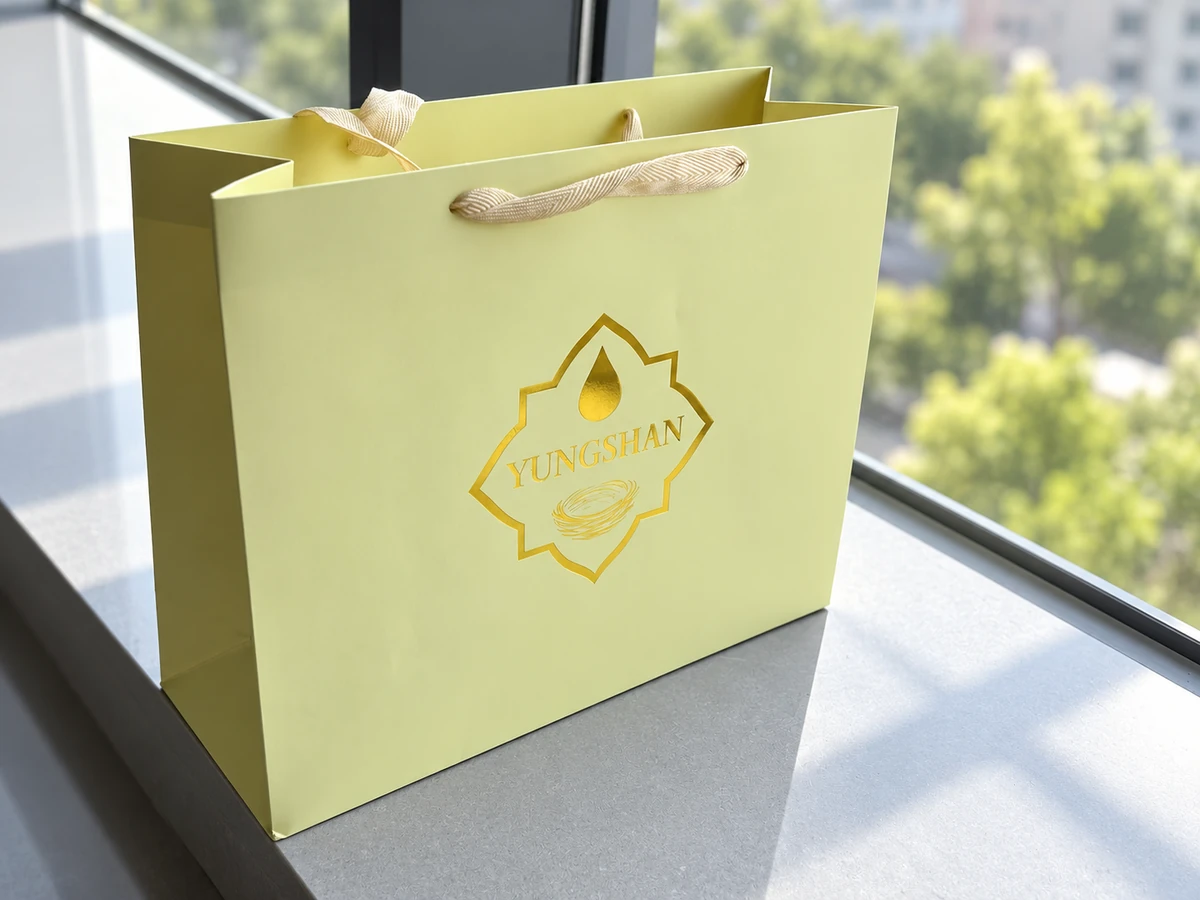
The pale yellow-green bag shows why flat foil can be enough. Its gold outline, lettering and small illustration provide contrast against a quiet background. The broad woven handles and simple layout carry part of the design, so the logo does not need extra height to attract attention.
Start here for a repeat-order shopping bag, a restrained design, or a logo with several fine details. Flat foil still needs suitable line widths and spacing: “flat” does not mean every tiny detail will reproduce cleanly.
Embossed foil: make one feature worth touching
Embossing shapes the paper into raised relief. Combining it with foil places the metallic finish on that raised design, adding edges that catch light and a contour you can feel.
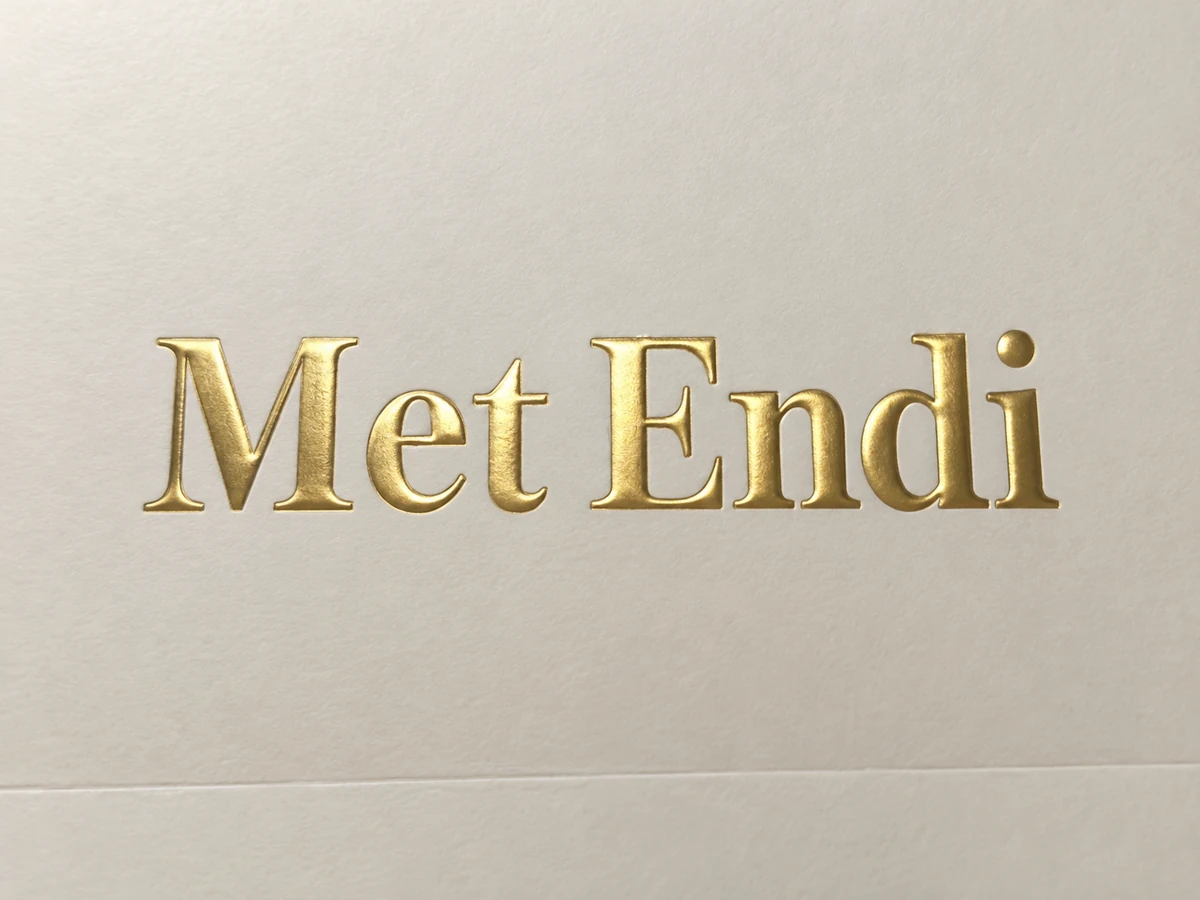
In the Met Endi close-up, the letter edges and changing highlights reveal the raised form. The broad parts of the serif letters give the shaping room to show. That is the useful difference from flat foil: the logo has a physical profile, not simply a different shade of gold.
Consider this finish for a main wordmark or emblem that is meant to be the focal point. A simple layout gives it space. You do not need to raise the address, tagline and every decorative line alongside it.
Embossing can leave a corresponding impression on the reverse of the paper. If the bag interior or reverse of the decorated panel will be visible, include that view when judging the result.
Fine lettering can be embossed, too
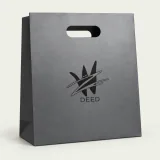
The SCARVER example takes a quieter approach. Its fine gold lettering is identified as foil plus embossing in the supplied sample information. It does not have the broad, visibly rounded contours of the Met Endi wordmark.
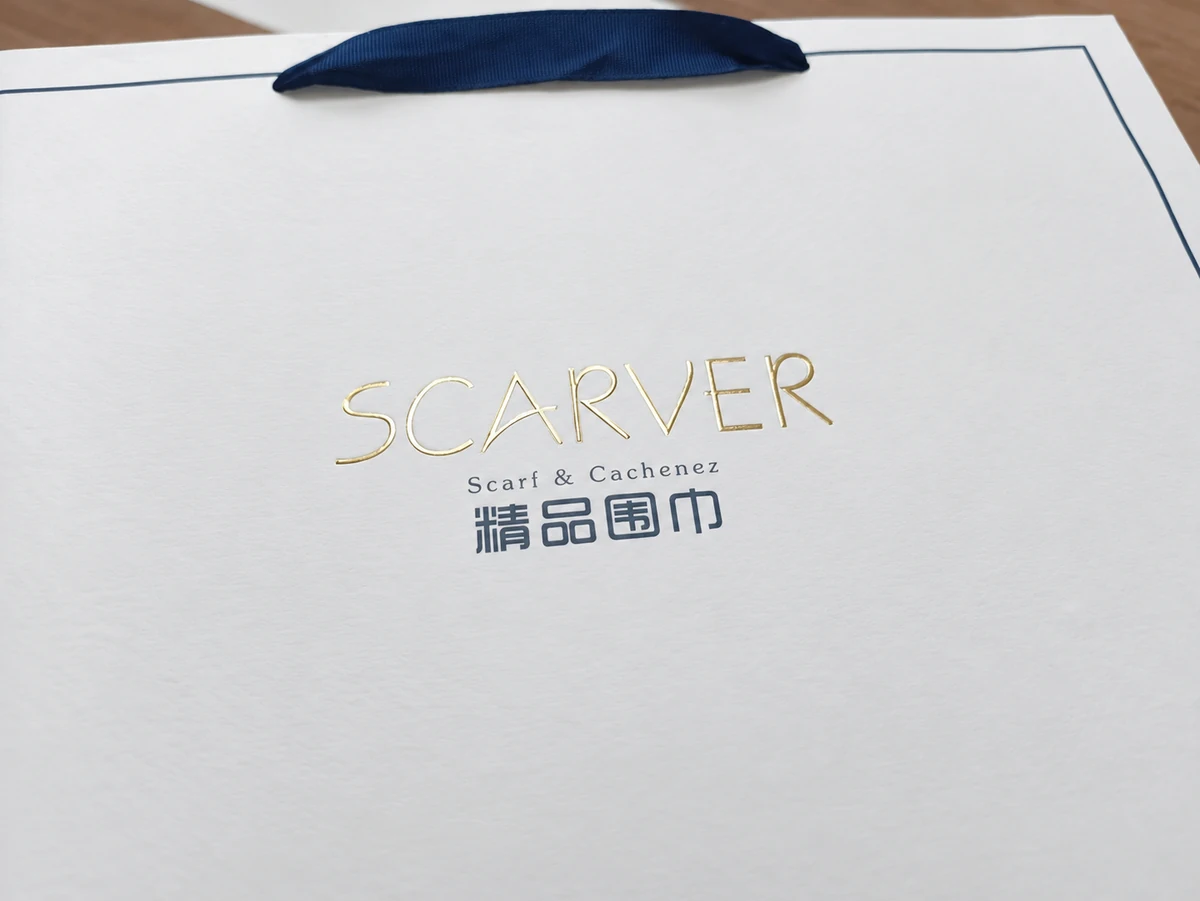
That makes it a useful reminder: adding embossing does not guarantee a dramatic raised effect. Fine strokes may produce a more restrained contour. If your main goal is legibility at a glance, clean flat foil may be the better use of the budget.
There is no single minimum letter size or relief depth that works for every bag. Paper thickness and surface, letter spacing, die design and the intended relief all interact. Keep the artwork at its final printed size when discussing it; zooming in on a screen makes fragile details look more generous than they are.
For a logo with both a large emblem and tiny text, a practical option is to discuss raising only the emblem while leaving the supporting text flat. Have the supplier assess the artwork and production route together.
Gold, silver and holographic foil are separate choices
Foil colour and surface relief answer different questions. Gold or silver describes the metallic appearance; flat or embossed describes the shape of the decorated paper. A holographic effect can also be applied flat.
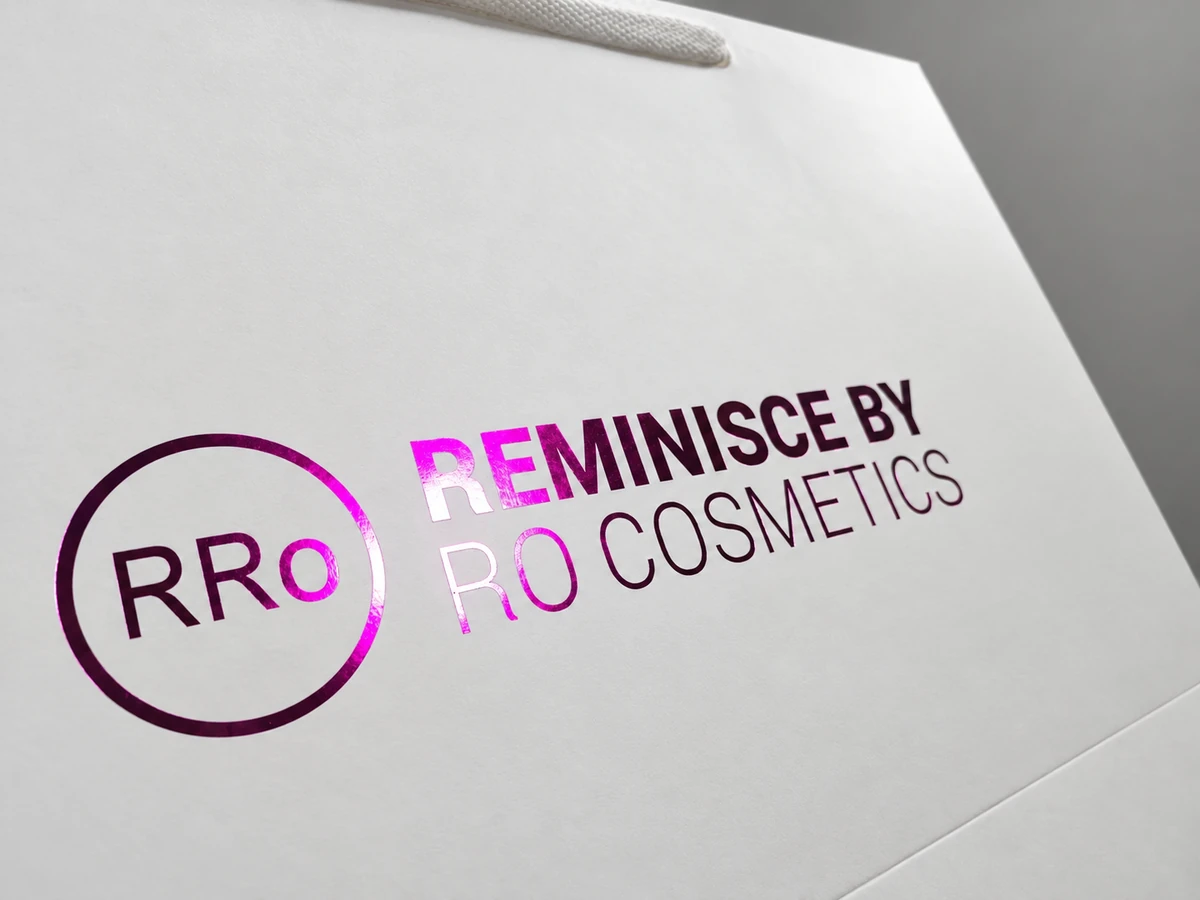
The changing colours on this white bag come from the foil’s optical effect, not from a raised logo. Choose the visual effect first, then decide whether touch adds anything useful. A colourful foil does not automatically need embossing to make it noticeable.
You can explore the available finish directions on PAQIVA’s special finishes page.
What changes the cost—and what to ask for
For comparable artwork, flat foil is usually the simpler starting point for tooling. Adding raised relief can require more involved dies, a matching counterdie and additional setup. Artwork complexity and order quantity affect how significant that cost becomes. Die maker Midwest Engraving describes both flat foil dies and combination foil-and-embossing dies.
However, foil plus embossing does not always mean two separate machine passes. A combination die can apply both in one pass; other jobs use separate operations. Tomlinson’s explanation of combination foiling and embossing shows why the production route matters. These are process options, not a statement about which equipment a particular bag used.
Ask for two quotations with the same bag size, paper, handles, foil area and quantity. Change only the requested relief, then ask the supplier to identify any paper or artwork adjustments needed. This makes the price difference useful instead of mixing several upgrades into one number.
A short request is enough: “Please quote this logo in flat gold foil and in gold foil with embossing. Show tooling separately and advise whether the small lettering should remain flat.”
Before choosing, compare the proposed finishes on the intended paper. Look at the foil coverage and open spaces between letters, feel the relief, and check the reverse. One physical comparison answers more than another photograph taken under stronger lighting.
Our recommendation for your paper bag
Use flat foil as the default when shine and clear branding are the main goals. Choose embossed foil when the raised logo is a deliberate part of the experience. The extra process should earn its place through the design, rather than being added to every gold logo automatically.
For a broader comparison that includes blind embossing and gloss highlights, see our guide to foil stamping, embossing and spot UV on paper bag logos. To compare the two foil options for your own artwork, send PAQIVA your logo, bag size, preferred paper and order quantity.