















Reordering Custom Paper Bags: How to Keep Colors and Quality Consistent
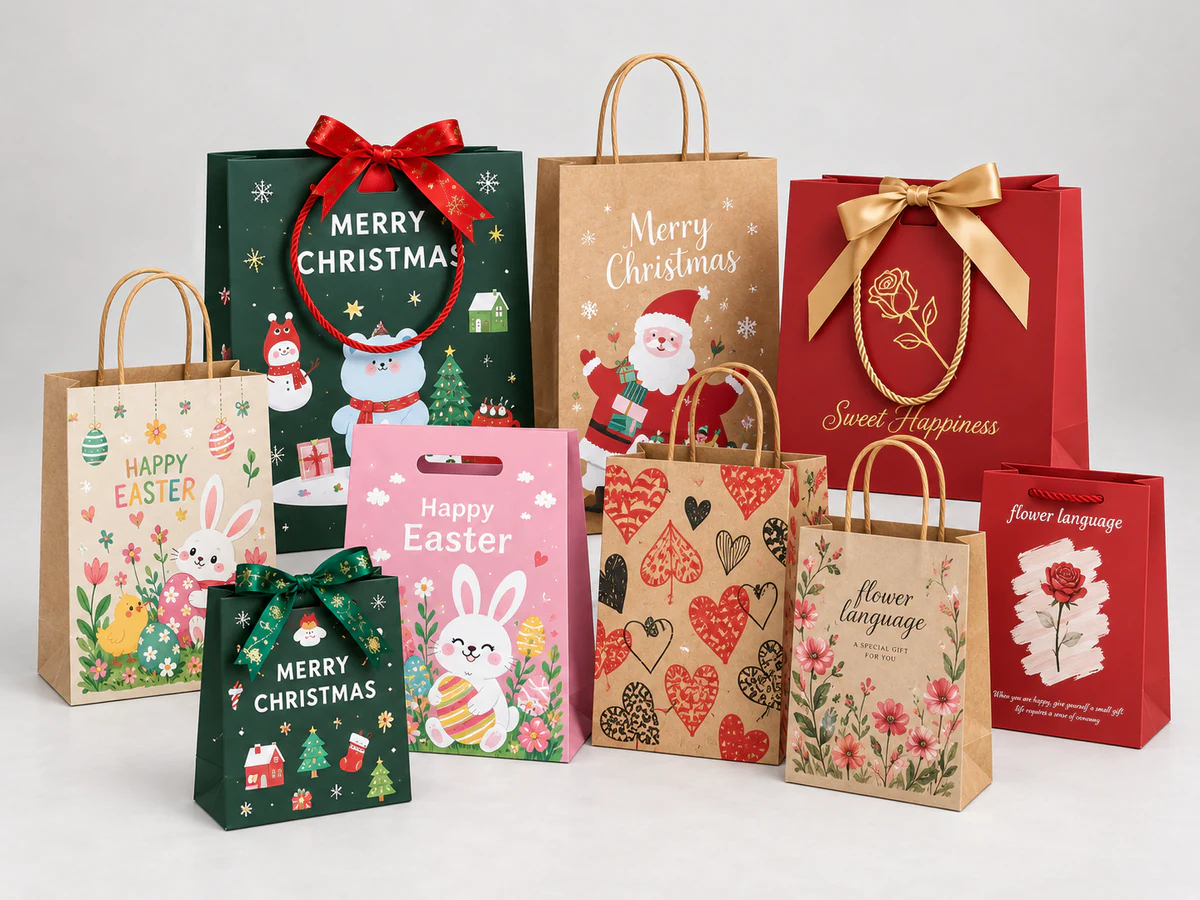
Send an accepted bag from the previous run and keep its paper, finish, ribbon and artwork specifications together. Use physical references to agree the next run, especially when changing manufacturers.
To keep repeat orders consistent, retain an approved physical bag and a clear production record—not just the artwork file. When changing manufacturers, send a representative bag from the last accepted production run so the new supplier can examine its color, paper, finish and construction together. Keep a corresponding reference yourself.
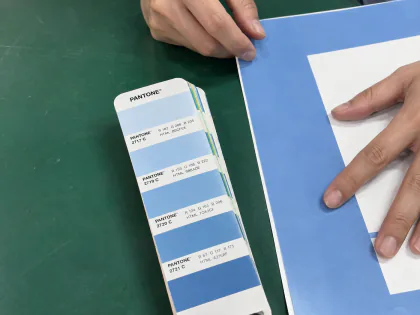
A complete Pantone reference or physical color swatch is a useful alternative when sending a bag is impractical. Photographs help explain the design, but they should not be the final color standard. The aim is a repeatable, agreed result within an acceptable range, rather than a promise of zero variation.
Why the same artwork can produce a different bag
In a designer's discussion about matching existing packaging, a client changed printers and received differently colored bags despite using the same file. The designer asked whether sending an existing bag would help the new printer match it. It is a practical question: the file may be unchanged while the production conditions are different.
Artwork records the design and its color instructions. It does not, by itself, lock down the paper's shade and texture, ink, printing settings, lamination, ribbon or bag assembly. Even the same paper weight can describe materials with different surfaces and stiffness.
Two suppliers can also aim for the same color reference and end up slightly on different sides of it: one warmer, the other cooler, for example. Placed together, their bags may show a more noticeable difference. Batch variation is a risk to manage; it does not mean that every reorder must look visibly different.
Send the previous production sample first
For a new manufacturer, a bag from an accepted production run is usually the most useful starting reference. Choose one that is clean, representative and not visibly faded or damaged. Identify the order or batch it came from, and explain which features must stay the same.
Send the paper details and artwork alongside it. The supplier can then assess the material, finish and construction, identify what is available, and propose how closely it can reproduce the result. A photograph alone cannot communicate all of these features.
This matters particularly with specialty papers: a similar-looking sheet may have a different texture, stiffness or response to printing. If the exact paper is unavailable, agree on the substitute before production. Shipping a sample adds cost, but for color-sensitive packaging and recurring orders, resolving the target before a full run is often worth that expense.
One decision deserves a clear answer: are you matching the previous bag, or correcting it to the brand's specified color? If the old bag and the color guide differ, tell the new supplier which is the controlling reference. Otherwise, matching the guide more closely could still produce a reorder that looks wrong beside existing stock.
Keep one production record with the approved samples
Keep the physical references and written specifications under the same product or job reference. An approved pre-production sample and a retained production bag have different roles: one records what was agreed, the other shows what was actually accepted from a run. Identify both so that neither is mistaken for an unfinished prototype.
| What to retain | What the record should identify |
|---|---|
| Approved bag and production retain | Product, order or batch reference, approval date and approver; which sample controls color, finish and construction |
| Paper specification | Paper maker or supplier, range and grade/code, color, weight and relevant thickness or texture; a physical swatch for specialty paper |
| Surface treatment | Lamination or coating type, matte/gloss appearance, foil reference and placement, embossing or other agreed finish |
| Ribbon or handle sample | Physical sample, supplier code where known, color, material or weave, width, length and attachment method |
| Printing and process record | Printing route, spot-color references or CMYK output conditions, relevant finish sequence, and the supplier's job or setup reference |
| Artwork and dieline version | Approved production files, revision and date, dimensions and finishing layers; keep replaced files clearly separate |
| Construction and use requirements | Bag dimensions, top/bottom reinforcement, handle fixing and agreed checks with the intended packed contents |
The production record does not require a new supplier to obtain another manufacturer's proprietary ink recipe or machine settings. It gives that supplier a clear target from which to establish its own repeatable setup. A paper or ribbon code is most useful when its supplier is also identified; a code without that context may not identify an equivalent material.
Use color references with their production context
Pantone and physical swatches: useful targets, not the whole specification
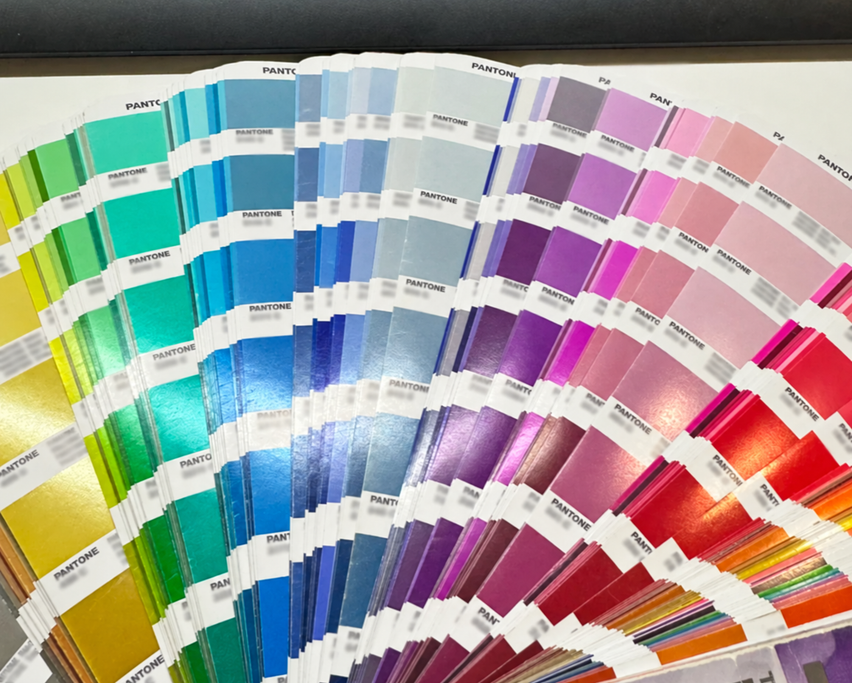
When a previous bag cannot be sent, supply a physical color swatch or the complete Pantone reference, together with the paper and finish specification. Include the guide and suffix where applicable. Pantone explains that coated and uncoated paper affect the appearance of a color. A C or U suffix describes the reference paper; it does not specify the bag's final lamination.
Also confirm how the reference will be reproduced. Giving a Pantone number does not automatically mean the order will use a separately mixed spot ink. The supplier may propose a CMYK simulation, and some target colors cannot be reproduced closely through that route. Spot printing can add cost depending on the design and production setup, so it is not necessary for every paper bag. Our CMYK and Pantone paper-bag guide explains that choice.
CMYK values need an agreed printing condition
For process-color work, provide the production artwork and CMYK color information in the format the supplier requests. Confirm the intended output profile or printing condition rather than sending four percentages without context. Adobe's guidance on print color profiles explains why the device, ink and paper combination matters.
Do not approve a bag color from an RGB or HEX value alone. RGB artwork can be part of a managed print workflow, but an arbitrary screen appearance is not a physical print target. Converting a file to CMYK, by itself, does not guarantee that a new supplier will match the old bag.
Photos and screens: use them to explain, not approve color
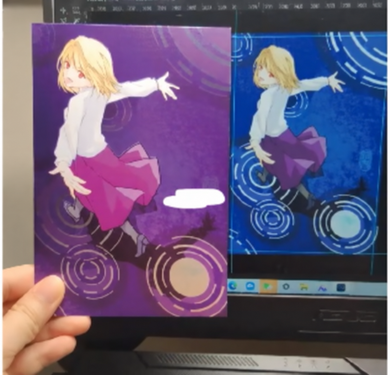
A photograph can show which panel or logo needs attention. It cannot reliably establish the final shade: lighting, camera processing and the viewer's screen all affect what is seen. The supplied print-and-screen example illustrates that problem; it does not establish the file's color mode or diagnose the cause of the difference.
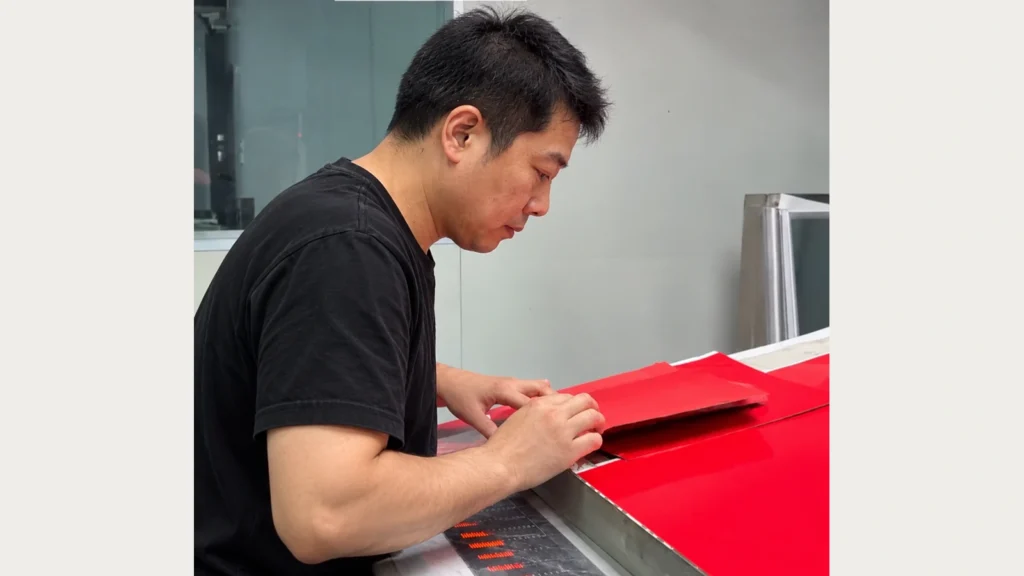
For a color-critical reorder, compare physical references under agreed lighting. If numerical color tolerances are needed, agree on the measurement method, conditions and acceptable range with the supplier. One universal tolerance is not suitable for every paper, finish and design.
Confirm changes before the next run
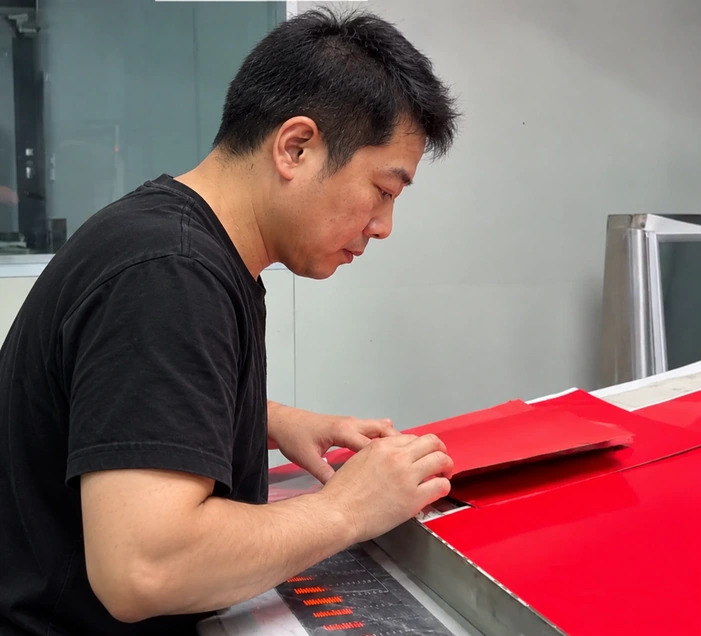
For each reorder, reference the approved job and ask what has changed. A new manufacturer, paper substitute, different printing route, finish or ribbon needs attention before production. Request a representative sample of the changed features, made using the proposed materials and process, and record the approval against the correct revision.
For an unchanged repeat order with reliable records, reuse the existing approved references and agree the production comparison needed. There is no reason to rebuild the whole specification or repeat every sampling step simply because another order is being placed.
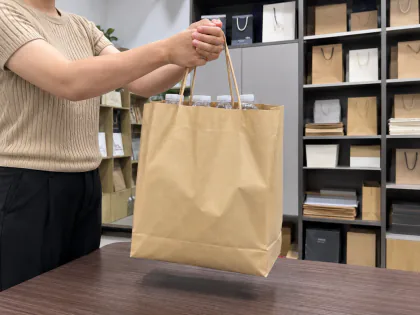
At acceptance, compare the new bags with the retained standard for both appearance and use: color and finish, paper feel, handle attachment, folds, seams and reinforcement. Use the intended packed contents for any agreed carrying check; a familiar color does not establish strength. Retain a representative accepted bag from the new run, and record any approved change so it does not become an unexplained difference next time.
To plan a repeat paper-bag order with PAQIVA, send the previous order reference if available, bag dimensions, quantity, current artwork revision and the paper/finish details you have. For a supplier change or a demanding color match, arrange to send an accepted bag as well. State whether the priority is matching existing stock or updating it to a new approved target.