















Should Paper Bags Be Free? Balancing Cost and Customer Experience
Where local rules allow, including one suitable paper bag can be part of good service. Compare costs, customer expectations, optional extras and takeaway fees before choosing your policy.

For clothing, gift and other service-focused retailers, our recommendation is to include one appropriately sized paper bag when the customer needs it, where local rules allow. Treat that bag as part of the cost of serving the order. Price optional extra gift bags or premium packaging separately, and make those prices clear before checkout.
That approach will not suit every business. A low-value grocery basket has different economics from a gift purchase, and some places require a charge even for paper bags. The useful question is: which policy can your margins support, and can customers understand it before they pay?
Why a small bag fee can feel bigger than its price
A shopper who has just bought clothing may see a carrier as the final part of the service. Asking for another small payment at that moment can feel out of proportion to the purchase.
Public discussions show both sides. In a 2026 thread about paying for a bag after spending over £1,000, some commenters felt the extra charge was petty; others preferred bringing their own bag or accepted a charge to discourage unnecessary use. These are individual experiences, not a representative customer survey. Read the AskUK discussion.
There is a staff cost, too. In a separate clothing-retail discussion, a worker described the arguments caused by a small bag charge. Replies suggested stating the price before putting the purchase in a bag. That does not tell us how often disputes happen, but it highlights a practical issue: a policy also has to work at the counter. Read the retail-worker discussion.
Charging is not automatically poor service. A clearly explained fee, an easy option to decline the bag and consistent treatment can be reasonable. An unexpected charge after the customer has mentally finished paying is harder to make feel welcoming.
A practical policy: one standard bag, optional extras
For a fashion boutique, gift shop or similar retailer, start with these choices:
| Situation | Suggested approach |
|---|---|
| A customer needs a carrier for an ordinary purchase | Include one suitable standard bag where permitted. Ask first rather than handing one out automatically. |
| The purchase genuinely needs more carrying capacity | Use an appropriately sized bag or enough suitable bags. Do not let a rigid one-bag rule leave the goods poorly packed. |
| A customer requests spare gift bags or an upgraded presentation | Display an optional price before agreeing to the extra packaging. |
| A local rule requires a bag charge | Apply the relevant charge, exemptions and disclosure rules. The included-bag policy must accommodate these requirements. |
This keeps the everyday offer simple without promising unlimited packaging. A basic carrier and a premium gift presentation can have different roles; every order does not need the most elaborate finish.
Luxury brands offer a useful example of packaging being part of the experience. Gucci's US site includes complimentary gift wrapping with Gucci.com orders. Louis Vuitton's US online-order FAQ describes a gift box, with a shopping bag available for many items. These are online gifting policies, not proof that every store worldwide supplies free paper bags. Gucci gift wrapping, Louis Vuitton gift-wrapping FAQ.
For your own shop, borrow the idea of a considered handover: a bag that fits, carries the purchase comfortably and suits the product's presentation. An included bag still has a cost; the business chooses to recover it through its overall pricing rather than a separate discretionary fee.
Check the local rule before promising free bags
Paper is not automatically exempt from bag charges. These examples were checked on October 12, 2026:
- China: the national paid-use shopping-bag rule specifically addresses plastic shopping bags. It is not a blanket requirement to charge for every paper carrier. A supermarket's paper-bag price should not be assumed to be a nationwide statutory price. China's official rule.
- United States: requirements vary by location and type of retailer. From January 1, 2026, covered California stores must charge at least $0.10 for compliant recycled paper carryout bags, subject to exemptions. The coverage includes specified grocery and other retail businesses; it is not a rule for every US shop. California retailer guidance.
- United Kingdom: England's mandatory minimum 10p scheme covers qualifying plastic carrier bags. Scotland's minimum 10p charge also covers qualifying single-use paper bags, with exemptions. Do not apply one country's rule to the entire UK. England guidance, Scotland guidance.
- European Union: EU rules allow Member States to use charges on single-use packaging as an incentive for reuse. Check the country and applicable local requirements rather than assuming one EU-wide paper-bag fee. EU packaging regulation, Article 51.
The same location-and-channel check matters for restaurants. A global fast-food brand name does not establish whether a paper carrier is free at a particular branch or on a delivery platform.
Is including a paper bag affordable?
Use the landed cost per usable bag, including relevant freight, import costs and unusable units, rather than only the factory unit price. Then look at how many bags each order actually uses.
For a simple illustration, assume a usable bag costs $0.30. One bag is 0.75% of a $40 sale, but 7.5% of a $4 sale. Those percentages are shares of sales revenue, not profit. This is an assumed example, not a PAQIVA quotation or a current market price.
At 1,000 transactions a month, if 80% need one such bag, the monthly bag budget would be $240. Compare that with your actual order margins before choosing an included-bag policy. There is no universal basket value at which a free bag becomes the right answer.
Before introducing a new fee, try three practical controls:
- Ask whether a bag is needed. Make bringing a suitable bag or declining one easy.
- Stock sizes that match common purchases. A well-chosen everyday range can avoid routinely using an oversized bag or packing one order into two small ones. Start with the packed goods when measuring a paper bag.
- Separate everyday packaging from gift upgrades. Keep the standard bag suitable for the goods; reserve more elaborate presentation for purchases that need it. Compare quantity breaks with storage and expected use when reviewing custom paper bag order quantities.
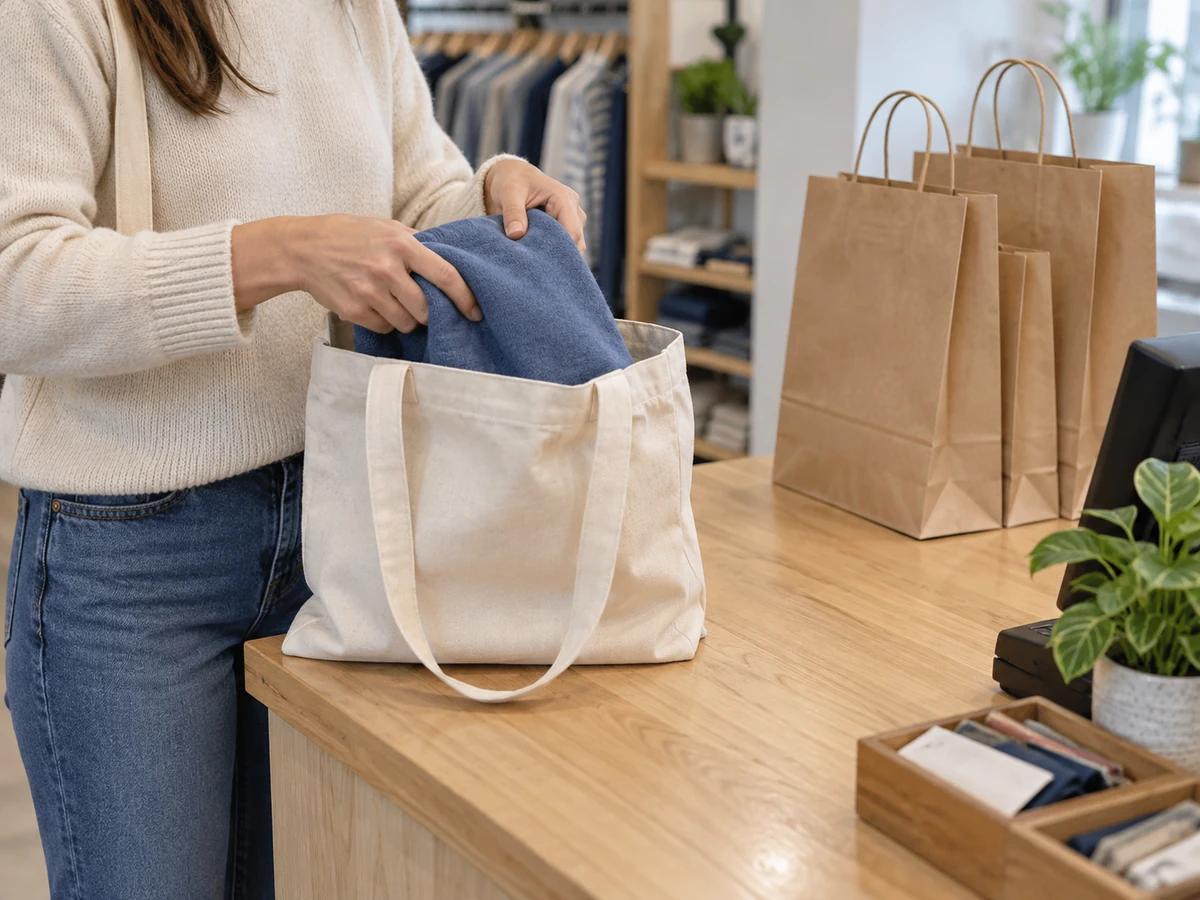
For takeaway, explain the packaging fee before the order
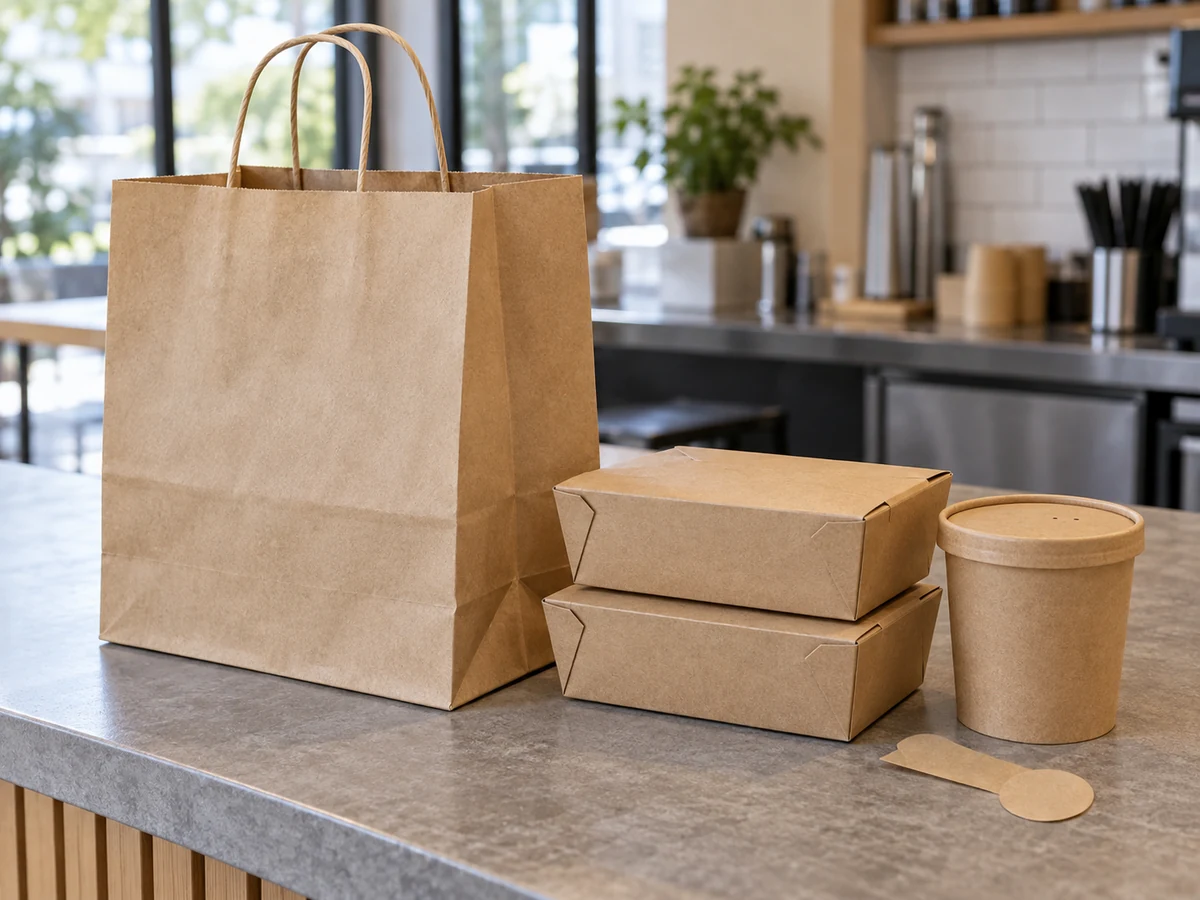
Takeaway packaging can include a carrier, food containers, lids and seals. A clearly described packaging charge can make those costs visible. But changing the name from “bag fee” to “packaging fee” does not, by itself, improve the experience.
In a community discussion about takeaway packaging charges, some customers objected to discovering an extra fee late, while others were more accepting if it was disclosed in advance. Read the packaging-fee discussion.
If you charge, show the amount and what it covers before the customer confirms the order. Keep the menu, ordering screen and receipt consistent. Do not hide a legally required carrier-bag charge inside a general packaging fee where local rules require it to be charged or shown separately.
Give staff a short, consistent explanation
For an included-bag policy, a natural question is: “Would you like a bag? One standard bag is included.” For an optional upgrade: “We also have a gift-packaging option; the price is shown here.” Where a charge is mandatory, explain the applicable charge before adding the bag.
Our preference for service-focused retail is to build necessary everyday packaging into the purchase where permitted, let customers decline it, and charge transparently for optional extras. Grocery and low-value purchases may support a different choice. In either case, an affordable bag that suits the goods and a clear policy are more useful than assuming every bag must be free—or that every bag should earn a separate margin.
Planning an everyday bag and an optional gift upgrade? Share your packed product sizes, expected quantities and delivery destination with PAQIVA to compare suitable paper-bag specifications.