








Stamps, Stickers or Printed Paper Bags: Which Costs Less?
Stamps and paper labels can keep startup spending low. Compare the blank bag, labour and rejects before deciding whether a printed order costs less.
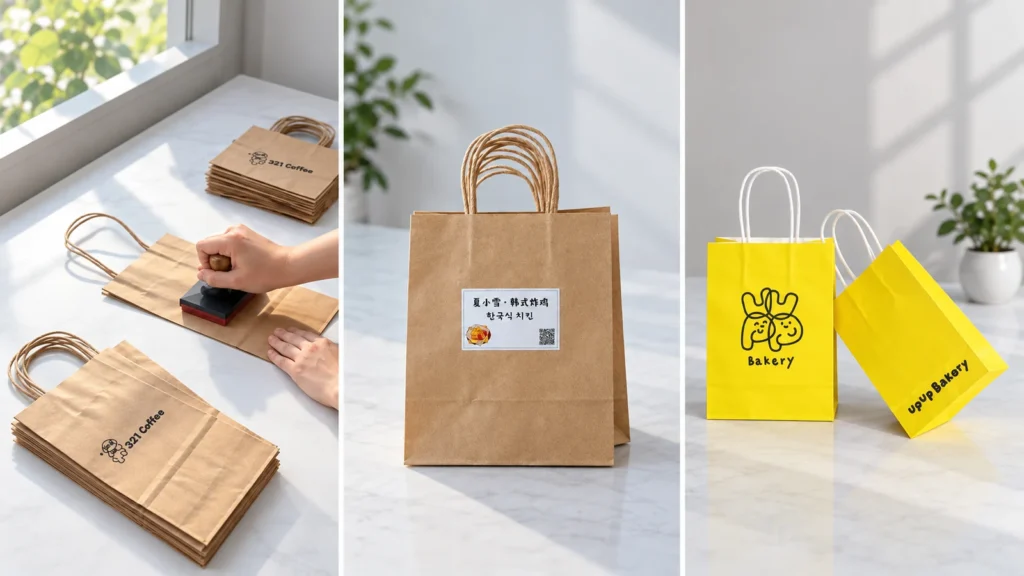
For a new business needing only 100–200 bags, a rubber stamp or an ordinary paper label is often a sensible way to add a logo without committing to a large order. Once you expect to use around 500 bags of the same size and design, compare a directly printed bag quotation first. Buying blanks, branding them by hand and replacing spoiled bags may cost more than you expect.
There is no universal winner at exactly 500 pieces. The better choice depends on your bag specification, local purchasing costs, available time and how confidently you can use the stock. All amounts below are in US dollars; the China sourcing references exclude shipping.
Rubber stamps: inexpensive tools, repeated work
A stamp suits a simple logo and a small batch you can prepare yourself. You can buy bags as needed and reuse the stamp on later orders.
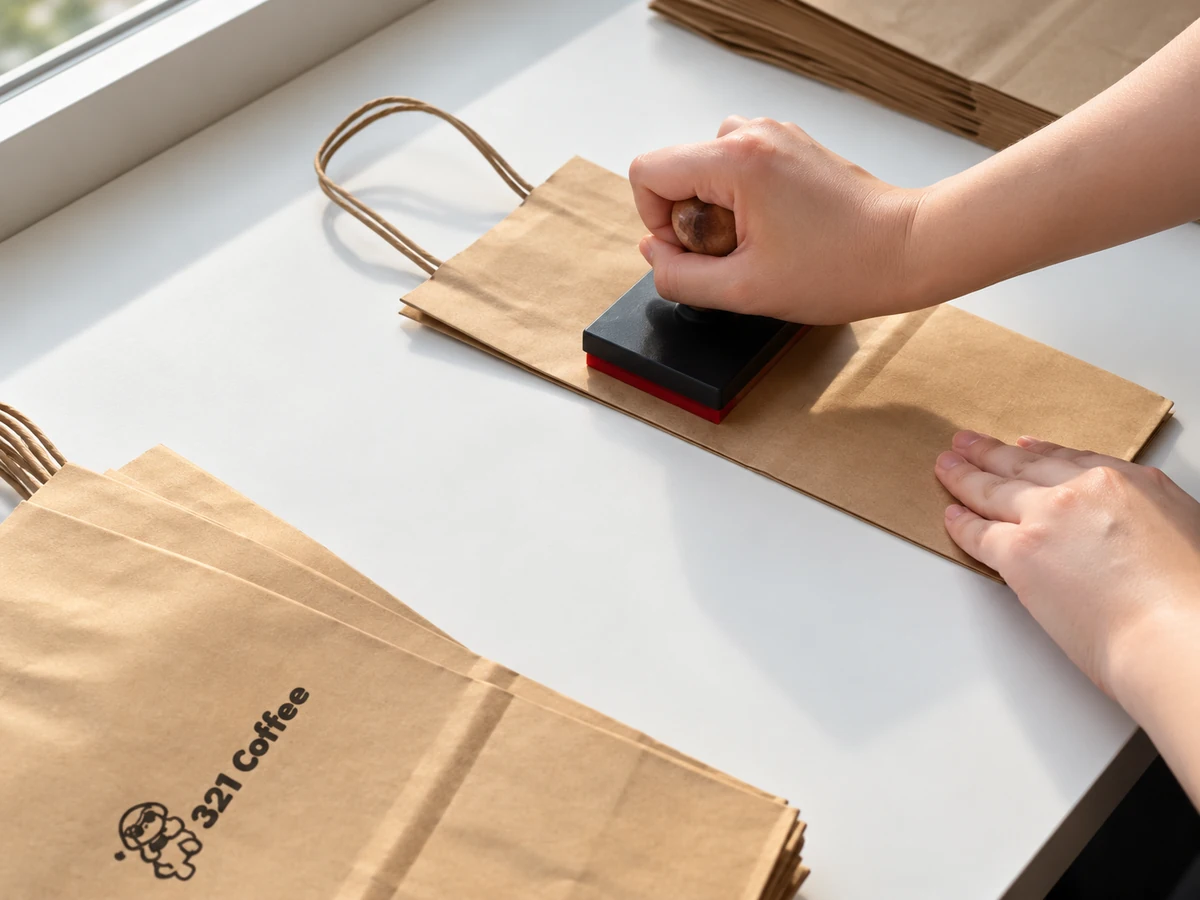
The tool price is only the beginning. Position the bag, keep the surface flat, ink the stamp, press evenly, lift it cleanly and check the result. Drying also needs space; stacking too early can spoil an otherwise acceptable impression. Match the ink to both the stamp and bag surface—RubberStamps.com’s ink guide explains why porous paper and glossy surfaces need different consideration.
For a sense of scale, indicative China purchasing references for custom stamps are 100 × 100 mm: $20; 80 × 50 mm: $10; 40 × 20 mm: $8; 10 × 8 mm: $5. These exclude ink and shipping. Stamp area, construction, quality and location can change the price.
One colour is the easiest starting point. Multicolour stamping is possible, including selectively inking one stamp or using multicolour pads. Separate colour passes add positioning and handling, so do not budget a complex multicolour design like a single black impression.
Choose stamping when a slightly handmade result fits the brand and you have time to do it. Uneven coverage, a tilted mark or a double impression can be part of that decision—not every business will accept them.
Paper labels: low material cost and flexible artwork
A printed label can carry several colours, small text or an illustration in one application. It also lets you change the message while keeping the same blank bag.
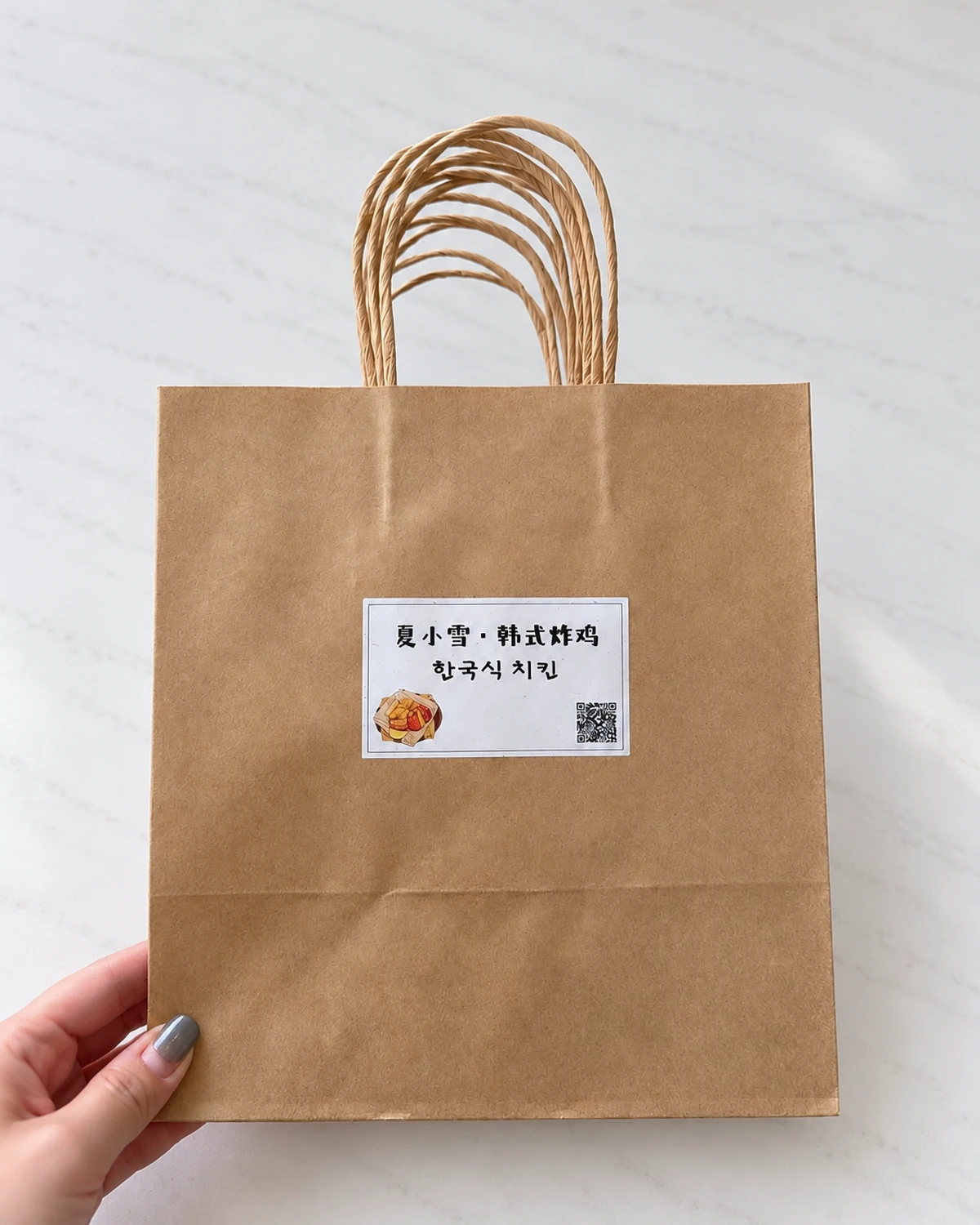
An indicative China sourcing reference for 10 × 5 cm coated-paper adhesive labels is $10 for 500, or $0.02 per label. That buys the labels, not the bags or the work of applying them. A white label also remains a visible part of the design, as the photograph shows.
Ordering 100 labels may cost little less than ordering 500. For the same label example, a small run of 100 is estimated at around $8, compared with $10 for 500, in China before shipping. Label printing also has setup costs or minimum charges, so do not turn the $10-for-500 reference into an assumed $2 price for 100. Ask for the actual prices at both quantities; the lower per-label rate only helps if you can use the extra labels.
Peeling, lining up and smoothing each label takes time. If one goes on crooked, replacement may damage the paper underneath. A consistent placement guide can help, but it does not remove the handling work.
For a colourful startup logo, compare ordinary paper labels before assuming a stamp is cheapest. Their low purchase cost can be useful, especially when the design may change.
Transfer graphics are a different budget
A transfer graphic can leave the design without the rectangular background of an ordinary paper label. An indicative reference for 10 × 5 cm transfers is $100 for 500, or $0.20 each—ten times the ordinary paper-label reference above, before bags and application.
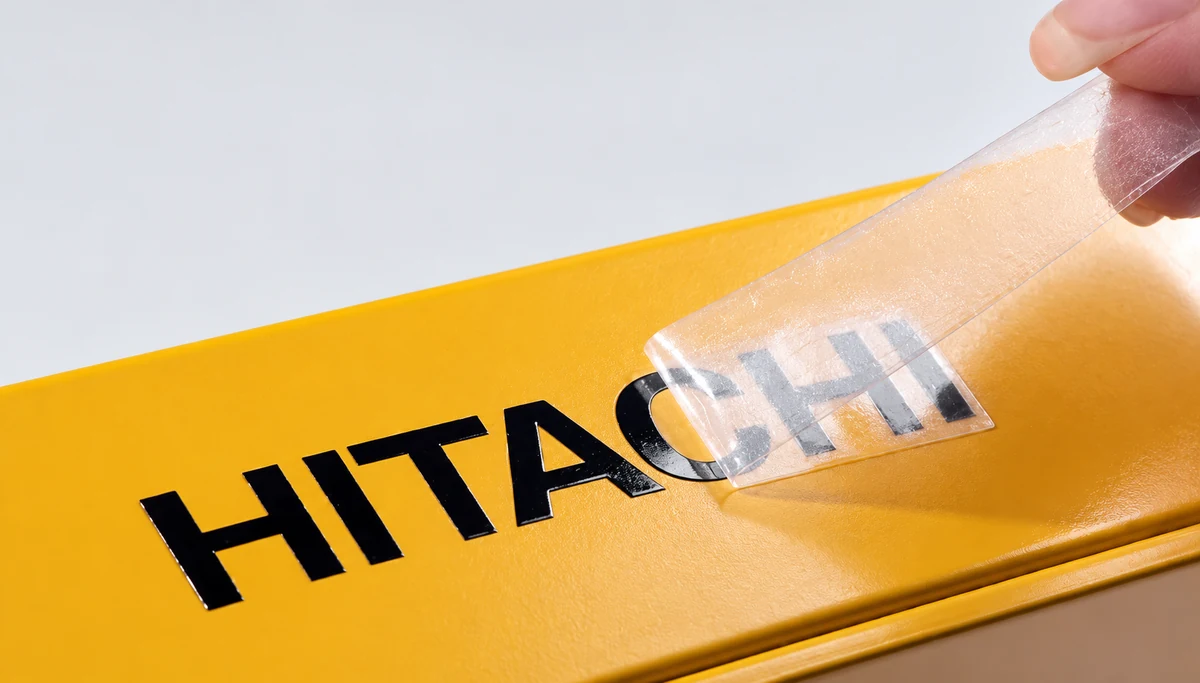
The photograph shows carrier film being peeled from a graphic on a box. It illustrates the application step; it does not establish suitability for a rough kraft bag. Transfer products differ, so identify the material and check it on your chosen bag.
Sticker Mule’s transfer application instructions involve positioning, pressing and removing the carrier. That is more handling than simply placing a paper label. Choose transfers for the appearance you need, rather than treating them as the cheapest kind of sticker.
Count the bags you can actually use
First-batch cost per usable bag = (bags purchased + branding supplies and tools + active labour + relevant delivery and other charges) ÷ acceptable finished bags.
If the purchased bags and work are already included, rejected bags reduce the denominator. Do not add their full purchase cost again. If you repair a bag successfully, keep it in the usable count and add only the extra supplies and time.
Here is a 200-bag planning example, not a supplier quote or a measured production test:
- Blank bags cost an assumed $0.30 each: $60 for 200. Assume four finished bags are unusable, leaving 196. The same hypothetical 2% rejection is used for all three methods.
- Value active work at an assumed $15/hour. Allow 20 seconds per bag for stamping or paper labels, and 40 seconds for transfers, including handling, positioning, checking and a share of preparation/cleanup.
- Buy one $10 stamp and allow an assumed $5 initial ink/pad purchase budget; alternatively, buy the full $10 pack of 500 paper labels or the full $100 pack of 500 transfers. Delivery and tax are excluded from this example and must be added for a real purchase.
The initial cash budgets are therefore $75 for stamping, $70 for paper labels and $160 for transfers. Stamping and paper labels each add about 67 minutes of work, valued at $16.67. Transfers add about 133 minutes, valued at $33.33.
| Method | First batch + time | Per usable bag |
|---|---|---|
| Stamp | $91.67 | $0.47 |
| Paper label | $86.67 | $0.44 |
| Transfer | $193.33 | $0.99 |
This table charges the full initial purchases to the first batch. Each label option still has 300 labels left, and the stamp can be reused. Those assets can reduce later spending; the figures above are not long-run consumable costs. Unpaid owner time is shown as a cost of using that time, even if no wage is paid out.
In this example, the ordinary paper label narrowly wins. Different local prices, working speeds or reject rates can reverse that result. The useful lesson is to compare the complete job, not a $0.02 label with a finished printed bag.
Direct printing: compare the whole bag specification
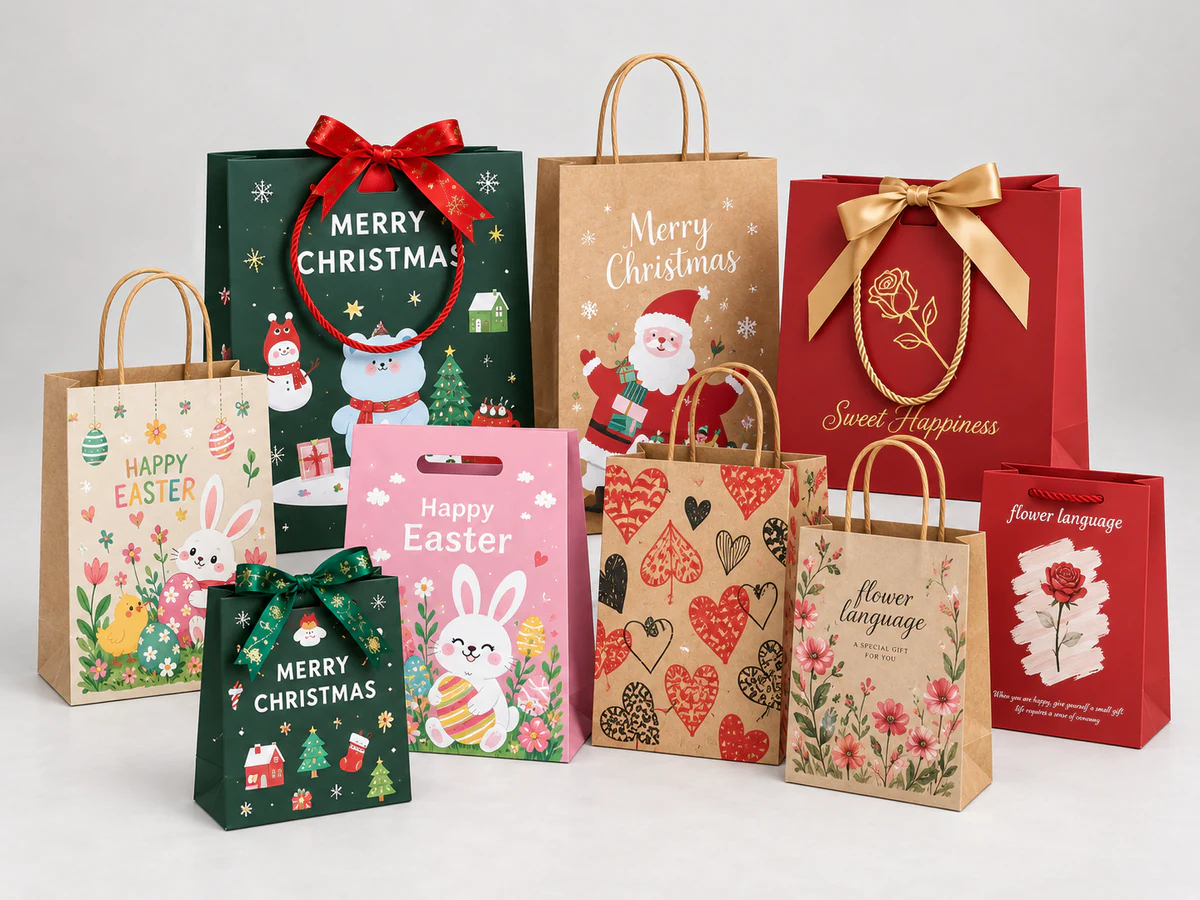
Ordering bags with the artwork already printed removes the separate shop-floor task of stamping or applying a logo. Made-to-order production can also plan the artwork across the bag before assembly, giving more design scope than decorating a finished blank. Print areas, folds, materials and production methods still impose limits.
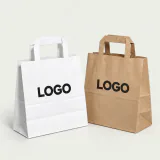
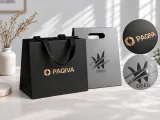
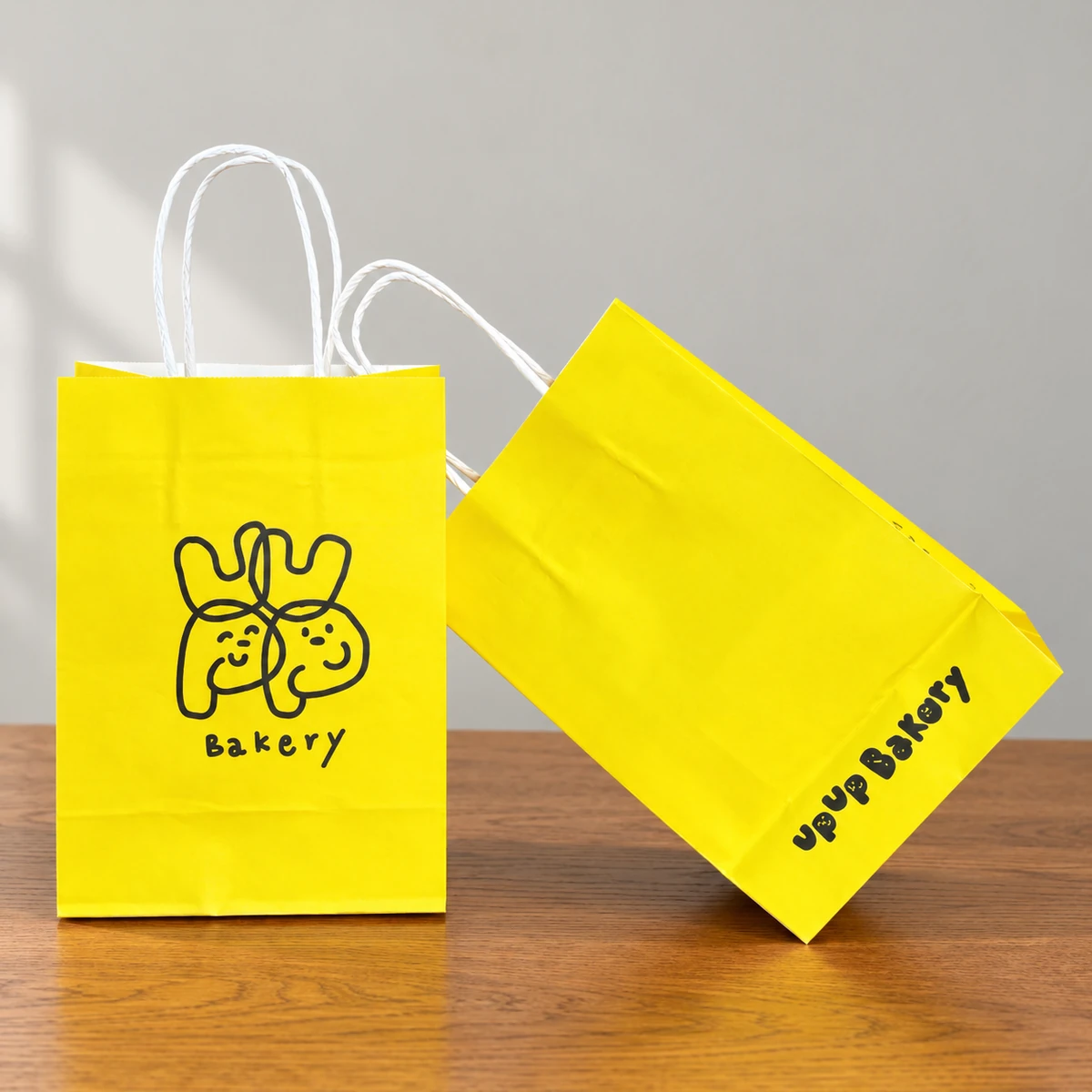
Two China sourcing references illustrate why the type of bag matters. They are indicative product-cost examples, not PAQIVA fixed offers or delivered international prices. Dimensions below are front width × side depth × bag-body height, excluding handles. The photographs illustrate the two construction types; they are not verified examples of the quoted sizes.
Kraft bags with paper-cord handles
For a 26 × 12 × 31.5 cm printed kraft bag, the supplied purchasing reference is approximately $200 for 1,000 bags, or $0.20 each. The final price depends on paper, artwork, printing and order requirements.
Shopping bags with threaded cord handles
For a 21 × 11 × 27 cm printed shopping bag with threaded cords, the reference is approximately $300 for 1,000 bags, or $0.30 each.
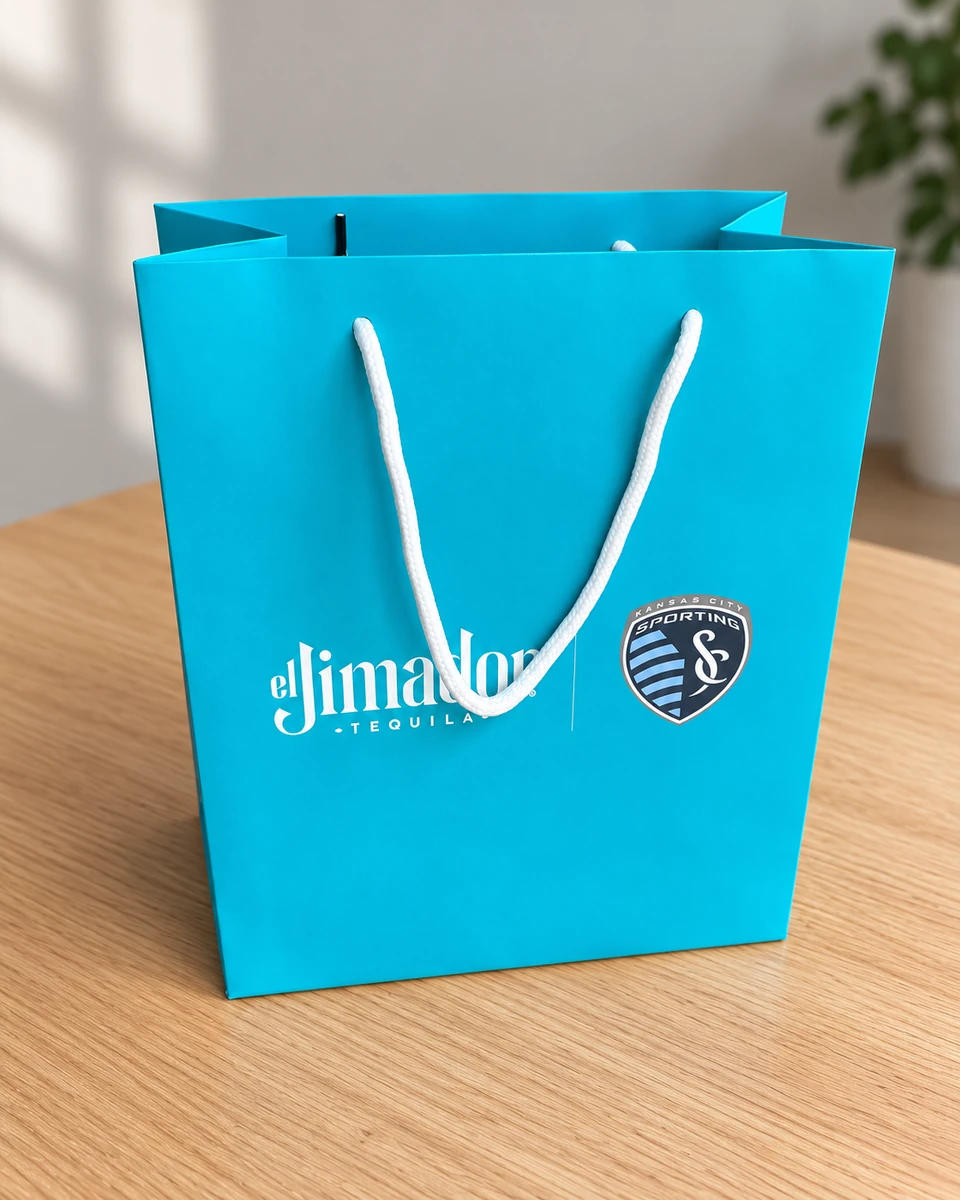
These two examples differ in size and construction; their price difference cannot be attributed to the handles alone. Neither gives a 500-bag price by simply halving the total. Setup costs spread across fewer bags can make 100–200 printed bags relatively expensive per unit, although suitable short-run options exist. Our paper bag MOQ guide explains that quantity trade-off.
Compare the same size, paper, handles, artwork, print sides and destination. Include setup if it is not already quoted, freight, applicable tax/duty and any unusable output. Factory printing reduces your logo-application work; it does not promise zero defects.
Blank-bag prices need the same care. The supplied Amazon listing snapshot shows 100 blank bags for $25.99, about $0.26 each, but also $30.70 shipping to Singapore. Together that is $56.69, or about $0.57 per bag before tax. This is a destination-specific screenshot example, not a current price or a like-for-like comparison with the China references.
When should you move from DIY to printed bags?
At 100–200 bags, protect your startup cash. A stamp or ordinary paper label can be a good choice while sales, logo design or bag sizes are still changing. A lower unit price on 1,000 printed bags is not a saving if you cannot use most of them.
At around 500 bags per stable size and design, request a direct-print quotation before buying more blanks. At the illustrative 20 seconds per bag, 500 hand-branded bags take about 2 hours 47 minutes of active work. Consider whether that work is taking time away from customers, fulfilment or sales.
For repeat batches of 500–1,000 or more, we generally recommend directly printed bags when the delivered cost and cash commitment fit the business. You gain a repeatable agreed design and avoid applying each logo yourself. If that quantity is split across several sizes, colours or changing designs, compare each specification separately.
Before deciding, time a small trial batch, count the bags you would actually give to customers and price the supplies you must buy now. Compare that with a quotation for the same finished bag. For the distinction between fully made-to-order bags and printing onto an existing bag format, see fully custom vs logo-printed stock paper bags.
Send PAQIVA your bag dimensions, handle style, artwork, quantity per design and delivery destination to compare a printed-bag option with your current DIY cost.